Ghana's Public Service Crippled: CLOGSAG Strike Sparks Crisis, Minister Warns of Economic Disaster
The ongoing nationwide strike by Ghana's CLOGSAG highlights critical issues, from immediate citizen impact to underlying economic challenges. While government officials call for dialogue, concerns are raised about irreversible losses for citizens and a deeper structural problem concerning productivity and public sector wages.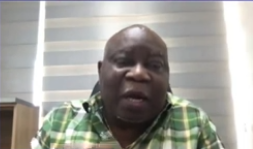
A nationwide strike by the Civil and Local Government Staff Association of Ghana (CLOGSAG) has sparked significant concerns, with warnings of irreversible losses for citizens relying on government services. The strike, which began on Monday, March 9, is a protest against persistent delays in implementing agreed conditions of service for CLOGSAG members.
Yiadom Boakye Amponsah, the acting Managing Director of Blue Gold (FGR/Blue Gold), expressed his alarm on JoyNews’ News Desk, emphasizing that beyond the immediate labour dispute, the shutdown of public services could prevent Ghanaians from accessing critical, time-sensitive opportunities. He cited the example of someone needing a birth certificate urgently, an opportunity that would be irrevocably lost due due to the strike. Mr. Amponsah criticized the delay in addressing the dispute, stating that industrial social relations are fluid and issues should be addressed promptly through proper engagement, not allowed to escalate to a withdrawal of services. He highlighted the dual responsibilities of unions to formally raise concerns and employers to proactively engage and resolve grievances, urging CLOGSAG to suspend the strike and participate in a scheduled meeting.
Adding to the discourse, Abdul-Rashid Hassan Pelpuo, the Minister for Labour, Jobs and Employment, appealed to CLOGSAG to suspend their industrial action and return to negotiations. Speaking with JoyNews, Mr. Pelpuo assured the union of the government’s commitment to resolving their concerns, stating that he had engaged both the Fair Wages and Salaries Commission and CLOGSAG leadership. He acknowledged a breakdown in communication between the National Labour Commission, the Fair Wages and Salaries Commission, and CLOGSAG prior to the strike. However, Isaac Bampoe Addo, CLOGSAG’s Executive Secretary, confirmed that a meeting with the Fair Wages and Salaries Commission on March 9 concluded without an agreement, and the union’s National Executive Council had not called off the strike, demanding a clear roadmap for resolution. Minister Pelpuo cautioned that prolonged industrial action would have adverse consequences for the nation and its workers.
Beyond the immediate grievances, the CLOGSAG strike has been identified as symptomatic of a deeper structural problem within Ghana’s public sector: a widening gap between productivity and entitlement. Critics argue that while CLOGSAG demands a revised salary structure and improved conditions, the very administrators and technocrats involved should understand the limitations of state revenue. This perspective posits that the conversation often revolves around what the government must pay, rather than what government institutions must produce. Ghana’s tax-to-GDP ratio, hovering around 14 percent, underscores the limited revenue available for salaries, infrastructure, and social programs.
The argument further stresses that Ghana struggles with extremely low productivity levels across sectors, yet salary demands consistently rise. This creates an unsustainable model where demands for Scandinavian-style public sector wages are made against sub-Saharan productivity. To break this cycle, a more rational framework for public sector compensation is proposed, such as pegging total public sector wages to a defined percentage of GDP. Such a system would align incentives, encouraging public servants to actively contribute to economic growth, as their wages would increase with the expansion of the national economy. The current illusion that income can be negotiated into existence, without prior wealth creation, is deemed unsustainable, and until Ghana embraces the fundamental economic truth that wealth must be created before it can be distributed, recurring industrial actions like the CLOGSAG strike are likely to persist.