Ghana's Post-IMF Test: Can the Nation Avoid an 18th Bailout and Forge Fiscal Discipline?
Ghana has formally exited its 17th IMF bailout, marking a critical step towards economic independence, and transitioning to a non-financing Policy Coordination Instrument. While the program stabilized the economy, the true test lies in maintaining fiscal discipline and pursuing structural transformations to avoid future reliance on external support, given a history of broken promises.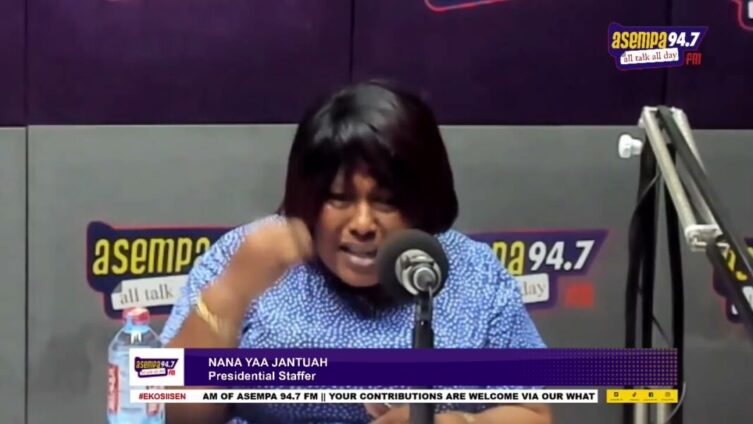
Ghana has formally exited its 17th International Monetary Fund (IMF) Extended Credit Facility (ECF) programme, a move that government officials and staffers have expressed as a significant step towards economic independence. This completion follows a three-year US$3 billion loan-supported programme, which saw Ghana transition from severe macroeconomic distress to a period of relative stability. Presidential Staffer Nana Yaa Jantuah, speaking on Adom FM, thanked Ghanaians for their resilience and patience during the difficult period, while also commending President John Dramani Mahama and his economic team for adhering to program conditions and ensuring continuity despite political transitions.
The decision to seek the 17th IMF bailout in July 2022 came after the Ghanaian economy faced severe challenges, including sharp depreciation of the cedi, inflation crossing 50% in November 2022, unbearable debt, and evaporated investor confidence. Ordinary citizens felt the impact acutely, with rising transport fares and shrinking household purchasing power. Despite being rich in resources like gold and cocoa—ranking among the largest exporters globally—Ghana has repeatedly found itself seeking external economic rescue, a pattern that many find disturbing given the nation's potential.
The IMF programme proved instrumental in stabilizing Ghana's economy. It helped restore some stability, with inflation dropping to 22.1% by October 2024 from 54.1% in December 2022. Foreign reserves improved to $7.7 billion, covering 3.5 months of imports, and the public debt-to-GDP ratio reduced from 79.2% to 74.6% in the same period. Subsequent improvements under the current administration include a strengthened cedi, a five-notch upgrade in sovereign credit rating to a B-status outlook, and gross international reserves reaching about $14.5 billion by February 2026, sufficient to cover nearly six months of imports. These gains have been attributed to aggressive fiscal consolidation, reduced public spending, and structural reforms.
However, the exit from the ECF program is not an end to engagement with the IMF. Ghana is now transitioning to a Policy Coordination Instrument (PCI), a non-financing arrangement designed to provide policy guidance, technical support, and boost investor confidence without direct financial disbursement. President of IMANI Africa, Franklin Cudjoe, described the PCI as a "master stroke decision" and urged the government and political parties to remain committed to fiscal discipline and policy reforms. This framework aims to support Ghana’s long-term objective of attaining investment-grade status, reducing borrowing costs, and attracting foreign investment.
Despite the recent success, a strong undercurrent of skepticism remains due to Ghana's history of repeated IMF bailouts and broken pledges by past administrations to make each one the "last." Both former President John Mahama and Nana Addo Dankwa Akufo-Addo made similar vows, which were subsequently broken, often attributed to election-year spending spikes, central bank financing of government, and vulnerability to commodity price fluctuations. The consensus among analysts is that IMF programmes are like "painkillers after surgery"; they stabilize the patient but do not cure the underlying disease, which is often political, structural, or even cultural.
The true test for Ghana now lies in maintaining fiscal discipline and shifting focus from stabilization to fundamental economic transformation. The IMF itself has urged Ghana to take full advantage of the created fiscal space to drive strategic investments and create jobs. Key risks to manage include maintaining strong fiscal safeguards, particularly by controlling spending by state-owned enterprises (SOEs) and avoiding extrabudgetary expenditures, and mitigating exposure to gold price volatility. The nation must move beyond import dependency and raw material exports to aggressively pursue agro-processing, industrialization, digital innovation, and manufacturing, leveraging the African Continental Free Trade Area Secretariat in Accra.
Ghana’s Finance Minister, Dr. Cassiel Ato Forson, outlined the country’s post-ECF priorities as stability, resilience, and development, promising a new "economy" framework focused on job creation and inclusive growth. This period represents a critical juncture, not just for Ghana but also for other sub-Saharan African economies. Ghana's ability to maintain fiscal discipline without direct IMF financial conditionality will serve as a vital case study, demonstrating whether sustainable macroeconomic adjustment can be effectively driven by domestic policy choices and political maturity. The challenge for the government will be to balance institutional spending discipline with domestic political demands for rapid development, ensuring this recovery is a permanent structural transformation rather than a temporary stabilization.