Ghana's Gold-for-Reserves Program Ignites Fury: $214M Loss Claims Spark Political Storm
Ghana's Gold-for-Reserves program faces a heated debate over a reported $214 million loss, with economists urging reforms while government officials classify it as a transactional cost. The Minority Caucus demands a bipartisan probe into the program's transparency and financial accountability amidst claims of significant economic gains.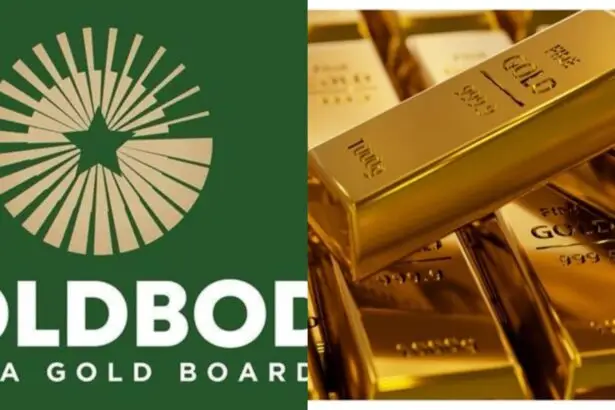
The Gold-for-Reserves (G4R) programme in Ghana, overseen by the Ghana Gold Board (GoldBod), has become the subject of intense political and economic debate following a report by the International Monetary Fund (IMF) highlighting a $214 million loss. This reported figure has sparked a significant back-and-forth between various political factions and economic experts, with differing interpretations on the nature of the amount and the future of the programme.
Economist Professor Patrick Asuming has urged that the reported $214 million loss, though concerning, should primarily prompt reforms rather than calls for the G4R programme's abandonment. Speaking on Joy FM and JoyNews, Prof. Asuming clarified that while such losses are unusual, especially with global gold prices at historic highs, they might stem from deliberate policy choices aimed at curbing gold smuggling. He stressed that the IMF's report should not be misconstrued as a directive to scrap the initiative, particularly since the information was provided by the Ghanaian government itself. Prof. Asuming emphasized that the core policy debate should focus on minimizing these costs and determining who should bear them, asserting that the IMF's main concern is preventing these losses from burdening the Bank of Ghana (BoG) and weakening its operational capacity. He dismissed arguments that the loss could only be confirmed post-audit, noting that IMF reporting occurs at various intervals. While acknowledging the G4R programme's benefits in boosting reserves and stabilizing the cedi, he urged authorities to accept the IMF's assessment in good faith and address the cost challenges.
In contrast, the Majority Caucus in Parliament and key government officials have vehemently rejected the classification of the $214 million as a "loss." Eric Afful, Chairperson of Parliament’s Economy Committee and MP for Amenfi West, insisted that the amount represents a "transactional cost" incurred by GoldBod in its gold trading activities, not a loss. He argued that official financial statements from GoldBod have yet to be released, and therefore, it is premature to declare a loss. Mr. Afful accused the Minority (NPP) of engaging in "propaganda" and intentionally making allegations to undermine Ghana's economic gains, expecting the Governor of the Bank of Ghana and the GoldBod CEO to render accounts to Parliament between January and March 2026.
Similarly, Sammy Gyamfi, Chief Executive Officer of GoldBod, dismissed accusations of "equalizing" losses, labeling the Minority's claims as hypocritical. Mr. Gyamfi provided a comparative analysis: in 2024 under the previous NPP administration, the BoG purchased 45 tonnes of gold with an audited loss of GHS4.18 billion when gold prices were below $2,800 per ounce. In 2025, under the current NDC administration, 102 tonnes were purchased at prices over $4,400 per ounce, with a reported unaudited loss of GHS3.3 billion. He asserted that the G4R programme's success should be measured by its role as a "forex-generation program" rather than a "profit-making program," focusing on its broad economic impact.
Senior Presidential Staffer Rosemond Obeng further championed the GoldBod, describing it as a "game changer" essential for preventing the collapse of Ghana's economy. She highlighted significant improvements in key economic indicators, including cedi stability, falling inflation (to single digits at 6.3%), and stronger foreign reserves, for which the IMF has commended Ghana. Madam Obeng viewed the criticisms as unfair, politically motivated attempts to downplay the GoldBod's achievements and discredit its leadership, particularly ahead of future performance reviews.
The Minority Caucus, however, stands firm on its position, insisting that the $214 million constitutes real losses and has called for a comprehensive bipartisan investigation into the Gold-for-Reserves programme. Kojo Oppong Nkrumah, MP for Ofoase Ayirebi, urged for a parliamentary ad-hoc committee to be empowered with subpoena powers to scrutinize all relevant contracts, licenses, intermediaries, and entities. He also demanded that the Bank of Ghana and GoldBod disclose fee structures, pricing formulas, aggregator selection criteria, and foreign exchange arrangements. Furthermore, concerns were raised about gold sourcing from forest reserves, leading to calls for the suspension of permits in these areas and the implementation of stricter traceability measures. The Minority emphasizes that such an inquiry is crucial to ensure accountability, transparency, and to prevent state funds from being linked to illegal mining activities.
The debate surrounding the Gold-for-Reserves programme underscores a fundamental disagreement on financial reporting and accountability within Ghana's economic policy. While the programme is widely credited with shoring up foreign reserves and stabilizing the cedi, the discrepancy in classifying the $214 million as either a "loss" or a "transactional cost" highlights the need for clear financial transparency. The ongoing discussions will likely shape future governance of such critical economic initiatives, with calls for investigations reflecting a broader demand for stringent oversight and responsible financial management.