Ghana's Fiery Presidential Battle: Age & Term Limits Ignite Political Firestorm
Ghana is embroiled in a significant constitutional debate over proposals by the Constitution Review Committee (CRC) to lower the presidential age limit to 30 and extend the presidential term from four to five years. While proponents argue for increased youth participation and policy continuity, critics raise concerns about maturity, institutional robustness, and accountability. The ongoing discussions highlight fundamental questions about Ghana's democratic future.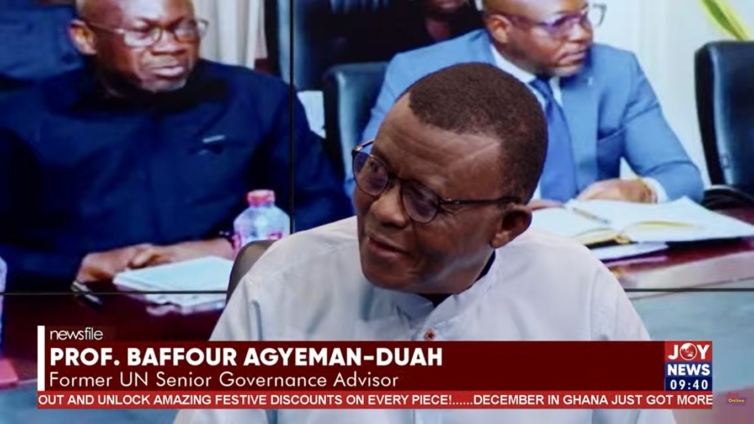
Ghana's constitutional landscape is currently a subject of intense national debate, following key proposals by the Constitution Review Committee (CRC). Chaired by Professor H. Kwasi Prempeh, the CRC submitted a summary of its findings to President John Dramani Mahama, recommending significant amendments to the 1992 Constitution. Among the most contentious recommendations are the reduction of the minimum age for presidential candidates from 40 to 30 years and the extension of the presidential term from four to five years. These proposals have sparked widespread discussion among legal experts, politicians, and the public, particularly in recent broadcasts on JoyNews' Newsfile.
The proposal to lower the presidential age limit has drawn mixed reactions. Prof Kwaku Agyeman-Duah, a former UN Senior Governance Advisor, vehemently opposes the change, arguing that the presidency demands a level of maturity, experience, and substantial exposure that most individuals at 30 years old have not yet attained. He cited the Ghanaian socio-economic context, where many complete their higher education later, leaving insufficient time to acquire the necessary depth of experience to govern effectively. Prof Agyeman-Duah further cautioned that an unrestrained interpretation of democracy, without expert guidance and mature judgment, could lead to societal chaos.
Conversely, Professor Prempeh, Chairman of the CRC, defended the recommendation, asserting that it aims to expand political participation and provide more opportunities for Ghana's youthful population. He highlighted historical precedents, noting that former President John Kufuor held significant leadership roles, including Deputy Minister, at just 21 years old under a constitutional framework that allowed such appointments. Chartered legal practitioner Victoria Bright echoed this support, stressing that the change aligns with global trends and Ghana's evolving demographics. She argued that if the electorate chooses a 30-year-old, it signifies their capability, and the large youth population deserves a voice in national leadership.
Another major point of contention is the CRC's proposal to extend the presidential term from four to five years. Victoria Bright, while supporting the lower age limit, opposed this extension, citing the current fragility of Ghana's institutions. She expressed concerns that a longer term could exacerbate existing governance and accountability challenges, especially given systemic corruption and the lack of consequences for public officials. Bright emphasized that Ghana’s political and legal institutions are not yet robust enough to effectively support an extended presidency, advocating for the retention of the four-year term for both MPs and the President.
Veteran Ghanaian statesman Dr Nyaho Nyaho-Tamakloe also strongly rejected the term extension, maintaining that two four-year terms are ample for any serious government to make its mark. He dismissed arguments for additional time as creating unnecessary opportunities for inefficiency and corruption. Dr Nyaho-Tamakloe further called for a review of constitutional provisions granting excessive immunity and lifelong benefits to public office holders, proposing their abolition to redirect resources to ordinary Ghanaians. He also advocated for reforms to strengthen accountability, including appointing ministers strictly from outside Parliament to ensure a clear separation of powers between the Executive and Legislature, and suggested reviewing the minimum age requirement for presidential candidates upward.
Nana Agyei Baffour Awuah, Vice Chair of Parliament’s Subsidiary Legislation Committee, deemed the five-year term proposal unnecessary. He questioned the rationale, arguing that presidents rarely complete all projects within their tenure regardless of term length. Instead, he stressed the importance of legal provisions and mechanisms that ensure continuity of national projects and policies across successive governments, rather than simply extending a president’s time in office. He noted that historical discussions during the Consultative Assembly and expert commissions had previously settled on a four-year term after careful evaluation.
Former Member of Parliament for Tamale Central, Inusah Fuseini, added to the opposition, arguing that Ghana’s four-year presidential term is sufficient for accountability. He cited former President John Dramani Mahama's political trajectory and performance as clear evidence that effective governance and significant achievements are possible within the existing framework. Fuseini also recalled former President John Agyekum Kufuor's 2009 suggestion for longer terms, based on examples like Singapore and Malaysia, but maintained that recent administrations have disproven the necessity of such extensions for policy delivery and governmental efficiency.
The CRC, while proposing these changes, maintains that its recommendations are aimed at strengthening institutions, enhancing policy continuity, deepening reforms, and improving overall governance stability, not at weakening democratic accountability. The full and final report, which will contain detailed reasoning and public consultation outcomes, is anticipated to be made public in January. As discussions continue, stakeholders are urged to approach the constitutional review process with integrity and a focus on the collective good of the nation, weighing the balance between stability and accountability in Ghana’s democratic framework.