Fuel Price War: Dangote Unleashes Firestorm, Accuses NMDPRA Boss of Lavish Spending & Demands Probe!
Billionaire Aliko Dangote has launched a scathing public attack on NMDPRA CEO Farouk Ahmed, alleging economic sabotage, including the purported spending of $5 million on his children's foreign education. This unprecedented confrontation also highlighted deep regulatory failures in Nigeria's petroleum sector, prompting calls for a thorough investigation by anti-corruption agencies.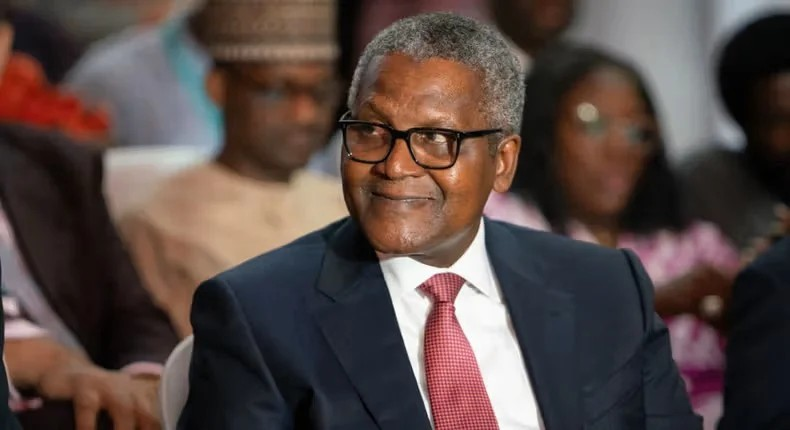
Billionaire businessman Aliko Dangote, President of Dangote Group, has launched a significant public attack against Farouk Ahmed, the Chief Executive of the Nigerian Midstream and Downstream Petroleum Regulatory Authority (NMDPRA), accusing him of economic sabotage and alleged financial impropriety. Speaking at press conferences at the Dangote Petroleum Refinery in Lekki, Lagos, Dangote called for a full investigation and public explanation into Ahmed's conduct, particularly regarding the education expenses of his children and the regulatory body's policies.
Dangote specifically alleged that Farouk Ahmed spent approximately $5 million on the secondary school education of his four children in Switzerland over a six-year period. He further claimed that one of Ahmed's children recently graduated from Harvard University, with tuition alone costing $150,000. Dangote questioned how a public servant could allegedly afford such expenses, stating that such figures are difficult to reconcile with a government income. He contrasted this with the struggles of many Nigerians to afford much lower school fees and emphasized that even private individuals would face tax scrutiny for such spending. Dangote, whose own children attended secondary school in Nigeria, reiterated that he was not calling for Ahmed’s removal but for transparency and accountability. He warned that if Ahmed denies the allegations, he would publish the tuition fees and take legal steps to compel the schools to disclose the payments made.
Beyond the personal accusations, Dangote used the platform to heavily criticize what he described as deep regulatory failures and entrenched interests within Nigeria's downstream petroleum sector. He accused powerful players and the NMDPRA leadership of allegedly colluding with international traders and oil importers to prioritize fuel imports over local refining, thereby frustrating domestic production and investment. Dangote highlighted that the volume of fuel imports allowed into Nigeria is 'unethical and against national interest' and warned against regulators also acting as traders. He disclosed that import licenses covering approximately 7.5 billion litres of Premium Motor Spirit (PMS) had reportedly been issued for the first quarter of 2026, despite significant domestic refining capacity. He noted that modular refineries are already struggling and on the brink of extinction due to the current policy environment and persistent issuance of import permits. He used a 'bakery analogy' to explain economic sabotage, likening it to selling bread at a loss in front of a local bakery to undermine it.
Dangote stressed the need for Nigeria to protect its strategic assets, including the Dangote Refinery, insisting it must continue running even at a loss due to its national importance. He announced that his refinery had reduced its gantry price for PMS to N699 per litre, assuring Nigerians that petrol would sell at no more than N740 per litre from Tuesday, December 16, starting in Lagos, with MRS filling stations being the first to reflect the new pricing. He also lowered the minimum purchase requirement from two million litres to 500,000 litres to enable more marketers, including members of the Independent Petroleum Marketers Association of Nigeria (IPMAN), to participate. He emphasized that the refinery was established primarily for the benefit of Nigerians, stating that those who continue importing despite local availability should be prepared to face consequences, as locally refined products are of better quality than some imported blended fuels.
Looking ahead, Dangote revealed plans to deploy Compressed Natural Gas (CNG) trucks and procure additional units if needed to sustain affordable pricing nationwide. He also disclosed intentions to list the refinery on the Nigerian Exchange, allowing Nigerians to own shares, with discussions ongoing with the Securities and Exchange Commission (SEC) for share purchases in naira and dividends in dollars. He stated that the refinery is driven more by legacy than profit, having invested $20 billion. Dangote accused NMDPRA of misrepresenting the refinery’s capacity by publishing offtake figures instead of actual production levels, suggesting that imports are deliberately encouraged to keep prices high. He also raised concerns about domestic refiners being forced to buy Nigerian crude at premiums of up to four dollars per barrel from international oil companies' trading arms and called for crude oil taxes to be assessed based on actual transaction values to prevent revenue losses. He mentioned that the refinery imports an average of 100 million barrels of crude oil annually from the United States, a figure expected to double with expansion, due to insufficient domestic supply, while also sourcing crude from Ghana and exporting jet fuel and gasoline to the US.
The NMDPRA had previously dismissed similar claims in July as a coordinated smear campaign. When contacted for a response to the latest allegations, NMDPRA spokesperson George Ene-Ita consistently responded with, “For now, no comment” or “No comment.” In response to these developments, the Socio-Economic Rights and Accountability Project (SERAP) formally called on Nigeria's anti-corruption agencies—the Code of Conduct Bureau (CCB), the Economic and Financial Crimes Commission (EFCC), and the Independent Corrupt Practices and other related offences Commission (ICPC)—to jointly and urgently investigate Farouk Ahmed. SERAP urged the agencies to summon Ahmed to explain the allegations regarding licensing and personal expenditures, emphasizing that such action would enhance transparency and accountability. SERAP also called on President Bola Tinubu's government to ensure the protection of Aliko Dangote as a whistleblower, consistent with Article 33 of the UN Convention against Corruption, to which Nigeria is a state party, citing his public interest disclosures.