Flashback: The Surprising History of Celebrity Grocery Runs 100 Years Ago
Step back in time to 1926 and discover the dramatic differences in grocery shopping compared to today. Before modern amenities like supermarkets, refrigerators, and pre-sliced bread, consumers navigated a world of counter service, wooden shopping lists, and essential food preservation techniques, revealing a stark contrast in everyday life.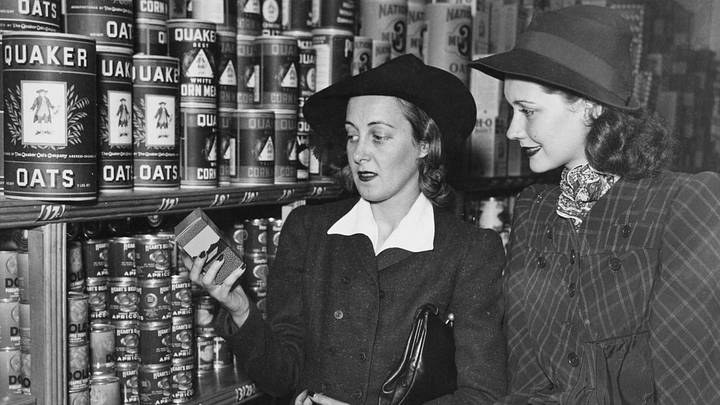
A century ago, the familiar phrase "best thing since sliced bread" held no meaning, as pre-sliced bread only became available in stores starting in 1928. Many modern conveniences we take for granted today, such as supermarkets, refrigerators, frozen foods, and plastic packaging, were either nonexistent or not yet commonplace. Products and shopping experiences were vastly different, with even simple shopping lists taking the form of wooden "reminder boards" with movable pegs. This article takes a journey back to 1926 to explore the distinct realities of grocery shopping before the advent of modern amenities.
Grocery lists in 1926 were a tangible necessity, unlike today's digital notes or reliance on memory. While some contemporary shoppers still prefer physical lists, a hundred years ago, jotting down items was standard practice. Shoppers might have used wooden pegged boards, distinct from the later metal versions of the 1950s, to keep track of their needs. For regulars, stores maintained personalized ledgers, recording past purchases to assist customers.
Counter service was a primary mode of shopping in 1926. While some grocery stores were beginning to introduce aisles where shoppers could pick out items themselves, it was more common to hand a clerk a list from behind the counter. The clerk would then retrieve the items from storage. Payments were often managed "on account," settled weekly or monthly, and early forms of home delivery for groceries were also available, mirroring aspects of today's advanced delivery services like Instacart or DoorDash.
The concept of large-scale "one-stop shop" supermarkets, like Walmart or Kroger, did not exist in 1926. Supermarkets only began to emerge in the 1930s and became mainstream much later in the 1950s. Consequently, shoppers had to make multiple stops to acquire all their goods, visiting specialized establishments such as the butcher for meat, the bakery for bread, the pharmacy for medication, and the fruit stand for fresh produce. Early exceptions like Piggly Wiggly, opened in 1916, offered a variety of items but were not yet the ubiquitous mega-stores of today.
Refrigerators, which now allow us to store perishables for extended periods, were not a common household item in 1926. Food was typically fresh and seasonal, necessitating more frequent grocery trips. Instead of frozen pineapple chunks, one would buy a fresh, in-season pineapple and consume it before it spoiled, or store it in an icebox. Preservation methods like self-canning, pickling vegetables, salting meats, or sun-dehydrating foods were essential. Icemen regularly delivered blocks of ice to keep iceboxes, which were insulated cabinets, cold. Milkmen delivered milk daily in glass bottles, as chemical preservatives for milk were not yet in widespread use.
Plastic packaging, which now dominates grocery store aisles, was virtually absent in 1926. The first fully synthetic plastic was invented in 1907, but it didn't become a household staple until the post-World War II economic boom of the 1950s. Therefore, items were packaged in paper, cardboard, metal cans, or glass. For instance, milk was delivered in glass bottles, as wax-coated paper milk cartons were only introduced in the 1930s.
Pre-sliced bread, a convenience many take for granted today, was not available in 1926. It wasn't until 1928 that Otto Frederick Rohwedder's invention of the bread slicing machine revolutionized bread consumption. Before this innovation, people either baked their own bread or bought whole loaves from a baker and sliced them by hand at home with a bread knife.
Regarding prices, while today's consumers often express concern over high grocery bills, the value and cost of items a century ago presented a different economic landscape. The shift in product availability, convenience, and preservation methods has fundamentally transformed not just what we buy, but also how much we pay for it.