Fierce Fight for Ghana's Anti-LGBTQ+ Bill: Politicians and Clergy Demand Immediate Action!
Ghana's Human Sexual Rights and Family Values Bill remains a central point of debate, with proponents like Sam Nartey George and Rev. Ntim Fordjour asserting its national priority and urging immediate passage. This contrasts with President John Dramani Mahama's view that while important, it is not among the country's most urgent concerns. The Ghana Catholic Bishops’ Conference emphasizes the integrated importance of moral values and economic development in national prosperity.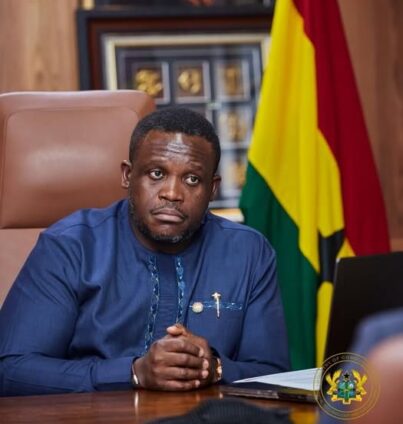
The Human Sexual Rights and Family Values Bill, widely known as the anti-LGBTQ+ bill, continues to be a contentious topic in Ghana, with key political figures and religious bodies offering differing views on its national priority status and pathway to passage. Despite suggestions that it is not among Ghana’s most urgent challenges, proponents of the legislation maintain its critical importance for the nation’s moral fabric and family values.
Sam Nartey George, the Minister for Communication, Digital Technology and Innovation and a principal sponsor of the bill, has firmly asserted that the controversial legislation remains a national priority. He argues that Ghana is capable of addressing multiple priorities simultaneously, emphasizing that efforts to improve infrastructure and social services, such as roads, hospitals, schools, and water, do not diminish the importance of upholding family values. Mr. George highlighted that his constituents in Ningo-Prampram reaffirmed their support for the bill during the 2024 parliamentary polls, evidenced by an increase in his vote margin from 69% to 74%. He also shared a personal anecdote, detailing how he assisted a father whose 21-year-old son was allegedly abducted and sodomized by a "gay lover," underscoring his belief in the bill's relevance to child protection and family values.
Adding to the advocacy for immediate passage, Rev. Ntim Fordjour, the Assin South MP and another key sponsor, has urged President John Dramani Mahama to prioritize and expedite the bill’s assent. Rev. Fordjour contends that any further call for national dialogue on the bill is unnecessary, as the debate has been exhaustively settled through extensive parliamentary processes, public hearings, and a Supreme Court ruling. He pointed out that the Supreme Court had ruled that no aspect of the bill violates Ghana’s constitution or any international human rights treaty obligations. Rev. Fordjour further noted the bill’s history of obstruction, including its unprecedented deletion from the order paper, and argued that renewed consultations would only allow external pressure groups, such as the United Nations Human Rights Council, to unduly influence the process. Citing a previous instance where President Mahama ordered the swift withdrawal of a bill seeking to remove the Special Prosecutor, Rev. Fordjour called on the President to issue a similar directive to Parliament to expedite the anti-LGBTQ+ bill’s passage, stressing that Parliament has already fast-tracked numerous other bills since January 2025.
However, President John Dramani Mahama has reportedly communicated a different stance. During a March 30 meeting with civil society organizations at the Jubilee House, and reiterated during an engagement with the World Affairs Council, the President stated that while the Human Sexual Rights and Family Values Bill is important, it does not rank among the country’s most pressing priorities at the moment. He underscored the administration's focus on basic needs such as education, healthcare, jobs, food, clothing, and shelter, a position echoed by government spokesperson Kachupusu.
Amidst this divergence, the Ghana Catholic Bishops’ Conference (GCBC), while having previously called for a national dialogue which Rev. Fordjour deems unnecessary, maintains a strong stance on the bill's importance. Represented by Rev. Fr. Michael Quaicoe, Director of Governance, Justice and Peace, the GCBC argues against treating moral values and economic development as competing priorities. He asserted that a truly prosperous nation is achieved by pursuing both economic excellence and upholding moral values concurrently, viewing national development as an integrated effort to improve both material conditions and societal values. The GCBC continues to strongly back the bill's passage, viewing moral values as central to Ghana’s development trajectory.
The Human Sexual Rights and Family Values Bill, having been reintroduced in the 9th Parliament after earlier efforts lapsed without presidential assent, continues to elicit strong reactions. It enjoys significant support from religious groups and some lawmakers but faces considerable criticism from human rights advocates and sections of the international community, making it a persistent point of national and international debate.