Explosive Reveal: Dan Loeb Exposes DOJ's Trump Threat Over Ulbricht's Freedom Bid!
Hedge fund manager Dan Loeb has revealed that the Department of Justice allegedly threatened President Donald Trump in January 2021, warning him against commuting Ross Ulbricht's sentence. This purported intervention resulted in Ulbricht serving four additional years before receiving a full pardon during Trump's second term, a promise that galvanized the "Free Ross" movement and significantly impacted the 2024 election by securing libertarian and crypto community votes. The incident highlights profound tensions between government authority, Bitcoin innovation, and criminal justice reform.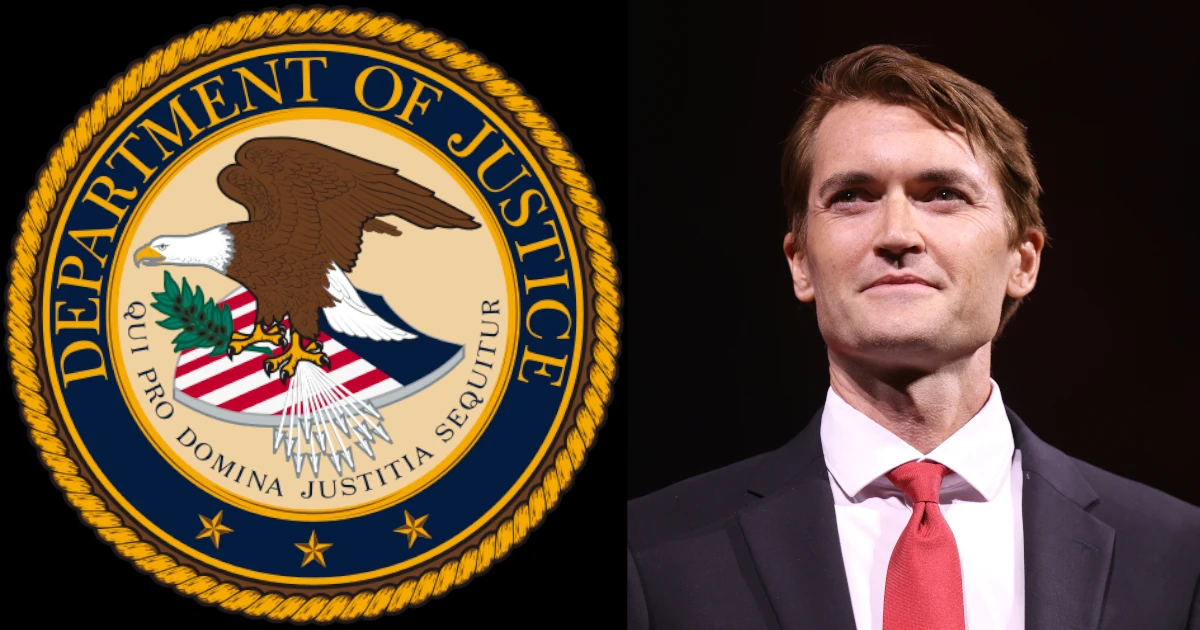
Hedge fund manager Dan Loeb has brought to light an extraordinary claim, asserting that the Department of Justice (DOJ) issued a direct threat to then-President Donald Trump in the waning hours of his first term in January 2021. According to Loeb, founder and CEO of Third Point LLC, the DOJ warned it would "go after" Trump if he proceeded with the commutation of Ross Ulbricht, the convicted founder of the Bitcoin-powered Silk Road online marketplace.
This alleged intervention reportedly led Trump to withdraw the commutation, condemning Ulbricht to serve an additional four years in prison. Ulbricht ultimately received a full and unconditional pardon in January 2025, during Trump’s second term. Loeb shared this revelation on the All-In Podcast, contextualizing it within his broader involvement in criminal justice reform and Ulbricht’s protracted clemency efforts. "On the last day of Trump’s 45th term, we were certain that he was going to get out," Loeb stated. "And the Justice Department, for whatever reason, said, ‘If you commute his sentence, we’re going to go after you,’ to the president. So he, as I understand, he withdrew the commutation."
The account marks the first public disclosure of such a direct and explicit threat from the DOJ to a sitting president concerning clemency powers during the final days of an administration. To date, this claim remains uncorroborated by independent sources, and no specific DOJ official has been publicly identified as having delivered the warning. The information is based solely on Loeb’s recollection, likely communicated through an advocacy network that included prominent crypto figures such as Riva Tez, conservative commentator Charlie Kirk, and then-White House counsel David Warrington.
In January 2021, Jeffrey A. Rosen served as Acting Attorney General, having taken the role after William Barr’s departure in late December 2020, with Richard Donoghue as Acting Deputy Attorney General. The Office of the Pardon Attorney (OPA), a DOJ unit responsible for reviewing clemency petitions and making recommendations, operated under their purview. However, presidents, including Trump, have frequently bypassed standard OPA processes for cases deemed politically sensitive. The alleged threat, as described by Loeb, appears to have extended far beyond typical DOJ advisory input on matters like sentence proportionality or enforcement priorities, representing an unprecedented escalation in executive-judicial tensions.
Ross Ulbricht had been serving a severe double life sentence plus 40 years since his 2015 conviction. His charges included operating a continuing criminal enterprise, narcotics distribution via the internet, money laundering, and hacking. It is crucial to note, contrary to widespread public misconceptions often fueled by mainstream media, that Ulbricht was never prosecuted on any charges related to murder-for-hire. The Silk Road platform, which facilitated transactions primarily using Bitcoin, was one of the earliest large-scale experiments in leveraging an alternative digital currency, making Ulbricht's case and its historical context foundational within the Bitcoin community. The reported pushback from the DOJ likely originated from institutional concerns about appearing lenient on significant drug trafficking and money laundering cases tied to the nascent Bitcoin economy.
The four-year delay resulting from the alleged DOJ intervention had profound consequences for Ulbricht and the broader movement advocating for his release. As Loeb detailed, Charlie Kirk subsequently assumed a leading role in the renewed clemency efforts, famously making Ulbricht's release his "only ask of the president." Kirk’s persistent advocacy transformed Ulbricht’s plight into a central promise made by Trump to both libertarians and the burgeoning crypto community during his 2024 presidential campaign. Trump fulfilled this commitment with a full and unconditional pardon early in his second term.
Ironically, the very delay caused by the alleged threat inadvertently strengthened the "Free Ross" movement. What began as an advocacy campaign for clemency, rooted in the belief that Ulbricht’s sentence was disproportionate and emblematic of government overreach within Bitcoin circles, evolved into a potent political force. The campaign effectively highlighted critical issues such as disproportionate sentencing, the importance of self-custody and privacy tools, and a widespread resistance to what many view as an unpopular and ineffective war on drugs. These themes resonate deeply with Bitcoin’s ethos of financial sovereignty and are of paramount importance to the libertarian voting bloc. The momentum generated by this movement, coupled with Trump’s public promise to pardon Ulbricht, is widely credited with securing Trump the decisive libertarian and crypto vote in 2024.
Loeb framed his personal involvement in Ulbricht’s case as an extension of his broader commitment to criminal justice reform, aligning it with his philanthropic endeavors in education and his concerns regarding opportunity and income inequality. He categorized clemency candidates into three groups: the wrongly convicted, the rehabilitated, and those who received disproportionately harsh sentences. Ulbricht, who admitted to wrongdoing on Silk Road while consistently denying the unsubstantiated murder-for-hire allegations, fit Loeb's criteria for the latter category.
This entire episode underscores the persistent tensions between traditional law enforcement, the innovative potential of Bitcoin, and the distinct libertarian culture prevalent within a significant segment of the U.S. public. Silk Road, as one of the earliest Bitcoin marketplaces, continues to serve as a pivotal reference point in ongoing debates surrounding decentralization, privacy, and the scope of regulatory oversight. Similar cases continue to capture the attention of the Bitcoin community, including those involving Bitcoin activist Ian Freeman, the developers of the Samourai Wallet privacy tool, and Roman Storm of Tornado Cash—all of whom face charges that many view as challenges to fundamental libertarian principles, the freedom of commerce, self-custody, and financial privacy tools.