Europe Ablaze: PM Sánchez Decries Climate Denial Amidst Raging Wildfires & Flailing EU Strategy
Spain is battling major wildfires amidst a new heatwave, with Prime Minister Sánchez condemning climate denialism and urging caution. The situation highlights Europe's struggle to implement its new wildfire prevention strategy, which faces hurdles like member state resistance and a historical focus on emergency response over sustained preventive measures. Experts warn that current policies are insufficient to tackle increasingly intense fire seasons.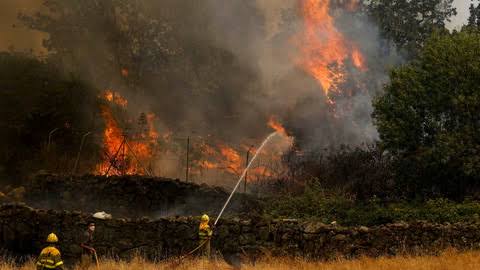
Spain is currently grappling with a severe wildfire season, with Prime Minister Pedro Sánchez acknowledging a glimmer of hope but cautioning that the immediate future remains challenging.
Sánchez vehemently criticized climate denialism, labeling it "the worst possible fuel for tackling the climate emergency," and emphasized the imperative for a cross-party deal on climate action.
The country faces soaring temperatures and a new heatwave forecast by the State Meteorological Agency (Aemet), which is expected to exacerbate firefighting difficulties and increase wildfire risks across vast regions.
Despite some improvements in major fires, vigilance remains crucial.
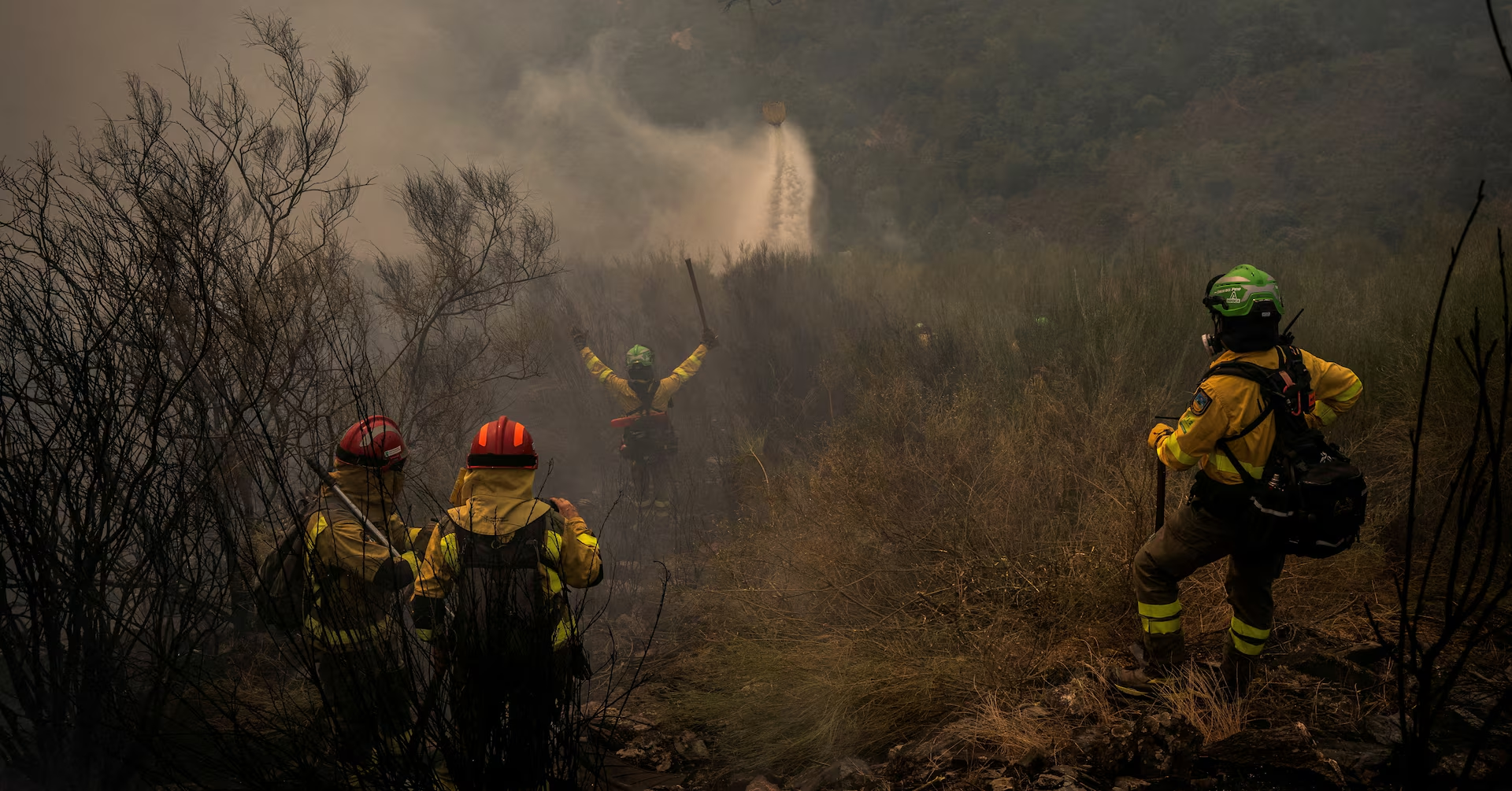
Fire crews are actively combating significant blazes in Ávila and those affecting San Martín de Valdeiglesias and Villa del Prado in the Madrid region, treating them as a single, merged fire front. These emergencies have profoundly impacted local communities, with nearly 100,000 people affected in Castile and León, the Community of Madrid, and Castile-La Mancha.
And over 63,000 residents have been evacuated, while another 35,000 are confined to their homes.
The Interior Minister Fernando Grande-Marlaska has reported that this is a "reasonably positive" results from recent night-time operations, with a focus on building upon ground progress.
He stressed the need to strengthen wildfire prevention and modernize Spain's aerial firefighting fleet.
In a sign of progress, Spain lifted evacuation orders in 13 municipalities across two wildfire-affected areas.
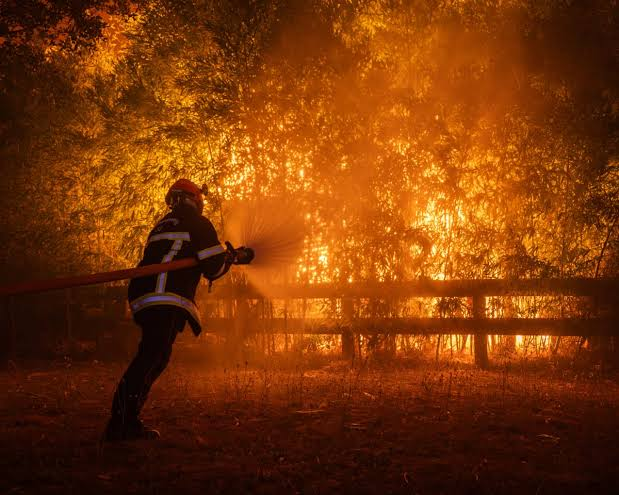
However, authorities remain on maximum alert due to an anticipated heat dome bringing extreme temperatures, very dry air, and stable atmospheric conditions.
These conditions threaten to reignite hotspots and impede firefighting efforts in affected areas like Ávila, Madrid, Toledo, and Castellón.
Investigators believe one significant fire originated from unauthorized use of heavy machinery in a forested area near Burgohondo, subsequently devastating parts of the Alberche Valley, Sierra de Gredos, Tierra de Pinares, Tiétar Valley, and the area around the El Burguillo reservoir.
Concurrently, Europe's wildfire challenges highlight a significant gap between ambition and reality in the European Commission's wildfire strategy.
Unveiled in March, the strategy aimed for a major shift from reactive firefighting to prioritizing prevention.
Yet, just four months later, Spain and France are enduring one of their worst wildfire seasons, raising questions about the timeliness and effectiveness of Brussels' approach.
The Commission had acknowledged that the EU was trapped in a costly cycle of extinguishing intense fires rather than preventing them, recognizing that decades of abandoned farmland, unmanaged forests, prolonged drought, and rising temperatures have created vast reserves of combustible vegetation.
The proposed preventive measures included paying farmers and foresters to thin forests, graze livestock, and restore abandoned land, along with restoring wetlands, peatlands, and floodplains to naturally retain moisture and slow fire spread.
However, many of these measures are long-term and cannot mitigate the immediate risks of fires currently raging.
The Environment Commissioner, Jessika Roswall indicated that no plans for new initiatives on forest management or additional indicators at this stage has been met, this is leading Europe to fall back on emergency tools like rescEU firefighting aircraft and cross-border teams.

A core weakness in Europe's wildfire policy is the tendency for political attention and funding to surge after catastrophes, while preventive landscape management requires sustained, years-long investment.
The Commission itself admitted that prevention had historically received less attention than emergency response.
Many proposals also depend on member states, as forest management, land-use planning, and civil protection are largely national responsibilities.
With preventive funding flows through EU agriculture funds and future budgets, with Brussels able to encourage and coordinate, but implementation resting with national governments, regional authorities, farmers, and landowners.
For years, a blocking minority in the Council, has been led by Sweden and Finland and often joined by France, has resisted greater EU involvement in forest policy, insisting on national competence for sustainable forest management.
France has notably stalled the Nature Restoration Law in 2024 and opposed Brussels gaining more influence over member states' forest management.
Similarly, several EU countries pushed back against the proposed Forest Monitoring Law in 2024.
The recommendation for EU countries on integrated wildfire risk management, adopted in June, remains non-binding, and the vision of wetlands and restored ecosystems as natural firebreaks will take years to materialize.
Martin Pigeon from the NGO Fern critically noted that the dramatic blazes in areas like Gironde's pine plantations were "absolutely foreseeable," with some areas burning for a second time, only to be replanted with pines.
He argued that the mainstream forestry industry's reliance on monoculture plantation-clearcut cycles burdens society with economic, climate, and health costs, while its influence has blocked meaningful EU regulation of forest management.
Climate scientists consistently warn of longer, more intense, and less predictable fire seasons in Europe, underscoring the Commission's own strategy's acceptance that emergency capacity alone is insufficient without more resilient forests and rural landscapes.
A Commission official privately conceded that forest management is "probably the best challenge that we need to do, to try to improve this situation for the incoming years."