Benue Blockade Crisis: Obi's Supporters Choose Peace Amidst High-Stakes Confrontation
The OK Movement, supporting the Peter Obi/Rabiu Kwankwaso ticket, explained its security personnel's restraint after Obi's convoy was allegedly blocked in Benue State. The movement condemned the disruption, called for an impartial investigation, and warned against political violence ahead of the 2027 elections, while reaffirming its commitment to peaceful democratic participation.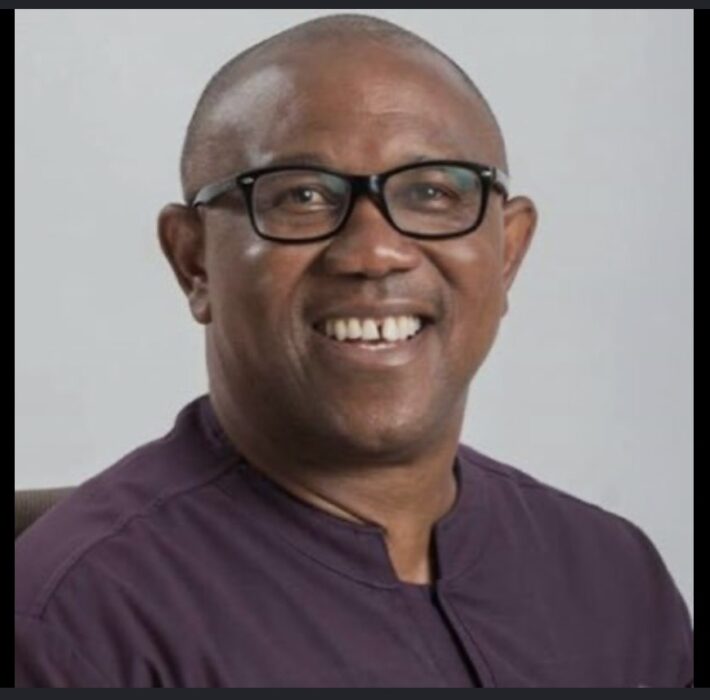
The OK Movement, a political platform dedicated to mobilizing support for the joint presidential ticket of Peter Obi of the Nigeria Democratic Congress (NDC) and his running mate, Dr. Rabiu Kwankwaso, has addressed the incident where Peter Obi's convoy was allegedly blocked during a visit to Benue State. John Ughulu, the director-general and founder of the movement, explained that the decision by its security personnel not to retaliate was a deliberate act of leadership aimed at preventing the situation from escalating into violence. This clarification was issued in a statement from Abuja.
Ughulu unequivocally stated that the restraint shown by the OK Movement's security team should not be misinterpreted as weakness, fear, or a lack of capacity. He underscored that choosing peace was a responsible decision, recognizing that Nigeria belongs to all citizens and political provocations should not lead to unnecessary confrontations. The movement, which encompasses supporters from the Obidient Movement, Kwankwasiyya, the New Nigeria People’s Party (NNPP), and the African Democratic Congress (ADC), strongly condemned the disruption of Obi's visit and urged for a thorough and impartial investigation into the matter.
The OK Movement leader further asserted Peter Obi's constitutional right, as a presidential candidate, to visit and engage politically in any part of Nigeria. Ughulu emphasized that no state government, political party, or individual possesses the authority to intimidate, harass, or obstruct a legitimate political movement through violence or thuggery. He stressed that elections should be won through ideas, competence, persuasion, and the will of the people, rather than intimidation or political thuggery.
Despite its commitment to peace, the movement issued a stern warning that it would not tolerate repeated testing or exploitation of its restraint. Ughulu affirmed that the OK Movement possesses the necessary capacity and organizational structures to protect its members and maintain order within legal limits. He warned against any further attempts to use political thuggery, intimidation, or state-sponsored violence to frustrate the legitimate activities of the OK Movement or any other political entity, stating, "This is not the Nigeria we want to build." The movement indicated its readiness to take lawful and necessary countermeasures if the safety of its leaders and members is threatened.
Ughulu also called upon security agencies to conduct a transparent and impartial investigation into the Benue incident, ensuring that anyone found responsible is held accountable under the law, irrespective of their political affiliation or position. He highlighted the critical importance of protecting constitutional rights, safety, and freedom for every political actor and citizen, especially as the nation approaches the 2027 general elections. The statement also urged the international community, diplomatic missions, election observers, and democracy monitoring organizations to actively monitor incidents of political violence and intimidation during this period.
The incident itself occurred two days prior to the OK Movement's statement, with Peter Obi and the Benue State Government trading accusations. Obi had intended to visit Yelwata to condole with families of victims of a deadly attack. His convoy was reportedly stopped on Gboko Road near the Nigerian Air Force Base and Makurdi Airport by youths chanting, "We don’t want Peter Obi," which disrupted traffic and forced his return to Abuja. Obi accused suspected hired thugs, allegedly acting on the instructions of a government aide, of blocking his movement. In contrast, the Benue State Government denied involvement, claiming Obi failed to follow required protocol by formally notifying the government and accused him of attempting to create political controversy. The Benue State Police Command, however, confirmed awareness of Obi’s visit, deployed security, and stated it was investigating the circumstances of the convoy’s stoppage and the identities of those responsible.
Ultimately, the OK Movement reiterated its unwavering commitment to peaceful democratic participation, emphasizing that its dedication to peace should never be mistaken for surrender. The movement declared its resolve to defend democracy, protect its people within the bounds of the law, resist intimidation, and never accept political violence as a substitute for democracy. It concluded by holding the federal government and all relevant authorities accountable for safeguarding the constitutional rights, safety, and freedom of all political actors and citizens in Nigeria.