End of an Era? Buterin Declares Diminishing Power in Ethereum's Future.
Ethereum co-founder Vitalik Buterin details his intentional reduction of influence within the Ethereum Foundation, aiming for a smaller, more decentralized entity. He also critiques the industry's focus on speed over core properties, emphasizing the EF's shift to prioritize longevity, security, and fundamental network integrity.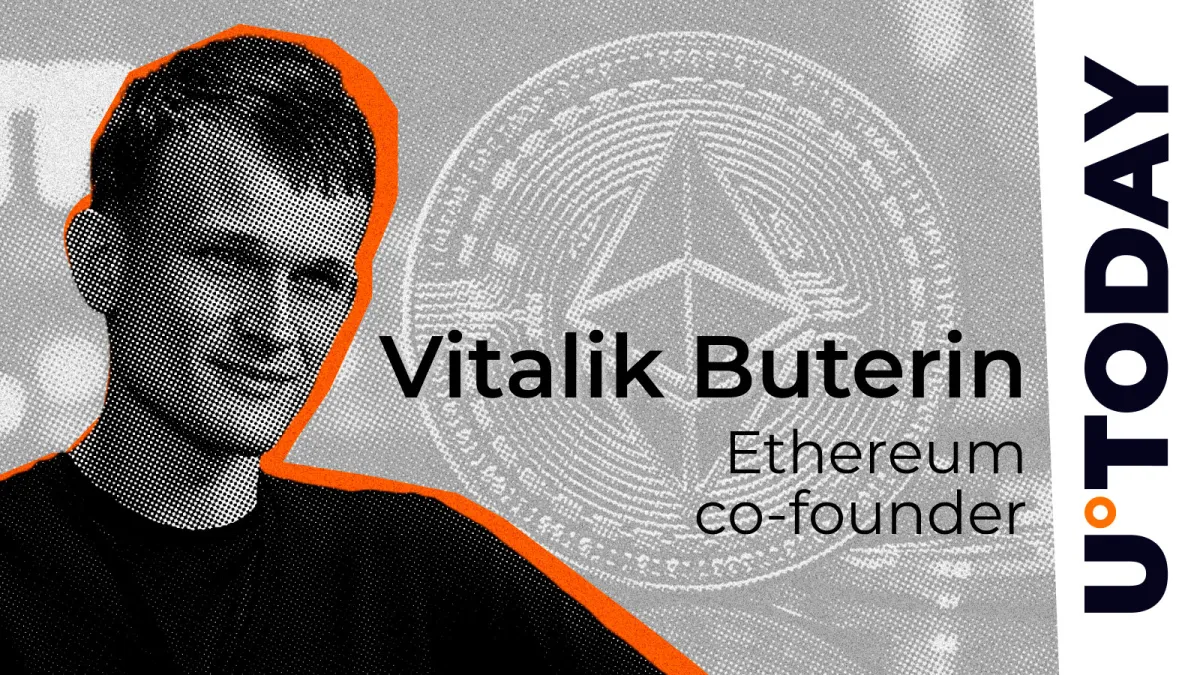
Ethereum co-founder Vitalik Buterin has outlined a deliberate strategy for the reduction of his influence within the Ethereum Foundation (EF), by design.
He envisions a future where the EF operates as a "smaller ship" and has clarified that the organization is not aspiring to be the absolute core of the broader Ethereum ecosystem.
Buterin emphasized that the EF was never meant to be an "eternal steward" or the definitive center of the network, reinforcing a vision of decentralized leadership and operation.
Buterin detailed that the foundation's board is currently undergoing an expansion process.
He explicitly stated that he holds "no extra special powers on the board that the other board members do not," and further stressed, "The board is in the process of expanding, and my own power within the org will continue to decrease, which is honestly what I want."

This move is designed to ensure a more distributed and less centralized governance structure for the foundation.
Addressing the EF's operational strategy, he highlighted that the organization operates with limited resources, possessing roughly 0.16% of the total ETH supply.
This proportion is substantially less than the holdings of foundations supporting many competing layer-1 blockchains.
To ensure its long-term viability, the EF is in the process of restructuring its long-term treasury management.
He explained this strategic shift as choosing to use its remaining resources to pursue "longevity over breadth," which specifically means the foundation will "sell less ETH."

Moreover, he also notably critiqued the industry's prevalent obsession with chasing maximum throughput, a goal that he suggests often comes at the expense of crucial attributes like decentralization and security.
He argued against the idea of achieving impressive speeds, such as 250-millisecond latency and one million transactions per second (TPS), if it requires sacrificing core network properties.
Buterin warned that "Being as fast and as scalable as possible, and only a small epsilon more decentralized than the others, is a route to mediocrity, and if we try it we will lose."
Instead, Buterin insisted that "Ethereum must be impressive" in more fundamental and robust ways.
He identified key goals for the network, including the development of provably bug-free code, ensuring available chain consensus, and prioritizing intermediary minimization.
These objectives underscore a commitment to foundational integrity and resilience over superficial performance metrics, aligning with a long-term vision for a secure and decentralized Ethereum.