Egusi in Orbit: How a Nigerian Seed is Helping Scientists Plan for Food in Space.
Our beloved egusi made its way to space aboard SpaceX, in hopes of feeding the future.
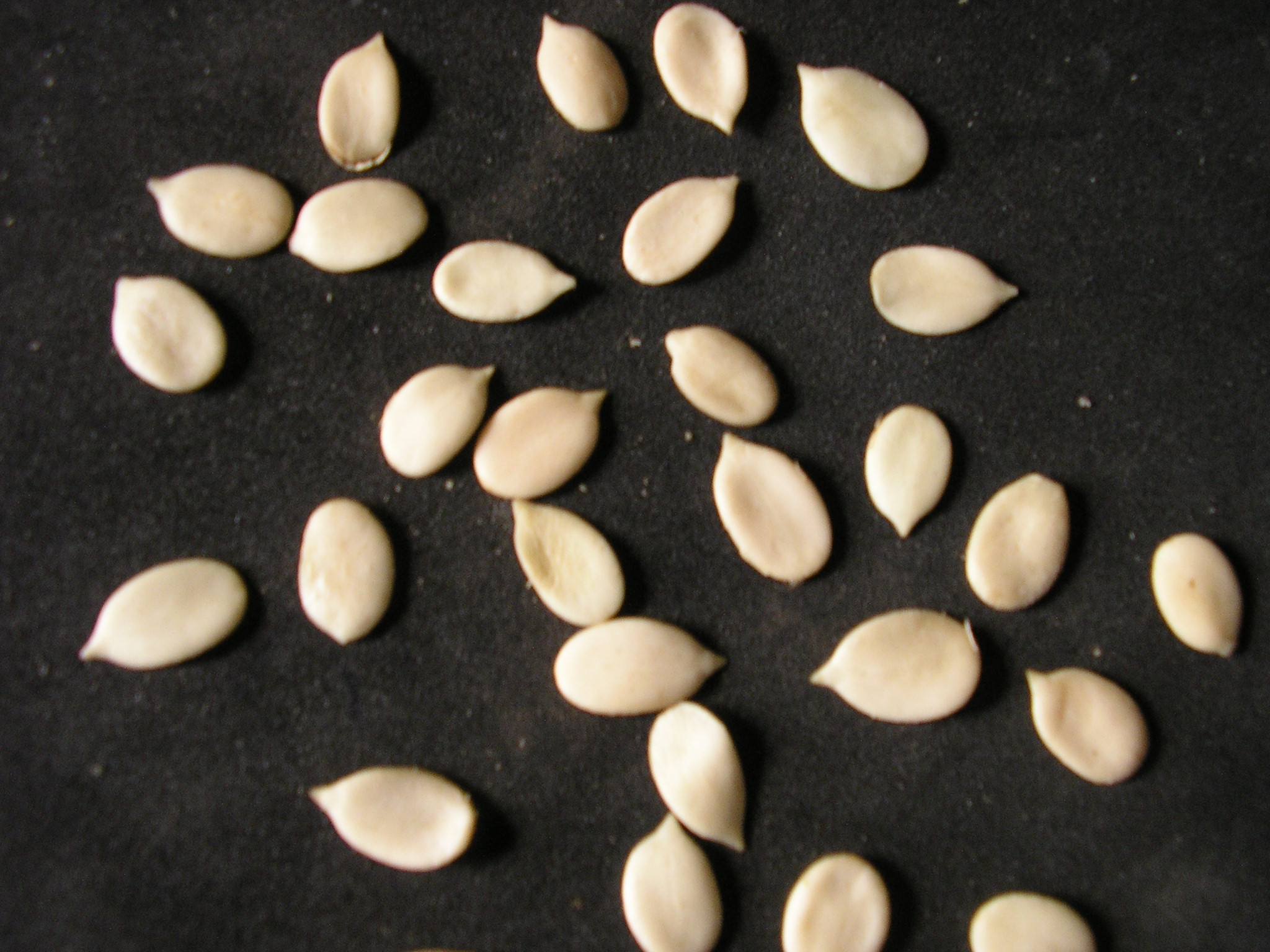
When the egusi seed, a small hard melon seed prized in West African kitchens—was launched into orbit aboard a SpaceX capsule in August 2025, it carried with it more than the hopes of one entrepreneur. It carried a culture, a cuisine, and a vision for how humanity might one day nourish itself on the Moon or Mars.
For seven days, egusi seeds orbited the Earth, tucked inside test tubes aboard the Crew-11 space capsule that lifted off from NASA’s Kennedy Space Center in Florida. Upon their return, they were distributed to research institutions for further analysis. Their brief voyage into microgravity marked a small, but symbolically significant, moment in the evolution of space agriculture.
“The goal is that in the next couple of decades, when people are living on the Moon, on Mars, and they're looking at growing food, foods that are native to Africa would be part of that,” said Temidayo Oniosun, the Nigerian space entrepreneur who selected the seeds. “So even in 50 years' time, if Africans are living on the Moon, we want them to be growing and planting egusi.”
Egusi, often ground into a thick paste and cooked with leafy greens, meats, and spices—is a staple across Nigeria and much of West Africa. In many homes, it’s more than just food. It’s tradition, identity, memory. The dish is served at celebrations, during family gatherings, and on ordinary evenings, steaming in bowls beside pounded yam or rice.
But what does egusi have to do with space travel?
Beyond Freeze-Dried Fare

For decades, space cuisine has been dominated by freeze-dried meals, nutrient bars, and pouches of liquefied food. While these are engineered for convenience and shelf life, they leave much to be desired in terms of taste, texture, and psychological comfort. For astronauts on long-duration missions, think months on the International Space Station, or years en route to Mars—the monotony of prepackaged meals is more than a culinary inconvenience. It’s a health risk.
This is where fresh, culturally relevant crops come in.
“Being able to grow their own, let's say, lettuce, tomatoes, or melons in space, is not only important for nutrition, for their health, but also it has psychological effects when you eat something that is fresh versus something that is processed,” saidDr. Wagner Vendrame, a scientist at the University of Florida and one of the researchers on the egusi mission.
Space-grown crops also promise autonomy. As missions stretch farther from Earth, resupplying food becomes logistically complex and costly. Cultivating plants onboard would allow astronauts to grow what they eat—and possibly recycle resources like water and carbon dioxide in more sustainable ways.
Yet, choosing which crops to send into space is no small feat. The plants must be compact, fast-growing, high in nutrients, and amenable to controlled environments. That’s why researchers are experimenting with a variety of seeds from across the globe. The recent launch included heritage seeds from Costa Rica, Guatemala, Armenia, and Pakistan, each selected for their nutritional value and cultural resonance.
Egusi stands out because of its adaptability. Though it is most famous as a soup ingredient, the seeds themselves are rich in protein and fat—making them a potentially valuable staple for off-world colonies.
The Cultural Orbit

There is, of course, a deeper story here. For Oniosun, who founded the space research and intelligence company Space in Africa, the selection of egusi was as much about representation as it was about science.
“Everybody in Nigeria eats egusi, and even other people in some West African countries and Africans in the diaspora, so this is something they could identify with. Egusi is the seed that tells our story.” Oniosun said.
We talk a lot about space as a frontier of science and innovation. But what people eat in space will also shape how they feel about who they are and where they come from.
In that light, the seed's journey becomes a quiet act of cultural preservation; an effort to ensure that African food traditions are not left behind as humanity looks outward.

Seeds of the Future
Now that the egusi seeds are back on Earth, researchers will begin the slow, meticulous process of studying them. First, they will be propagated in vitro, meaning grown in lab environments, to assess any genetic or physiological changes caused by exposure to microgravity and cosmic radiation.
“We want to understand if the seeds are still viable, if their germination rates have changed, and if the plants that grow from them still carry the same nutritional value,” said Vendrame. The ultimate question is whether these seeds can thrive in off-world conditions—and, if not, how they might be modified to do so.
This kind of research isn't unprecedented. Lettuce, radishes, wheat, and even mustard have been grown in microgravity. In 2015, astronauts aboard the ISS ate their first space-grown salad. But the inclusion of new crops like egusi represents a new phase, one that considers not just calories and proteins; but the satisfaction from a hearty meal.
From Farm to Mars
The future of food in space could look surprisingly familiar. In small bioreactors aboard spacecraft, we may see miniature farms sprouting African greens, South Asian spices, or Latin American tubers. Tiny kitchens where astronauts fry egusi paste or simmer lentils in curry.
But beyond the novelty lies a deeper implication: If we are to make other planets habitable, we must also make them feel like home. And that begins with the most elemental of comforts; a meal that reminds us who we are.
In this sense, the egusi seed’s orbital journey is both scientific experiment and cultural statement. It suggests a future in which the Moon may host not just science labs, but soul food; where Martian colonies grow crops that speak the languages of Earth’s many kitchens.
It’s easy to marvel at the grand spectacle of rockets and rovers. But in the quiet revolution of a seed in orbit, we glimpse something more intimate: the human desire to eat well, to eat meaningfully, and to bring a piece of our world with us, wherever we go next.
Image Credits: Unsplash