Dell Philanthropy Powers AI Medical Revolution with $750M Gift to UT
Billionaires Michael and Susan Dell have made a transformative $750 million gift to the University of Texas at Austin, aiming to significantly advance medical research and enhance patient care through the strategic integration of artificial intelligence. This monumental donation is earmarked for the development of the UT Dell Medical Center, a state-of-the-art facility projected to open in 2030. Envisioned as the centerpiece of a new 300-plus-acre advanced research campus, the university plans to break ground this fall on what leaders are calling the country’s first “AI-native” hospital.
This latest contribution solidifies the Dells' philanthropic legacy, making them the first University of Texas donors to surpass $1 billion in total giving to the system. Their two decades of unwavering support have previously bolstered computer science education, the medical school, and provided crucial scholarships for students facing significant financial hardship. Michael Dell, founder and CEO of Dell Technologies with an estimated net worth of $170 billion, expressed his deep personal connection to Texas, stating, “I was born in Texas. My wife was born in Texas. This is our home.” His commitment stems from a desire to fortify the region’s health system, foster innovation, and support the growth and stability of Central Texas, an area that has seen its population nearly double.
The Dells’ $750 million gift stands as one of the largest contributions ever made in higher education philanthropy. It joins a distinguished list of recent megagifts, including Phil Knight’s $2 billion pledge to Oregon Health & Science University’s cancer center and Michael Bloomberg’s $1.8 billion commitment to cover tuition for Johns Hopkins University medical students. Such substantial donations are increasingly vital at a time when private support for higher education is becoming more concentrated, with nearly 90% of the record $78 billion raised last year coming from just 2% of donors.
Dr. Claudia Lucchinetti, dean of Dell Medical School and senior vice president for medical affairs, highlights the extraordinary opportunity presented by the UT Dell Medical Center. Unlike existing hospitals that retroactively integrate new technologies, this initiative allows for the seamless, integrated application of artificial intelligence from its very inception. This proactive approach aims to create a healthcare environment where technology supports, rather than detracts from, the patient-doctor relationship, making care “feel simpler and more human.”
The planned facility will leverage “ambient” AI to transform the hospital into an “intelligent member of the care team,” capable of tasks such as automated note-taking, thereby freeing clinicians to focus more directly on patient interaction. Dr. Lucchinetti also championed AI’s potential to identify subtle biometric patterns and early signs of cancer before they become outwardly apparent. The overarching goal is a paradigm shift from a reactive and fragmented health system to one that is predictive, preventative, and ultimately more seamless. Additionally, the center will collaborate with the University of Texas MD Anderson Cancer Center in Houston to ensure access to top specialists for patients with complex conditions.
Beyond the immediate scope of the medical center, the Dells’ gift will also extend support to undergraduate scholarships, student housing initiatives, and the University of Texas’s Texas Advanced Computing Center. The latter is a critical hub where officials are currently developing the nation’s largest academic supercomputer, featuring advanced AI infrastructure provided by Dell Technologies.
Michael Dell has consistently advocated for the responsible and ethical application of AI in healthcare. In a previous convocation address, he urged medical school graduates to ensure AI models align with human ethics and promote equitable health outcomes. He firmly believes that AI will be instrumental in augmenting caregiving, facilitating more precise treatments, accelerating scientific discoveries, and expediting the translation of these findings into real-world medical practices. His vision is centered on harnessing technology to enable humans to reach their full potential, emphasizing the collaborative effort required to achieve this responsibly.
The impact of this donation extends to the broader landscape of higher education giving. Associate Dean for Research at Rutgers University, Marybeth Gasman, expressed optimism that such a high-profile gift to a public institution will inspire further donations, especially as public funding for higher education continues to decline amidst politicized attacks. Historically, significant individual contributions have often catalyzed increased giving, a trend that UT-Austin officials are certainly hoping to replicate as the Dells’ gift inaugurates a broader 10-year campaign to raise $10 billion for the university.
The Dells' philanthropic endeavors also include a substantial $6.25 billion pledge to fund
Recommended Articles

You may also like...
The AI Tool Too Dangerous to Release Has Already Been Accessed. Anthropic Probably Didn't See It Coming

An unauthorised group has reportedly gained access to Mythos, Anthropic's exclusive enterprise cybersecurity AI tool. He...
Nigeria’s Oil Revenue Is Rising—But Who Is Really Benefiting?

Nigeria is earning more from oil due to Middle East geopolitical tensions pushing global prices higher but rising living...
Dangote Refinery Expansion: Boosting Nigeria’s Industrial Future

Nigeria’s Dangote Refinery expansion into petrochemicals is set to cut imports, boost local production of plastics and d...
Google Is Betting on Nigerian Startups Again, And That Bet Keeps Paying Off

Four Nigerian startups secure spots in Google’s highly competitive Accelerator Africa program, reinforcing the country’s...
IBF Champ Hitchins Abandons Title, Eyes Welterweight Glory!
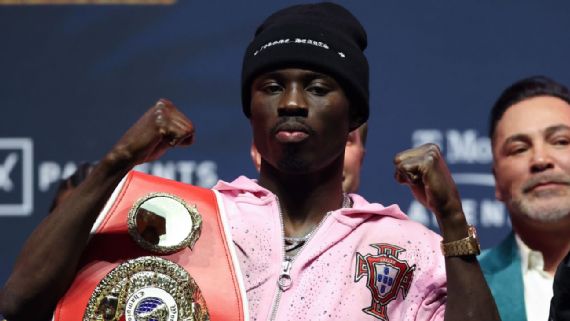
IBF junior welterweight champion Richardson Hitchins has relinquished his title to move up to the 147-pound welterweight...
Boxing Shockwave: Okolie's Adverse Drug Test Rocks Yoka Clash!

British heavyweight Lawrence Okolie's scheduled fight against Tony Yoka in Paris has been cancelled after he failed a VA...
Devil Wears Prada 2 Shocker: Hathaway Demands Inclusion, Sweeney's Cameo Cut!

The Indian SUV market sees compact SUVs leading sales in FY2025, with Tata Punch topping the charts. Maruti Brezza and F...
Luis Fonsi & Feid Soar to #1 with 'Cambiaré,' Celebrating Chart Domination!

Luis Fonsi and Feid's collaboration, “Cambiaré,” has ascended to No. 1 on Billboard’s Latin Airplay chart, marking a sig...