Dangote Refinery Rises to the Occasion, Dominates Nigeria's Petrol Supply Amidst NNPC Shutdowns
Nigeria's domestic refining sector saw a significant boost in August 2026, primarily driven by the Dangote refinery's robust output and impressive capacity utilization. This led to increased crude oil intake and a notable rise in domestic petrol supply, diminishing reliance on imports, while state-owned refineries remained inactive.
Nigeria's domestic refining sector demonstrated a marked increase in crude oil intake and petrol supply during August 2026, a development primarily propelled by the exceptional performance of the Dangote Petroleum Refinery.
This positive shift occurred despite the continued non-operational status of the country’s three major state-owned refineries.
These insights are central to the latest Midstream and Downstream Statistics for August 2026, released by the Nigerian Midstream and Downstream Petroleum Regulatory Authority (NMDPRA).
The statistical report detailed a significant rise in crude oil receipts by domestic refineries, increasing by 17 per cent from 585,000 barrels per day (bpd) in July to 683,000 bpd in August.
This surge directly contributed to a profound increase in domestic petrol receipts and a corresponding decline in the nation's reliance on imported petrol.
The average daily Premium Motor Spirit (PMS) receipts witnessed an 11 per cent increase, climbing from 45.5 million litres per day in July to 50.5 million litres per day in August.
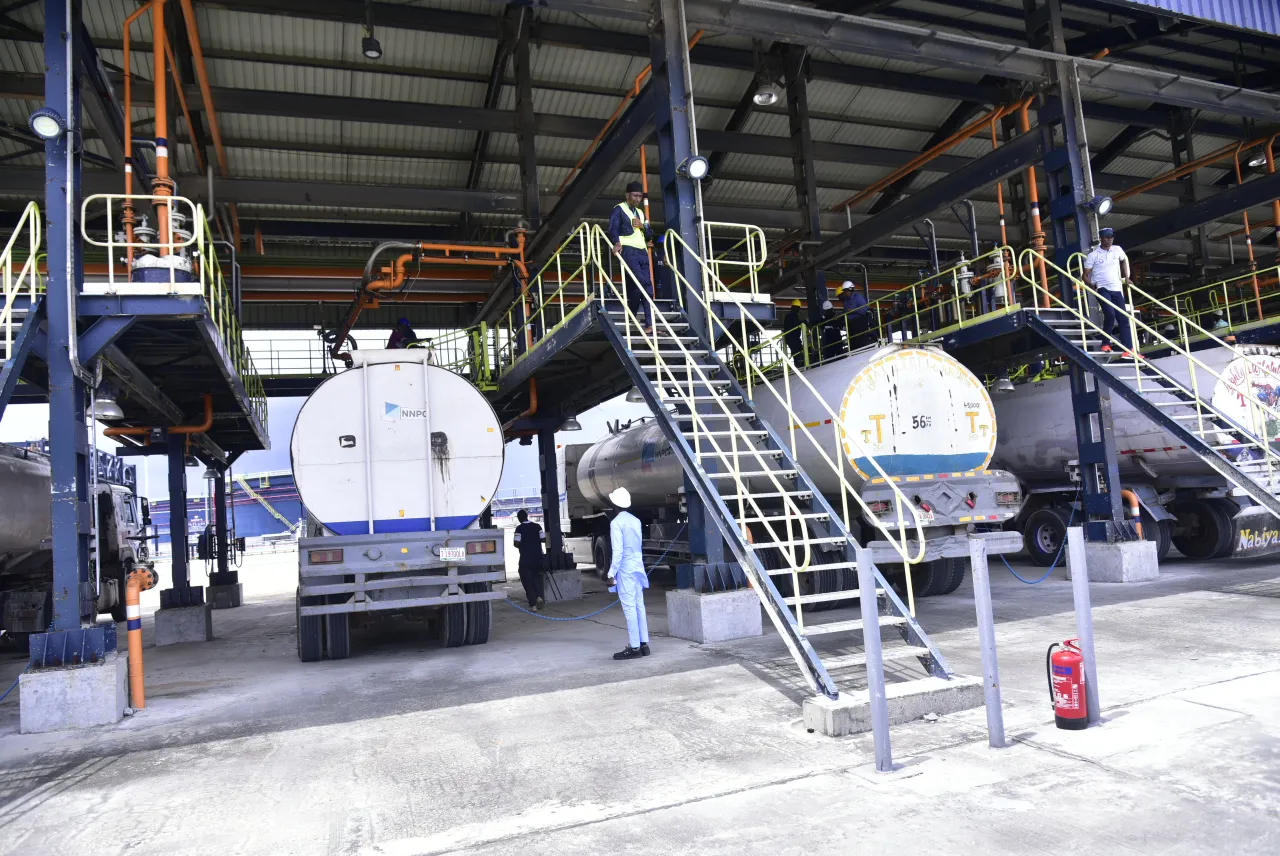
Domestically sourced PMS receipts accounted for the majority of this growth, soaring by 39 per cent, from 25.8 million litres per day to 35.9 million litres per day.
In a contrasting but related trend, PMS imports experienced a 26 per cent reduction, dropping from 19.7 million litres per day in July to 14.6 million litres per day in August, signaling a clear shift towards expanding local refining capacity.
According to NMDPRA report data, the Dangote Petroleum Refinery was highlighted as a primary driver of this increased output, recording an average capacity utilization of 105.21 per cent during the period.
The refinery's production figures were impressive, averaging 41.94 million litres of PMS per day, alongside 18.01 million litres of Automotive Gas Oil (AGO) and 24.48 million litres of aviation turbine kerosene (ATK).
Its daily domestic receipts included 35.87 million litres of PMS, 12.37 million litres of AGO, and 3.07 million litres of ATK.
Beyond domestic supply, the refinery also exported substantial volumes, including 9.73 million litres of PMS, 8.75 million litres of AGO, and 21.30 million litres of ATK per day.
As of August 31, the refinery maintained robust closing stocks, with approximately 360.4 million litres of PMS, 137.2 million litres of AGO, and 133.3 million litres of ATK.
While the Dangote refinery operated above its stated capacity, the NMDPRA report confirmed that all three Nigerian National Petroleum Company Limited (NNPCL) refineries—the Port Harcourt Refining Company (PHRC), Warri Refining and Petrochemicals Company (WRPC), and Kaduna Refining and Petrochemicals Company (KRPC)—were listed with a production status of “Not producing.”

This continued inactivity of state-owned facilities stands in stark contrast to the increasing output from private and modular refineries.
The NMDPRA data also noted production from other modular refineries during the month, with WalterSmith Refinery achieving an average capacity utilization of 64.77 per cent and Edo Refinery recording 90.43 per cent.
However, the increase in domestic petrol supply was not uniformly replicated across all petroleum products. Average daily AGO receipts saw a significant decline of 39 per cent, from 23.6 million litres in July to 14.5 million litres in August.
The domestic AGO receipts decreased by 16 per cent, while AGO imports plunged by 84 per cent, from 7.9 million litres to 1.3 million litres per day.
That Liquefied Petroleum Gas (LPG) receipts also fell by 19 per cent to 4.3 kilotonnes per day, although LPG imports increased by 44 per cent to 1.3 kilotonnes per day.

In a more positive trend, domestic gas supply to the sector experienced a marginal increase of 4 per cent, rising from 4.723 billion cubic feet per day in July to 4.930 billion cubic feet per day in August.
Regarding stock sufficiency, PMS reserves stood at 22.9 days, a slight improvement from 22.4 days in July. AGO stock sufficiency also increased, moving from 46.5 days to 51.6 days.
The NMDPRA clarified that its consumption figures are based on the volumes of products trucked into the domestic market.