Cuts That Heal: The Complex Legacy of Yoruba Scarification Medicine
An intimate look into gbéré, the Yoruba healing scarification practice that blended medicine, spirituality, and survival—exploring why it existed, what it meant, and why it is fading today.
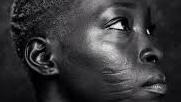
Did you know that the Yorubas had a healing tradition where an incision is made into your skin, filled with herbal paste amidst incantations? I didn’t know, either.
Imagine a world where your childhood doctor's visits involved intentional cuts on your skin, filled with medicinal paste, designed to protect you from everything from measles to literal evil spirits.
No anesthesia, just razor blades, traditional knowledge passed down through generations, and parents who genuinely believed they were giving you the best chance at survival.
This was the reality for many Yoruba children in Nigeria. These are not the tribal marks you might have seen in photos or documentaries, the ones that identify which family or town someone belongs to.
We are talking about healing scarifications, known asgbéréin Yoruba, and they tell a much different story about medicine, spirituality, and what people will do to keep their children alive.
More Than Just Marks
Healing scarifications are deliberate incisions made on the skin, often when you are literally too young to remember getting them. Unlike tribal identification marks that are placed prominently on the face, these healing cuts could be anywhere on your body: your chest, your back, your legs, even your forehead.
They are usually smaller, sometimes hidden under clothes, and each one served a specific medical or spiritual purpose.
The procedure itself is pretty straightforward. Practitioners would use razor blades or traditional sharp knives to create small cuts in the skin. Then comes the interesting part: they would rub black paste or native dye, often made from ground charcoal mixed with medicinal herbs into the fresh wounds.
The paste was designed to keep the skin from healing too quickly, allowing the medicine to properly absorb into your system while creating those permanent raised scars.
And the reasons for doing this are actually pretty diverse. Some cuts were like early vaccines, meant to inoculate kids against diseases like measles, pneumonia, and convulsions. Others were preventive medicine like literal snakebite protection achieved through strategic cuts treated with anti-venom herbs.
If you had chronic migraines, cuts on the forehead were the traditional solution.
Then there is the spiritual dimension that honestly hits different. In Yoruba culture, there is this concept of abiku — children who are believed to be spirits that keep dying and being reborn, basically trolling their parents with repeated grief.
Families who lost multiple children would use scarification as a way to "anchor" the next child to this world, marking them in a way that supposedly prevented the spirit from bouncing back to the spirit realm. Whether you believe in the supernatural aspect or not, you can't deny the desperation and love behind parents trying anything to keep their babies alive.
The Cultural Weight
These marks were not just random medical interventions. They represented a whole philosophy about health and identity. In traditional Yoruba thought, your outer body reflects your inner spirit.
Culture
Read Between the Lines of African Society
Your Gateway to Africa's Untold Cultural Narratives.
The visible marks were proof that you had been protected, treated, fortified against the dangers of the physical and spiritual worlds. It was preventive care and insurance policy rolled into one, written directly onto your skin.
This was gbéré and it was part of a larger system of traditional medicine that had its own logic, its own practitioners, and its own track record of keeping communities alive long before Western medicine showed up with its needles and pills.
The Uncomfortable Present
However, there is a reason this practice is fading, and it is not just because of "Western influence" erasing culture. The health risks are genuinely serious.
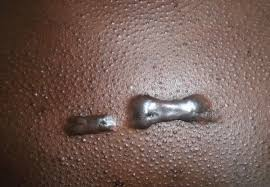
Non-sterile razor blades can transmit HIV/AIDS, Hepatitis B, and other blood-borne infections. Some people develop keloids and it can be painful or disfiguring.
States like Oyo and Ekiti in Nigeria have actually passed laws prohibiting scarification, classifying it as child abuse.

The phrase "harmful tradition" gets thrown around a lot in these discussions, and honestly, it is complicated. Because calling something harmful does not erase why it existed in the first place.
The practice is declining rapidly. Modernization, access to hospitals, education about infection risks are factors which means fewer parents are choosing scarification for their kids. But for those who grew up with these marks, they carry a complex legacy.
Some view them with pride as connections to their heritage. Others see them as reminders of painful, unnecessary procedures. Many feel both things at once.
What Gets Remembered
Understanding Yoruba healing scarifications means sitting with contradictions. It means recognizing that people used the best tools they had to protect their children, even when those tools came with serious risks.
It means acknowledging that traditional knowledge systems developed real medical interventions while also accepting that modern medicine has legitimately safer alternatives.
These marks are fading from bodies but they are part of Yoruba history, an evidence of how communities survived, adapted, and tried to heal themselves with what they knew. That is worth remembering, even as the practice itself disappears.