Chowdeck's Legal Showdown: Will Price Transparency Reshape Nigeria's Food Delivery?
A lawsuit filed against Chowdeck before the Competition and Consumer Protection Tribunal alleges undisclosed price markups and misleading practices in Nigeria's food delivery sector. The case seeks to compel pricing transparency and could set a significant precedent for the entire industry, which commonly sees price discrepancies between in-store and platform listings.
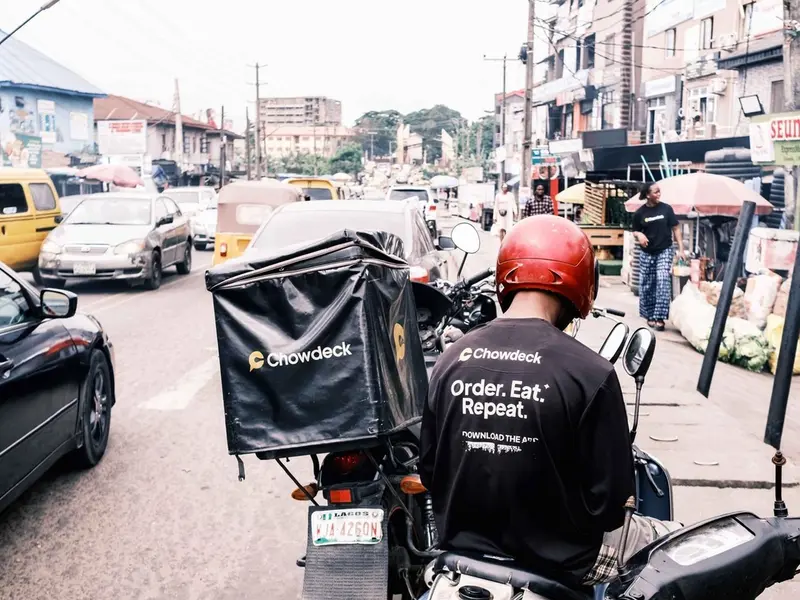
A significant lawsuit has been filed before the Competition and Consumer Protection Tribunal in Abuja, with potential far-reaching implications for Nigeria’s rapidly expanding eCommerce and food delivery sectors. Instituted by Dolapo Adedeji against Chowdeck, one of Nigeria’s leading quick commerce platforms, the suit alleges misrepresentation of the true cost of meals purchased through its platform.
According to the claimant, Chowdeck purportedly inflates the base price of food items without transparently disclosing this markup, presenting only delivery and service charges as additional consumer costs. Adedeji's claims stem from an instance where, aware of a restaurant’s physical location price, they noticed a significantly higher price for the same meal on the Chowdeck platform.
Initially, the claimant assumed the difference was due to a larger portion size or enhanced quality. However, upon receiving the order, the meal was found to be identical in size, quality, and packaging to the in-store offering.
Further investigation by the claimant with the vendor allegedly revealed that Chowdeck exercises control over pricing on its platform, contradicting the company's representation that restaurants set their own prices. This alleged control resulted in food items being priced between 25% and 50% higher on the platform than in-store rates, even before additional delivery and service fees were applied.
The claimant is asking the Tribunal to make several key determinations, including: whether presenting menu prices materially higher than those charged by vendors, without adequate disclosure, violates Section 115 of the Federal Competition and Consumer Protection Act, 2018; whether the alleged failure to disclose platform markups constitutes a material omission and misleading representation capable of deceiving consumers; and whether Chowdeck’s pricing structure, including its policy on non-refundable fees, amounts to unfair, unreasonable, or unjust trading practices or contractual terms under the Act.
Beyond these determinations, Adedeji seeks declaratory, corrective, and compliance-oriented reliefs. These include orders compelling Chowdeck to restructure its pricing disclosures to clearly and immediately show any markups or embedded platform charges.
Restitution for alleged excess sums paid due to the disputed pricing structure is also sought, along with declarations that the retention of certain non-refundable fees is an unfair trade practice. The suit further asks the Tribunal to affirm that consumers should not bear the financial consequences of the company’s commission model.
Abdulrahman Akinyemi, counsel to the claimant, stated that the suit’s objective extends beyond individual compensation. He emphasized that the goal is to prompt industry-wide policy reflection, strengthen compliance practices, and foster a culture of pricing transparency to enable informed consumer decisions.
Akinyemi underscored the importance of innovation in Nigeria’s tech ecosystem growing alongside transparency and accountability.
The allegations touch on a pervasive issue within the food delivery industry, where price discrepancies between in-store menus and platform listings are common. A 2023 Credit Suisse study indicated these discrepancies could reach up to 30% in some stores.
In Nigeria, restaurants on third-party delivery apps typically pay commissions ranging from 15% to 30% per order. Many vendors, facing tight margins, opt to adjust their listed prices upwards on platforms to offset these commissions and maintain profitability.
Since its launch in 2021, Chowdeck has grown rapidly, even expanding into Ghana, and has been lauded for its operational efficiency and fair rider wages. However, its pricing structure has periodically drawn criticism from customers. Early on, its delivery and service fees were notably higher than competitors, a stance the company defended as essential for service quality. Although fees have moderated, pricing remains a recurring point of contention among users.
Crucially, the Federal Competition and Consumer Protection Act, under which these claims are brought, predates the mainstream adoption of app-based food delivery in Nigeria. Consequently, it does not explicitly address the complexities of platform commissions, dynamic pricing, or the allocation of cost burdens between restaurants, intermediaries, and consumers.
The Tribunal’s interpretation and ruling in this case are therefore expected to provide vital guidance for an industry that constantly navigates the balance between transparency, profitability, and consumer expectations.