Chad's Royal Airways Soars with Latest ATR 72-500 Jet
Chad’s Royal Airways is expanding its fleet and regional network with a new ATR 72-500, targeting routes across West and Central Africa, including Nigeria and Benin.
Chad's private carrier, Royal Airways, is embarking on a significant and ambitious fleet expansion strategy, poised to strengthen its operational footprint across the promising growth corridors of West and Central Africa. This strategic growth initiative is attracting considerable attention from African aviation observers, who view the region as ripe for enhanced air connectivity.
A pivotal moment in this expansion is the impending delivery of a pre-owned ATR 72-500 aircraft. This latest acquisition is designed to substantially bolster the airline's capacity and efficiency, building on its recent launch of scheduled international services and an active pursuit of fresh route approvals to key markets, including Nigeria and Benin, with further destinations anticipated to follow.
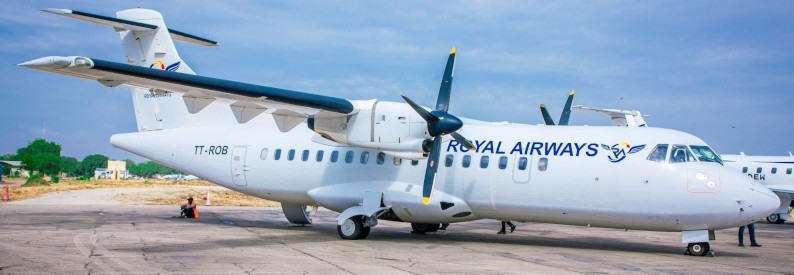
Founded as a wholly Chadian-owned private carrier, Royal Airways initially cemented its presence through a robust domestic network. It successfully launched commercial operations connecting the capital, N'Djamena, to vital regional towns such as Abéché, Amdjarass, Faya, Moundou, and Sarh, quickly establishing the most comprehensive domestic air travel network within Chad.
The incoming ATR 72-500, capable of accommodating up to 78 passengers, represents a strategic upgrade tailored for regional operations. The turboprop’s distinctive high-wing design and exceptional short takeoff and landing (STOL) capabilities make it particularly well-suited for navigating the diverse range of airstrips found across Central Africa, which include both paved and less-developed facilities.
This aircraft type offers the crucial flexibility to align capacity with demand on thinner regional routes without incurring the higher operating costs typically associated with jet equipment on shorter sectors.
Royal Airways is actively diversifying its fleet, which already comprises a mix of ATR turboprops, Embraer regional jets, and a Falcon 900EX executive aircraft.
Reflecting its commitment to modernization and evolving market expectations, the airline previously retired its Embraer E120 operations in favor of larger, more contemporary equipment, thereby aligning its services more closely with the demands of African travelers and corporate clients.
The airline has already achieved a significant milestone by inaugurating the N'Djamena–Douala route, effectively linking Chad and Cameroon. This achievement was enthusiastically described by Chad's Minister of Transport, Civil Aviation and Meteorology as a "national victory," underscoring the nation's determination to reassert its presence and influence within regional and international airspace through its flag carrier.
Looking ahead, the next phase of expansion is slated to target the Alliance of Sahel States market, with initial reports indicating plans for services to Niger, alongside the previously mentioned openings to Nigerian and Beninese cities. This forward-looking approach positions Royal Airways to capitalize on untapped demand within the sub-region.
For professionals within the African travel sector, Royal Airways' trajectory presents a compelling case study. Central Africa has historically suffered from under-served intra-regional connectivity, often compelling travelers to undertake circuitous journeys via distant hubs to move between neighboring capitals.
A well-capitalized private operator like Royal Airways, committed to developing direct point-to-point services within this catchment area, has the potential to unlock significant new possibilities.
Such enhanced connectivity could greatly benefit tour operators seeking to package multi-country itineraries, corporate travel managers serving clients in vital sectors like oil, mining, and humanitarian aid, and even leisure specialists exploring emerging destinations across the Sahel.
The carrier is strategically positioning itself in a market segment estimated to encompass several million passengers, competing alongside other growing operators such as Nigeria's ValueJet.
The long-term success of Royal Airways will ultimately depend on its ability to maintain robust operational reliability, offer competitive fares, and adeptly navigate the complex landscape of securing timely bilateral traffic rights. Theses are challenges that are consistently faced by aviation start-ups across Africa.
Nevertheless, the momentum demonstrated by Royal Airways vividly illustrates a wider and positive trend across the continent, where privately owned African airlines are proactively stepping in to bridge connectivity gaps often left by traditional legacy flag carriers.
As Royal Airways' fleet numbers grow and its route map progressively widens, travel agents and tour designers throughout sub-Saharan Africa may soon find themselves with novel and more direct options for constructing itineraries that previously necessitated complex, multi-airline routings.
The coming months will be instrumental in revealing how swiftly Royal Airways can translate its expanding fleet into published schedules and whether Chad can indeed secure a stronger and more prominent seat at the regional aviation table. For the African trade, this unfolding development, marked by each new aircraft delivery, remains a crucial area for vigilant monitoring.