Ceuta Erupts: Hundreds Protest Spain's Migrant Crisis Response
Ceuta's multi-religious communities staged a major protest against the migrant crisis and central government, demanding solutions and resources for the "unsustainable" situation, particularly concerning unaccompanied minors. Political tensions escalated domestically with criticisms from opposition parties and internationally with Spain's retaliatory border controls against Italy, fueling a diplomatic dispute.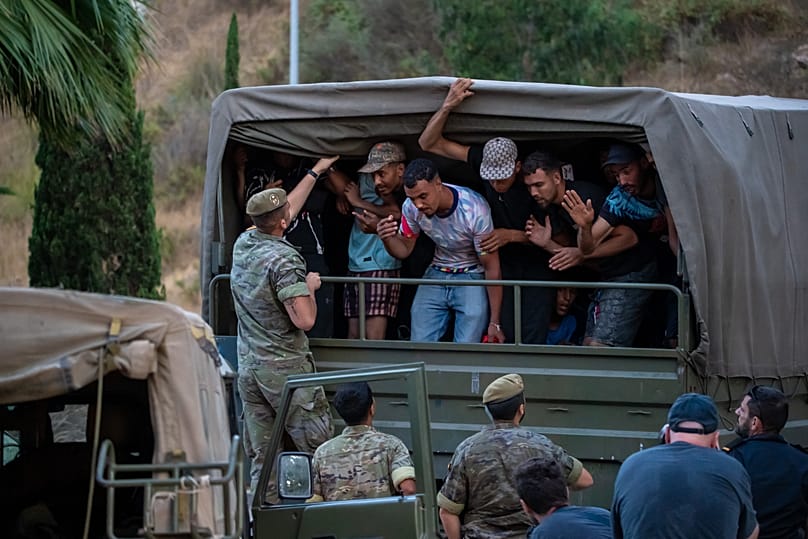
A Spanish autonomous city called Ceuta, has witnessed a significant demonstration on Sunday afternoon in Constitution Square, where its four religious communities—Christian, Muslim, Jewish, and Hindu—united hundreds of residents.
The protest, held under the banner "Enough is enough, Ceuta will not surrender," demanded urgent solutions to the migrant crisis and championed coexistence in the city.
Many participants voiced strong criticism against the government in Madrid, accusing it of "abandonment," with chants such as "Ceuta is not for sale. Ceuta is Spain" and "Sánchez, resign" echoing through the crowd.
Some protesters later marched towards the Government Delegation, reflecting the deep-seated discontent.
Meanwhile, tensions escalated in Plaza de los Reyes with the arrival of Spanish far-right political activist Vito Quiles, whom some attendees accused of attempting to "divide" Ceuta's community.
The migrant situation has also intensified political disputes over Spain's decision to temporarily reintroduce border controls at ports and airports for travelers arriving from Italy.
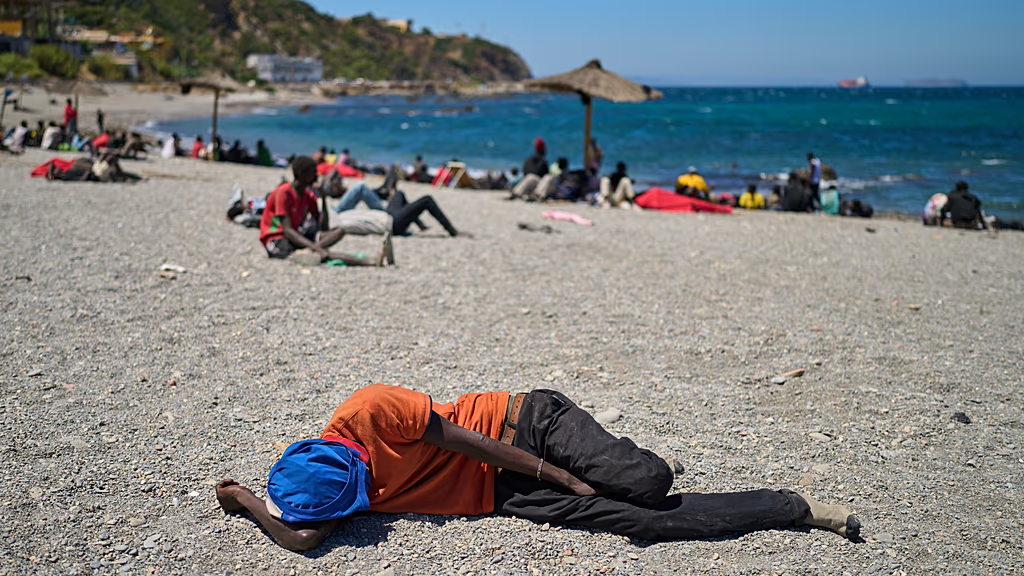
This move came after Rome refused to lift its own controls on passengers from Spain, which had been imposed following the initial events in Ceuta last week.
The Ceuta's President, Juan Jesús Vivas, met on Saturday with Sira Rego, the Minister for Youth and Children, who visited the city to specifically address the plight of unaccompanied migrant minors.
Vivas stated that his government's firm stance is that these minors, identified at 1,342 although more are unregistered, should be returned to Morocco, asserting, "The only way out is Morocco via the Tarajal border crossing."
He described the situation as "absolutely unsustainable" and appealed to the central government for increased resources and security personnel.
Despite his criticisms of Madrid, Vivas reiterated his commitment to "institutional loyalty" and a "sense of state," though he believes the government has "stumbled twice on the same stone" after the 2021 and current crises.
The Ministry for Youth and Children, conversely, prioritized the protection of minors, emphasizing individual case examination.
Minister Rego advocated for family reunification "whenever possible" but acknowledged that many unaccompanied minors lack families, necessitating autonomous communities to act as their guardians and safeguard their rights.
She assured that the government would deploy "all the necessary resources" for reception and provide "full support, financial, technical and human, for Ceuta."
A technical team from the ministry has been dispatched to assist with reception management and coordination with autonomous communities.
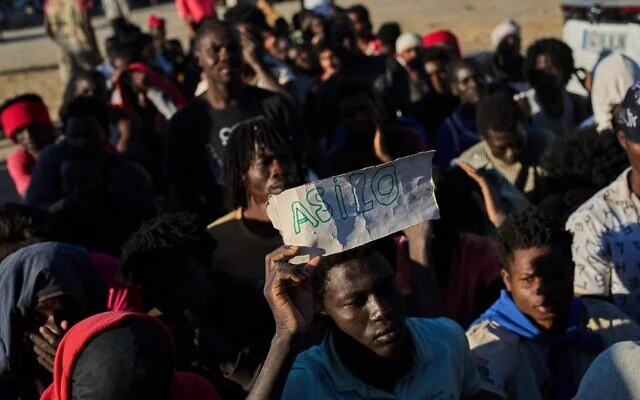
Further friction is anticipated at the Sectoral Commission on Children and Adolescents, scheduled for August 13th, which will discuss the transfer of minors from Ceuta.
Vox, a far-right party, has announced that its regional vice presidents responsible for this area in Castile and Leon, Extremadura, and Aragon will boycott the meeting, reiterating its opposition to distribution with the slogan "children with their families."
The President of the Madrid capital region, Isabel Díaz Ayuso, criticized the government's migration policy, stating, "We let more than 70,000 people enter illegally through Ceuta alone and we ban Italians from entering, a brother country that invests in and contributes to Spain."
Alberto Nadal of the PP accused Prime Minister Pedro Sánchez's government of "isolating Spain in the European Union," while Extremadura's president, María Guardiola, called for a humane and serious approach.

International tensions between Madrid and Rome escalated as Italy’s foreign minister, Antonio Tajani, branded Spain's reciprocal border measures as "incomprehensible and totally unacceptable."
Tajani explained that Italy had suspended the Schengen area, as allowed by treaties, due to the extraordinary events in Ceuta, intending to lift measures once the risk subsided.
He accused Sánchez of "intensifying" the situation but maintained that Italy is not against Spain, merely protecting its borders.
Opposition parties in Italy, however, criticized Prime Minister Giorgia Meloni’s government for what they deemed an "unfounded" diplomatic crisis.
Both Spain and Italy have informed the European Commission that their respective controls are temporary, with European Commissioner Magnus Brunner indicating that Italy might soon lift its measures. Spain's retaliatory controls are set to remain until September 7th.