Can Israel’s AI Push Help Nigeria Build Jobs, Not Just Tools?
Nigeria does not need another AI moment. It needs AI partnerships that move from bootcamps to real products, companies, pilots and jobs.
Every country wants to sound ready for artificial intelligence and Nigeria is no different.
There are conferences, bootcamps, panels, startup pitches and big promises about the future of work. But one question we should ask is: who actually gets work from this?
That is the real issue behind Israel’s promise to deepen AI collaboration with Nigeria.
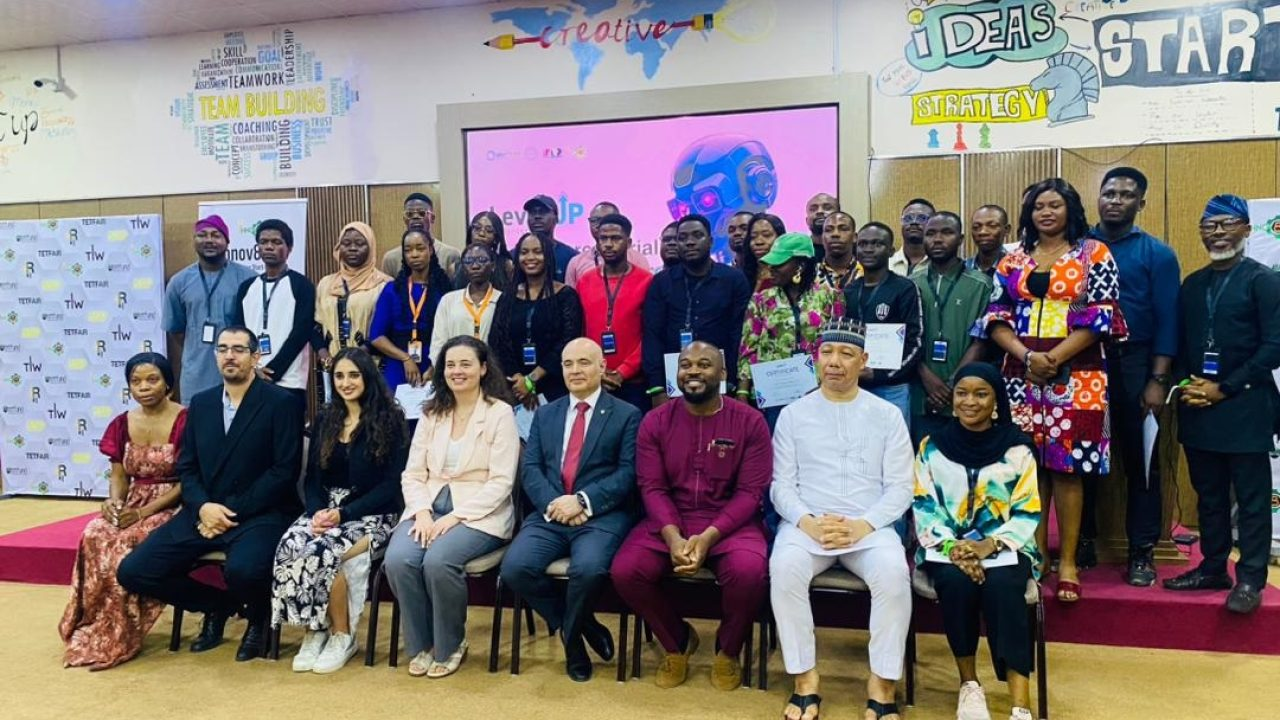
At an AI entrepreneurship bootcamp in Abuja,Israel’s ambassador to Nigeria, Michael Freeman, promised more knowledge-sharing with Nigerian innovators and that matters, but the event itself is not the story.
Nigeria does not need artificial intelligence as decoration, it needs AI that can move from training rooms into markets, businesses, clinics, farms, classrooms and jobs.
AI Jobs Do Not Come From Speeches
AI can create jobs, but not by magic and training is not the same as employment, it is only the first step.
A new tool does not automatically become work. Jobs are created around the tool when people build it, test it, sell it, maintain it, train others to use it, support customers, improve the data and adapt it to real problems.

An AI product for farmers, for example, is not only a piece of software. It may need people gathering local crop data, translating advice into languages farmers understand, training cooperatives, managing feedback, fixing errors and helping users trust the recommendations.
So when officials say AI can create employment, the claim should be tested against the chain that makes jobs possible: skills, funding, infrastructure, customers and adoption.
Without that chain, AI may only produce impressive demos and short-lived excitement.
The Missing Middle Between Ideas and Work

Nigeria is not short of ideas. Young people are already building, experimenting and pitching solutions in education, healthcare, agriculture, finance, logistics and creative industries.
But the problem is conversion, because how does an idea become a product people use? How does a prototype become a company? How does a company find paying customers? How does training become work?
This is where many innovation programmes struggle. A bootcamp can teach useful skills, but founders often leave the room and return to the same obstacles: limited funding, weak infrastructure, poor access to data, unclear regulation, few pilot opportunities and customers who may like the idea but are not ready to pay.
If Israel’s AI push is going to matter, it has to help strengthen that missing middle: follow-up mentorship, pilot programmes, links to investors, technical support, access to relevant data and partnerships with sectors that actually need solutions.
Local Intelligence Must Lead
AI is not neutral in the way people often imagine. It reflects the data, languages, assumptions and environments behind it.


A tool built somewhere else may be powerful, but that does not mean it will understand Nigerian realities. It may struggle with local languages, accents, informal markets, poor records, school conditions, farming patterns, small-business behaviour or the messy way many services actually work.
That is why a Nigerian voice in AI matters.
If Nigeria only imports AI tools, it may become a consumer of intelligence designed elsewhere. But if Nigerian founders, researchers and workers help build the tools, they can shape AI around local problems.
There is also a data question. Local AI needs local data, but that data must be gathered and used responsibly. Building Nigerian AI should not mean exposing citizens, patients, students, farmers or businesses to careless data use.
So foreign expertise can help, but local understanding must lead.
From Partnership to Pipeline
Israel has experience linking research, entrepreneurship and technology to startup growth. That is useful. But the value of any partnership depends on what it leaves behind.
The best kind of AI collaboration would not simply transfer knowledge for a few days. It would help Nigerian innovators build technical depth, networks, market access and confidence.
It would also help startups test products with real users. A health idea should find clinics willing to pilot it. An agriculture tool should reach farmers. An education product should enter classrooms. A small-business solution should be tested by traders, not just judges at a pitch event.
The government has a role here beyond regulation. In sectors like health, education and agriculture, public institutions can become early adopters of useful AI tools, giving startups real environments to test and improve their products.
That is how a partnership becomes a pipeline.
The success of Israel’s AI push will not be measured by the number of people who attended a bootcamp. It will be measured months later: pilots running, products used, founders funded, customers reached, and jobs created around deployment, training, support, software, data and cybersecurity.
Nigeria’s challenge is not simply to learn AI from abroad but to turn knowledge into local products, useful companies and work people can actually live on.
Without that, Nigeria will not be building an AI economy, it will only be renting one.