BoG's Staggering GH¢15 Billion Loss Rocks Ghana's Economy, Sparks Political Firestorm
Ghana's Parliament is locked in a fierce debate over the Bank of Ghana's projected GH¢15 billion loss for the 2025 financial year. While the Minority accuses the Majority of propaganda and policy contradictions, the Majority defends the central bank's strategic interventions, citing global trends and structural reforms to ensure future stability despite significant financial costs.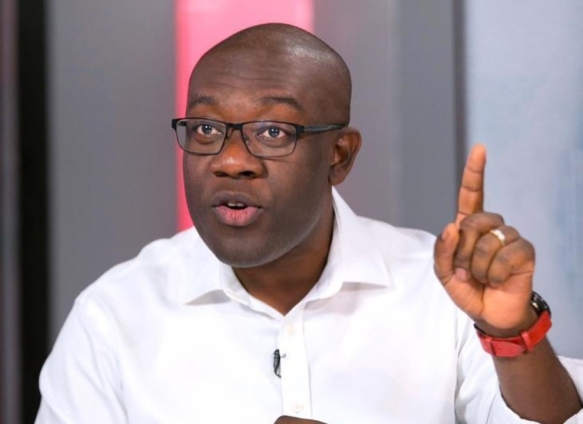
The Bank of Ghana (BoG) is facing intense parliamentary scrutiny and public debate over its expected net loss of approximately GH¢15 billion for the 2025 financial year, a figure that marks a significant increase from the GH¢9.6 billion recorded in 2024. This projected loss, which could be as high as GH¢15.7 billion, represents a 68 percent jump year-on-year and would be the central bank's second-largest loss since 2008. The controversy has been ignited by a pre-emptive press conference held by the Majority in Parliament ahead of the official release of the BoG's audited financial accounts, prompting accusations of propaganda and "perception management" from the Minority.
The Minority in Parliament has vocally criticized the Majority's actions, stating that the decision to brief the public before the official publication of the accounts is an attempt to "shift public opinion" and pre-empt scrutiny of the central bank’s financial position. Kojo Oppong Nkrumah, the Ranking Member on Parliament’s Economy and Development Committee, described the situation as reflecting a pattern of inconsistency in the government’s approach to economic management. He highlighted a perceived hypocrisy, noting that the same actors who previously criticized the central bank for a GH¢10 billion loss in 2023 are now defending a much larger deficit of about GH¢15 billion. "Yesterday’s critics have become today’s defenders. The cosmetics with which they were managing things are beginning to wear off," he stated, adding that this behavior indicates an exercise of propaganda to "hide the real facts from Ghanaians."
Furthermore, Oppong Nkrumah pointed to what he described as policy contradictions, particularly concerning the use of liquidity management tools such as sterilisation through open market operations, which he argued comes with "huge costs to the Bank of Ghana." He asserted that earlier concerns raised by the Minority regarding these costs, which were previously dismissed, are now being implicitly admitted by government explanations as a major contributor to the loss. The lawmaker also raised alarms about changes in Ghana’s gold purchasing framework, alleging that costs associated with the policy shift from large-scale mining purchases to the Gold Board system were transferred to the BoG, while the Gold Board itself reported a profit. He recounted calls for a parliamentary inquiry into these matters that were not heeded, estimating the cost of gold transactions at about GH¢9 billion. The Minority insists on the full publication of the BoG accounts for independent scrutiny, emphasizing that only then can the public fully understand the situation.
In response, the Majority in Parliament has staunchly defended the Bank of Ghana, expressing confidence that the GH¢15.7 billion loss for 2025 represents a peak. Atta Issah, a member of Parliament's Finance Committee, argued that the central bank’s authority is derived from law, not its balance sheet performance, and that these results do not compromise its ability to implement monetary policy, manage foreign reserves, or supervise the financial system. He underscored that central bank losses linked to inflation-control measures are a global phenomenon, citing examples such as the European Central Bank, the United States Federal Reserve, and the Czech National Bank, all of whom have reported losses while managing inflation.
The Majority attributes the expected losses to necessary interventions undertaken to stabilize the economy during a challenging period, emphasizing that the BoG is not a profit-maximization institution. They foresee a significant reduction in future financial pressures due to structural changes in monetary conditions and policy reforms. Key factors cited include the easing of inflation to 3.2 percent in March 2026, which has substantially reduced the need for aggressive liquidity management operations and will lead to a structural fall in the cost of open market operations. Similarly, the reduction in the policy rate from 27 percent at the end of 2024 to 14 percent in March 2026 is expected to halve the cost of issuing and rolling over BoG instruments.
Additionally, the Majority highlighted recent legislative changes, such as the Ghana Accelerated National Reserve Accumulation Policy (GANRAP), passed in February 2026. This new framework dictates that gold offtakers will pre-finance parts of the gold purchase program, and the Ministry of Finance will assume a clearer budgetary role, thereby reducing off-balance-sheet pressures on the central bank and preventing a recurrence of the GH¢9 billion cost linked to gold transactions seen in the 2025 accounts. They also project greater cedi stability, arguing that the substantial revaluation losses of approximately GH¢19.32 billion recorded in 2025 are unlikely to be repeated in a more stable exchange rate environment. The Majority concluded that the financial framework underpinning key policy interventions has been strengthened, assuring the public of a "different picture in the years ahead."
Addressing the central bank’s equity position, Mr. Issah explained that while the net equity stood at negative GH¢31.3 billion at the end of 2024, it is projected to improve to a positive GH¢1.2 billion compared to a deeper negative position of about GH¢35 billion recorded at the end of 2025. Cumulatively, the Bank’s net equity position reflects approximately negative GH¢96.3 billion, representing the financial cost of interventions over the period. For context, he noted that the Bank had a positive net equity of about GH¢1.2 billion in 2021, and that when President John Dramani Mahama assumed office, the total negative equity position of the Bank of Ghana stood at about GH¢61.3 billion. Despite the reported losses, officials maintained that the central bank’s operational strength remains intact, pointing to an improvement in the Bank’s policy position from GH¢700 million to GH¢5.5 billion, indicating that it generated sufficient income through its policy operations to cover the costs of restoring macroeconomic stability.
As the Bank of Ghana prepares to publish its full audited financial statements for the 2025 financial year in the coming days, the debate over the scale, causes, and implications of its reported losses is set to continue, with calls for transparency and accountability from the Minority remaining firm amidst the Majority's defense of the central bank's strategic interventions.