Barotseland Outrage: Politicians Clash Over Controversial Airport Remarks
A heated debate over an international airport for Barotseland has brought to light historical patterns of marginalisation and unfulfilled promises in Zambia. While a public policy expert criticizes past governmental neglect and a minister's controversial remarks, a presidential candidate from the Tonse Alliance has distanced his party from those comments, vowing for equitable development and outlining a comprehensive plan for the region.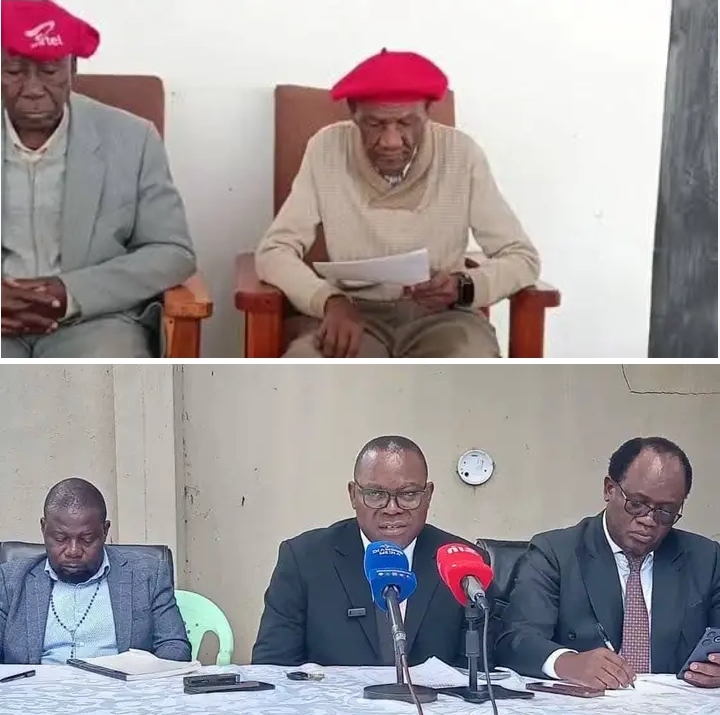
The necessity and equitable distribution of development across Zambia, particularly concerning Barotseland (Western Province), has ignited significant debate, specifically around the proposal for an international airport in the region. Dr. Martin Mushumba, a Public Policy and Education Quality Assurance Expert, argues that an airport serves as a catalyst for development, unlocking potential in tourism, trade, agriculture, fisheries, investment, emergency services, and regional connectivity, rather than being a reward for existing development. He criticizes Hon. Mutotwe Kafwaya's assertion that Barotseland does not need an international airport, viewing it as a demonstration of profound ignorance regarding Barotseland's potential and a disturbing disrespect for its people who have long awaited development.
Mushumba highlights a consistent pattern of systematic marginalisation against Barotseland. He points out that Mutotwe Kafwaya, while a senior minister in the Patriotic Front (PF) government, was part of an administration that diverted funds intended for King Lewanika University in Barotseland to Kapasa Makasa University in Muchinga Province. Similarly, funds allocated for the rehabilitation of the Lusaka–Mongu Road were reportedly redirected to township roads in Muchinga Province, leaving Barotseland neglected. Mushumba sees these actions, coupled with Kafwaya’s recent remarks, not as isolated incidents but as a clear, documented pattern of developmental sabotage. He also notes that Brian Mundubile and Makebi Zulu, now political allies with Kafwaya under the Tonse Alliance, were ministers in the same PF government, suggesting a shared history in these policies.
Kafwaya's argument that Barotseland has “nothing” is directly challenged by Mushumba, who questions whether the blame lies with the diligent people of Barotseland or with the government—which Kafwaya served for nearly a decade—that deliberately withheld development. Mushumba concludes that Kafwaya's contempt is not a random outburst but rather the exposed foundation of a long-standing strategy rooted in tribal arrogance and developmental neglect. He stresses that an apology from Kafwaya would be mere 'empty theatre' and urges the Barotse Royal Establishment (BRE), the Kuta, and the people of Barotseland to mobilize against political forces that view the province merely as a vote bank, rather than an equal partner in Zambia's future. The airport, in this context, is presented as a test of Zambia's commitment to the principle of “One Zambia, One Nation,” with Barotseland refusing to be a perpetual afterthought.
In response to Kafwaya's controversial remarks, Brian Mundubile, Presidential Candidate for the National Reconciliation Party for Unity and Prosperity (NRPUP), has formally distanced both his party and the Tonse Alliance from these statements. Speaking from Isoka, Mr. Mundubile extended gratitude to the Barotse Royal Establishment for facilitating dialogue, affirming that Kafwaya's comments were personal views and not representative of the NRPUP or the Tonse Alliance. He confirmed that Kafwaya has since apologized and is expected to submit a written, unconditional withdrawal of his statement. Mundubile assured the BRE that no member of the Tonse Alliance would base their campaign on denying development to any part of Zambia, including Barotseland. He pledged that, if elected, his administration would collaborate closely with the royal establishment to foster development through a consultative, inclusive, and equitable approach, engaging the BRE on policy proposals during the campaign period in Western Province.
Mundubile also acknowledged the years of unfulfilled promises to the people of Barotseland, citing the proposed King Lewanika University and a stadium, which remain unbuilt despite land allocation. He extended his criticism to the current administration, noting that many promises made before the 2021 general elections also remain unrealized. Furthermore, Mundubile criticized President Hakainde Hichilema’s January 2024 statement, “You don’t have a country called Barotseland,” highlighting that it caused significant hurt and was never followed by an apology. He appealed to the people of Barotseland and the wider country to evaluate his leadership on its own merits and grant his party the opportunity to rebuild public trust.
Outlining the NRPUP's vision for national reconciliation, unity, and prosperity, Mundubile committed to supporting agriculture, maximizing Zambia's mineral wealth for its citizens, and implementing policies grounded in research and local realities. Specifically for Barotseland, his commitments include significant improvements to major road infrastructure, such as the Mongu–Lusaka and Sesheke–Livingstone roads, increased investment in the cattle industry with a focus on controlling foot-and-mouth disease, prioritizing local employment in the growing tourism and service sectors, and expanding vital veterinary and agricultural extension services. He also promised to elevate education standards by constructing more secondary schools and recruiting teachers familiar with the local language and culture, alongside upgrading the existing airports in Mongu and Kalabo. Mundubile expressed confidence that through close cooperation with the Barotse Royal Establishment to identify and prioritize development needs, Barotseland and Zambia as a whole could be transformed.