Atiku's Bold Promise: Student Debt Forgiveness on the Horizon!

Atiku Abubakar, the ADC presidential candidate, has vowed to review Nigeria's Education Loan Fund (NELFUND) and introduce debt forgiveness for qualifying students if elected. His aide criticized President Tinubu's NELFUND defense, calling it 'witchcraft economics' and advocating for reduced education costs and energy prices to alleviate financial burdens.
Pelumi Ilesanmi
Pelumi IlesanmiPolitics8 hours ago3 minute read
Key Points
Atiku Abubakar has pledged to review the Nigerian Education Loan Fund (NELFUND) scheme and introduce debt forgiveness for qualifying students if elected.
His aide criticized the current administration for increasing education costs and then offering loans, labeling it as 'witchcraft economics'.
Atiku's proposed strategy includes reducing the fundamental cost of education and providing forgiveness for eligible student debts.
Atiku's Bold Promise: Student Debt Forgiveness on the Horizon!

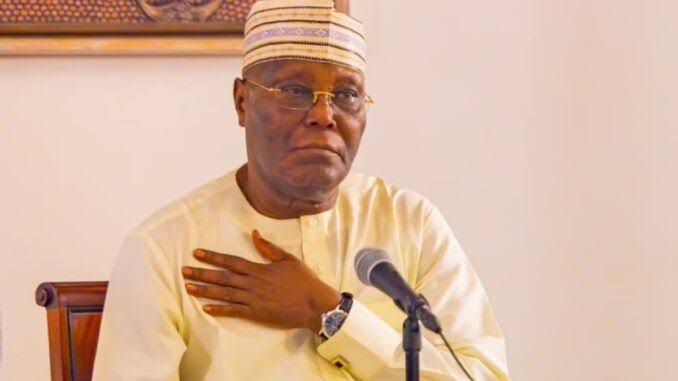
The presidential candidate of the African Democratic Congress (ADC), Atiku Abubakar, has pledged to review the Nigerian Education Loan Fund (NELFUND) scheme and introduce debt forgiveness for qualifying Nigerian students if elected. This position was articulated by his Senior Special Assistant on Public Communication, Phrank Shaibu, in response to President Bola Tinubu’s recent comments regarding the economy and the student loan initiative.

President Tinubu had previously referenced NELFUND as an indicator that education had become more affordable under his administration. However, Shaibu strongly dismissed this assertion, labeling the argument as “dishonest.” He contended that the government itself contributed to the escalating cost of education before implementing student loans as a mechanism to help students manage the resulting financial burden. Shaibu sharply criticized the logic, stating, “Celebrating NELFUND as proof that education has become affordable under your government is like setting school fees on fire and then boasting that you lent students a bucket of water.” He questioned the wisdom of dramatically increasing school fees only to then celebrate loans as the solution.

Shaibu described the current administration’s approach as “witchcraft economics,” arguing that the government should prioritize reducing the fundamental cost of education instead of encouraging students to accumulate debt. He explained this by saying, “You make education more expensive, lend students money to survive the increase, and then demand applause for the rescue. That is not affordability. It is witchcraft economics: create the burden with one hand, offer debt with the other, and demand applause for the intervention.”

Highlighting Atiku Abubakar’s alternative vision, Shaibu stated that the former vice president has already evaluated the existing student-loan framework. Atiku’s objective would be to ensure that Nigerian graduates are not compelled to commence their professional lives weighed down by education debt. His proposed strategy includes measures to significantly reduce the underlying cost of education and, following a review, provide forgiveness for eligible student debts. The aim is to enable young Nigerians to graduate with optimism rather than the pressures of repayment. Shaibu emphasized that “Education should open doors, not mortgage the future.”

Further, Shaibu asserted that a loan cannot be equated with a scholarship, stressing that the true success of any education policy should be measured by the ability of ordinary families to afford their children’s schooling without resorting to borrowing. He accused the federal government of “parading the loan itself as evidence that the system is working,” despite the continuous rise in education costs.

Shaibu also refuted claims from the presidency that Atiku’s proposed intervention to reduce energy costs—specifically targeting Nigerian crude supplied for domestic refining—could negatively impact NELFUND funding, workers’ salaries, or the minimum wage. He challenged the Tinubu administration to publicly disclose detailed calculations that would substantiate how Atiku’s proposal would affect funding for students and workers. Shaibu declared, “If your government has the arithmetic, Bola, publish it. Show Nigerians, line by line, how a transparently budgeted subsidy tied to Nigerian crude and domestic refining suddenly empties NELFUND or workers’ pay packets.”

Instead, Shaibu argued that reducing energy and transportation costs would positively impact the economy by improving the purchasing power of workers’ salaries and alleviating the financial strain on students and their families. He concluded by stating, “Reduce the cost of energy so that salaries buy more. Reduce transport costs so that less of a worker’s wage disappears merely getting to work. You cannot make life painfully expensive, push students towards debt to survive the consequences, and then frighten those same students that cheaper fuel will take their loans away.”

Loading...