Anambra Poll Showdown: Voter Apathy and Result Uploads Stir Debate
INEC has uploaded over 82% of results for the Anambra State governorship election, but the Centre for Democracy and Development (CDD-West Africa) has raised significant concerns. Issues highlighted include widespread vote trading, operational delays, BVAS failures, and limited accessibility, which undermined the election's transparency and fairness.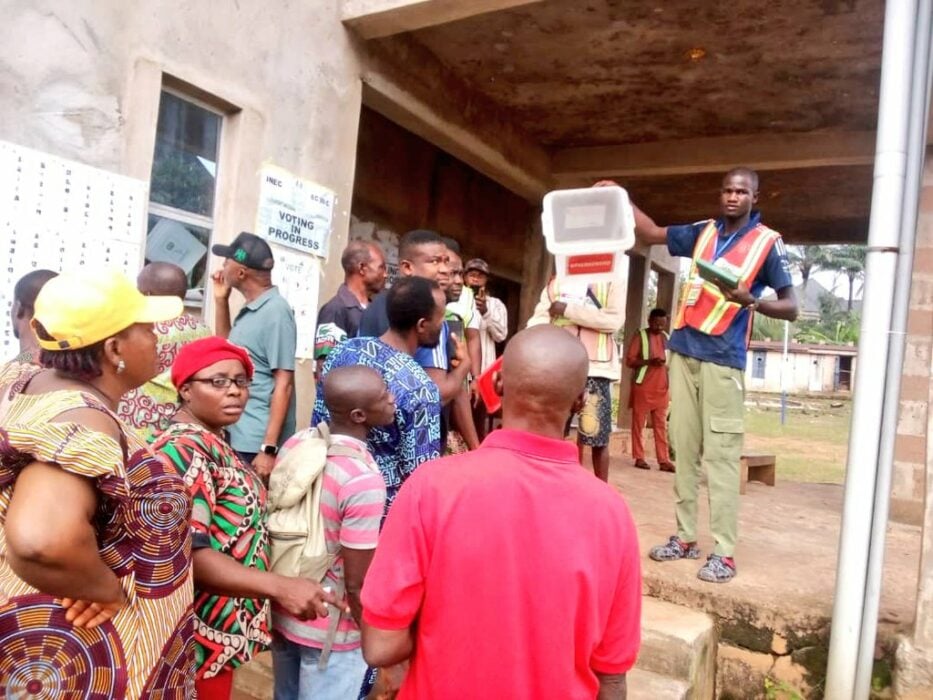
Following the conclusion of voting in the Anambra State governorship election across its 21 local government areas on Saturday, the Independent National Electoral Commission (INEC) has made significant progress in uploading results. As of 5:25 pm on Saturday evening, a check on the IReV portal by LEADERSHIP revealed that 82.76% of results had been uploaded, specifically from 4,734 units out of a total of 5,720 polling units. This ongoing upload reflects the active collation process, with electoral officials continuing to compile and transmit results from the remaining units. INEC had previously assured stakeholders of progressive result releases, verified for transparency, with the final election outcome pending full collation and official declaration from all polling units.
Amidst the ongoing result collation, the Centre for Democracy and Development (CDD-West Africa) has expressed serious concerns regarding several aspects of the Anambra State governorship election. In its preliminary statement, CDD-West Africa highlighted issues such as prevalent voter apathy, widespread vote trading, and notable gaps in institutional preparedness throughout the electoral process.
CDD-West Africa observed multiple incidents of vote buying and trading across the state, with particularly high concentrations reported in the central and southern senatorial zones. These activities, frequently conducted in plain sight of both voters and officials, severely undermined the transparency and fairness of the election. Specific instances of vote buying were noted in high-density polling clusters like Nodu Village Hall 1 (PU 009) and Nodu Hall 2 (PU 010) in Awka South, Anambra Central, as well as Ezinifitte Hall 2 (PU 008) and Nibo 002 Maternity I in Nnewi North LGA. Voters were often seen engaging in a 'vote-and-snap' behavior, capturing images of their marked ballots as proof for financial incentives. In some cases, party agents utilized money transfer platforms instead of direct cash payments. Offers to voters ranged from N10,000 to N5,000, depending on the location; for example, N5,000 and N2,000 payments were distributed in PU 005, Achina Ward 3, and opposite PU 012, Ward 1, in Aguata LGA. Similar patterns were observed in Anambra South, where agents distributed cash payments ranging from N2,000 to N5,000 in rooms directly across polling units in locations such as Ichi PU 010 in Ekwusigo LGA and Achina Ward 1, PU 012 in Aguata LGA. Disturbingly, at Igboukwu Ward 2, Central School PU 017, party agents openly distributed N5,000 to voters without any intervention from security personnel. Furthermore, observers reported a systematic vote-trading mechanism in Uruagu Ward 1, PU 006 in Nnewi North LGA, where party agents maintained informal logs of voters who had received payments.
Operational gaps also led to delays in a small but significant number of polling units, particularly affecting last-mile logistics in harder-to-reach or densely populated communities. In Onitsha North LGA (Ward 15, PU005) and Woliwo Ward 15 (PU001), operations were delayed due to the late arrival of officials and the absence of security personnel as late as 9:00 am. Similar delays were recorded in Ogbaru LGA (Okpoko Ward 5, PU004 and Iyiowa Odekpe Ward, PU008) and Anambra East LGA (Ward 002, PU010).
While the Bimodal Voter Accreditation System (BVAS) was deployed across all monitored polling units, CDD-West Africa noted instances of device failures. In Ward 4 (Agulu), PU011, in Anaocha LGA, the BVAS failed to capture thumbprints with no corrective measures in place. Similar issues arose in Idemili South LGA, Ward 2 (Alor), PU004, and Nkpor Ward 2, Idemili North (PU002), where voting had not commenced by 10:12 am and 11:00 am respectively. In Anambra Central, specifically Njikoka LGA, Umudim Ward 2 (PU035), the facial recognition feature of the BVAS machine functioned poorly.
Regarding security, personnel were present at 87.3% of observed polling units, but 12.7% reported no security presence at the time of observation. Despite significant interest shown by youth during the Continuous Voter Registration (CVR) period, voter turnout among young demographics was visibly low, particularly in urban centers like Awka and Onitsha.
The election was also marred by incidents of violence. In Orumba North LGA, Obodo Amagu Square PU 004, a violent confrontation between party agents escalated into a physical altercation, leading to the destruction of the ballot box and ultimately halting the voting process. This incident occurred in the absence of sufficient on-site security, exposing voters and electoral officials to serious risks. A particularly disturbing report from Obiofia Umuenem Hall PU 002 in Anambra South indicated that party agents allegedly forced voters to cast their ballots for certain candidates through intimidation.
Finally, accessibility for persons with disabilities remained limited in several areas, including Onitsha North and Idemili South LGAs. Despite INEC’s public commitment to inclusion, observers reported that many polling units lacked essential provisions such as wheelchair access, signage for the visually impaired, or priority voting arrangements, underscoring continued challenges in ensuring an inclusive electoral process.