An Igbo Village in Virginia? The Surprising History Behind This Museum Exhibit
Thousands of miles from Nigeria, a Virginia museum recreated an 18th-century Igbo compound. The story behind it connects Igbo history to the transatlantic slave trade and America’s past.
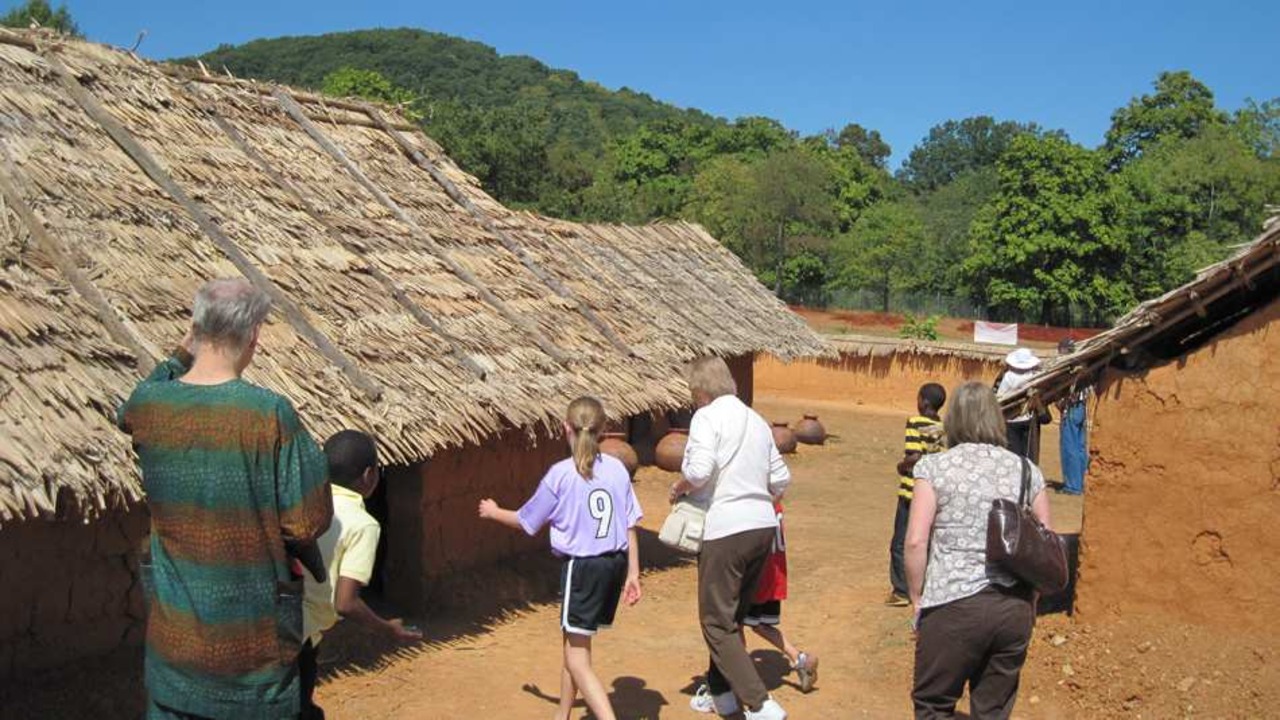
Hearing that a museum in Virginia recreated an Igbo family compound would surely raise an intriguing question in anyone's mind: why would an American museum recreate an eighteenth-century Nigerian community?
The buildings, made with materials such as mud and timber, are part of theFrontier Culture Museum of Virginia. The exhibit is called West Africa, 1700s, and it represents a rural Igbo farming household as it might have existed about three centuries ago.
Let's see why the museum chose to recreate this piece of Igbo history in Virginia and what it reveals about the connection between Nigeria and America.
What the Museum's Igbo Compound Represents
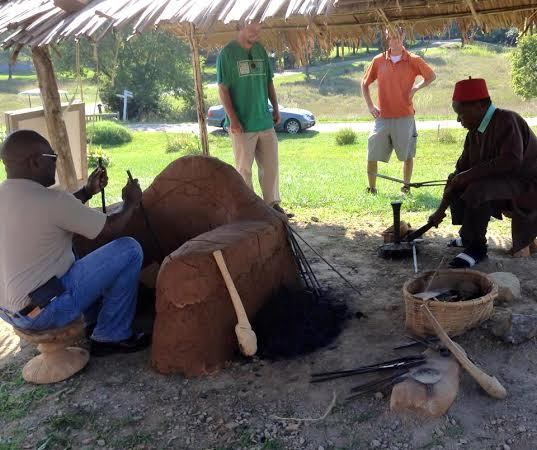
The compound is not an original village brought from Nigeria. It is a modern reconstruction designed to show what an Igbo farming household might have looked like in the 1700s.
Family compounds were important parts of Igbo life, serving as places where families lived, worked and organised their daily activities. Agriculture, family relationships and community traditions shaped life in these rural settlements.
The museum's reconstruction gives visitors an idea of the kind of society that existed in Igboland centuries ago.
The project took several years to develop and involved Nigerian expertise. Nigerian scholar Akuma-Kalu Njoku, who had researched the forced journeys of Igbo people to the Americas, became the project's principal consultant in 2004.
The museum initially planned to bring three traditional Igbo builders from Nigeria to Virginia to construct the compound. In 2008, however,all three were denied US visas.
The project continued with help from Umembe Onyejekwe, a former Nigerian government museum curator, who spent four months in Virginia guiding the construction.
Igbo volunteers and local residents helped build the walls in 2009. The village was completed and celebrated in September 2010.
But then again, why was this representation of Igbo life built in Virginia, thousands of kilometres from Nigeria?
How Igbo People Became Part of Virginia's History
History
Rewind the Stories that Made Africa, Africa
A Journey Through Time, Narrated with Insight.
During the 1700s, Virginia was an English colony where tobacco plantations relied heavily on enslaved African labour. Thousands of Africans were transported across the Atlantic against their will, and some came from the region that is now southeastern Nigeria.
One major source of captives was the Bight of Biafra, a historical coastal region that included parts of present-day southeastern Nigeria. TheFrontier Culture Museum explains that inland routes connected communities and marketplaces to coastal ports such as Bonny, Old Calabar and New Calabar, from where captives were shipped across the Atlantic.
Many of those taken from the region were Igbo, although other ethnic groups also lived there.
The museum estimates that approximately30,000 Igbo people were shipped to Virginia between 1716 and 1755. This is the museum's estimate; surviving records do not establish the origins of every person who was enslaved and transported to the colony.

Historian Douglas B. Chambers examined this connection in his research on Africans and their descendants in colonial Virginia between 1690 and 1810. Hisdissertation at the University of Virginia describes how Igbo people drew on cultural traditions from their homeland while adapting to the conditions of slavery in the Chesapeake region.
So, the connection between Igboland and Virginia was not simply a matter of people travelling from one place to another. Many were forcibly removed from their communities and made to work for others. They arrived with histories, traditions and ways of life of their own, even as slavery tried to control nearly every part of their existence.
The Igbo Compound Today
The Igbo compound has recently received attention online, with people sharing their experiences of visiting the site and discussing changes to the exhibit.
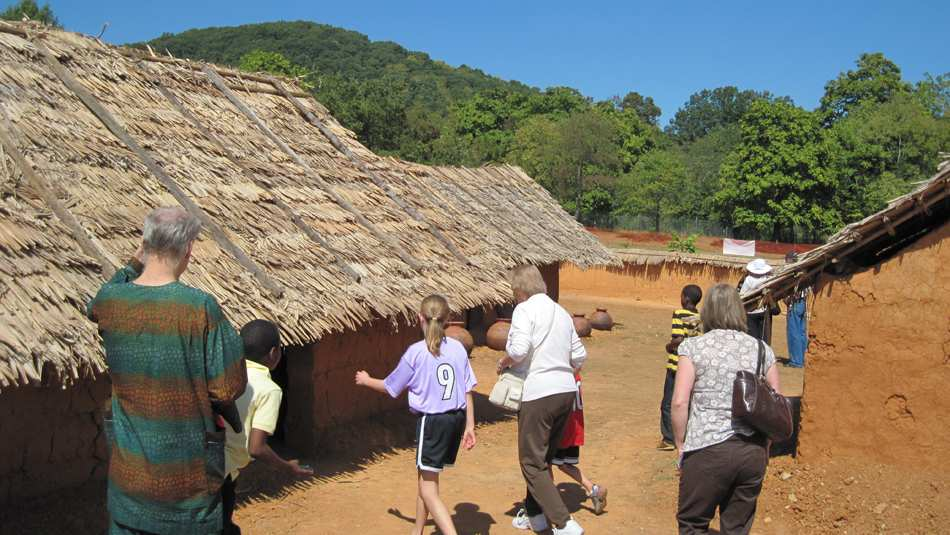
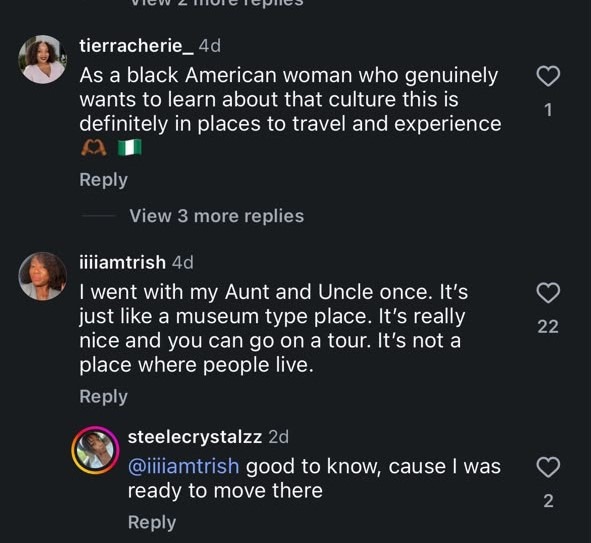
One visitor described it as a museum attraction where people can take a guided tour, clarifying that it is not a place where people live.
Another person, who visited during the summer, said the exhibit was being moved to another part of the museum to make it bigger, with temporary structures in place in the meantime.
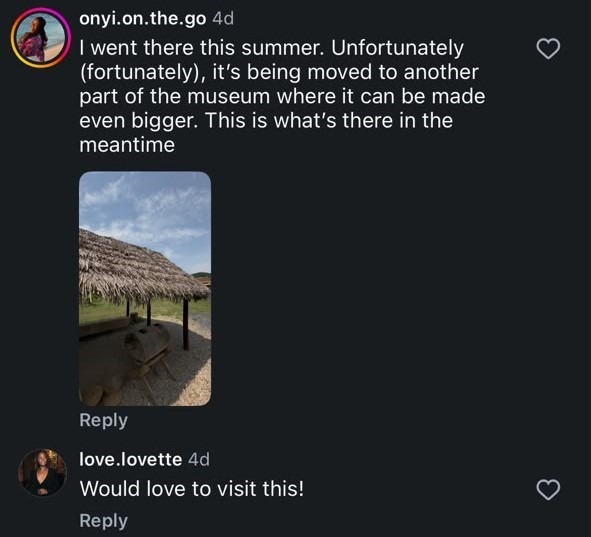
The museum has also confirmed that its West African exhibit is being upgraded with temporary structures available for programmes while work continues.
And if you are planning a trip, check themuseum's official website for the latest information.