Airtel Money Nigeria's IPO Dreams Derailed Amidst Q1 Financial Struggle
Airtel Africa's mobile money division faces significant challenges in Nigeria, recording minimal revenue despite user growth, while thriving across other African markets. The company is implementing strategic initiatives to boost its Nigerian presence, even as its planned $10 billion London IPO for mobile money is delayed due to global macroeconomic and geopolitical instability.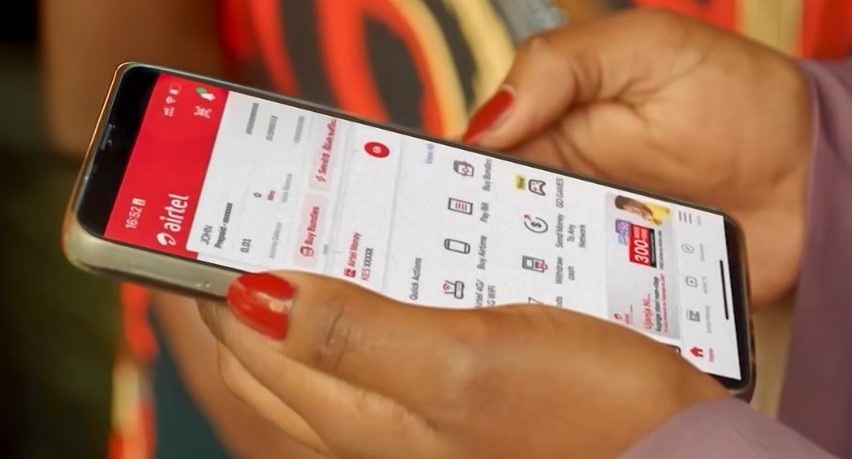
Airtel Africa's mobile money operations are experiencing a stark contrast in performance across its markets, with robust growth in other African regions overshadowing persistent struggles in Nigeria. According to financial results for the first three months of 2026, Airtel Nigeria recorded a mobile money revenue of just $3 million, representing a mere 0.81% of Airtel Africa’s total mobile money revenue of $369 million during the same period. Despite a 60.7% year-on-year surge, the company only managed to acquire 2.7 million mobile money users in Nigeria by March 2026, accounting for a marginal 5% of the group’s 54.1 million customer base across its 14 African markets, and only 4% of Airtel Nigeria’s own 68.6 million subscriber base.
The challenges in Nigeria are multi-faceted, stemming from intense competition and regulatory constraints. The market is heavily dominated by established fintech heavyweights such as Moniepoint, OPay, and PalmPay. Furthermore, Airtel's SmartCash Payment Service Bank (PSB) faces limitations, including higher capital requirements, a late entry into the market, and restrictions that prevent it from offering loans, thereby limiting its growth trajectory in the vibrant Nigerian mobile money landscape, which saw transactions jump 1,518.64% to N20.71 trillion in Q1 2025 from Q1 2021. For the entire financial year ending March 31, 2026, Nigeria's mobile money revenue stood at $9 million, a 113.4% year-on-year increase, yet still the lowest within the group.
In response to these challenges, Group Chief Executive Officer Sunil Taldar outlined a strategic repositioning plan in January. Airtel plans to leverage its collective brand strength, extensive agent network, vast customer base, and digital capabilities to enhance its mobile money presence in Nigeria. February 2026 saw the introduction of new features on its SmartCash platform, including cashback on airtime recharge, free transfers, and a flat 15% annual interest rate on savings. The company also announced collaborations with other financial institutions to enable seamless inter-bank and wallet transfers. Additionally, Airtel is implementing an ambitious expansion strategy, involving the physical distribution of 60,000 point-of-sale (POS) terminals nationwide to agents, supermarkets, small businesses, and merchants. Plans are also underway to launch a virtual card and other embedded initiatives to deepen product acceptance among Nigerians.
In stark contrast to Nigeria, Airtel Africa’s mobile money unit is thriving across other countries, particularly in East Africa. For Q1 2026, mobile money recorded a total revenue of $369 million, marking a 25.7% year-on-year jump in constant currency. East Africa contributed the largest share with $273 million in revenue, while Francophone Africa generated $93 million. The total mobile money customer base now stands at 54.1 million, with 40.9 million from East African markets and 10.5 million from Francophone African markets. For the full financial year ended March 31, 2026, Airtel Africa’s mobile money recorded $1.36 billion in revenue, a 36.3% year-on-year increase, with East Africa contributing $1.01 billion and Francophone Africa $337 million. Customer engagement has deepened significantly, with apps transacting customers up by 74% and annualized Total Processed Value (TPV) exceeding $215 billion. Mobile money revenue contributed a substantial 21.1% to the group’s overall revenue during this period, with a 14.4% increase in TPV per customer.
Airtel Africa had ambitious plans to further capitalize on this success by listing its mobile money unit on the London Stock Exchange, a move expected to raise approximately $2 billion and value the unit at $10 billion. However, this planned Initial Public Offering (IPO) has been postponed from the first half of 2026 to the second half of the year. This delay is attributed to ongoing unfavorable macroeconomic conditions and escalating geopolitical developments, specifically referencing the Middle East war. Sunil Taldar noted that the conflict has crippled international supply chains, leading to rising costs for energy and logistics, and driving significant market volatility. Despite these headwinds, Taldar affirmed the company's commitment to the listing once market conditions become more favorable, emphasizing continued progress in digital adoption, ecosystem expansion, and product innovation.
Overall, Airtel Africa reported strong group performance in Q1 2026, with revenue surging to $1.7 billion, representing a 22.3% increase in constant currency. This growth was primarily fueled by $705 million in data revenue and $613 million in voice revenue. Profit after tax saw a remarkable jump of 183.3% to $227 million, with the total customer base reaching 183.5 million. Airtel Nigeria’s overall earnings for the quarter surged by 40.2% to $475 million, supported by $244 million in data revenue. East Africa’s six markets generated $577 million in total revenue, while the group’s seven Francophone African markets contributed $400 million during the quarter.