AI Takes Center Stage in Nigeria: Google & Apolitical Partner to Train Civil Servants for a Digital Future
Nigeria is initiating a significant AI training programme for its public servants in collaboration with Google and Apolitical, aiming to revolutionize governance. However, the nation's ambitious digital future faces considerable threats from persistent political instability, frequent cabinet reshuffles, and a lack of policy continuity at state levels, hindering critical innovation projects and risking the country's progress in the global AI race.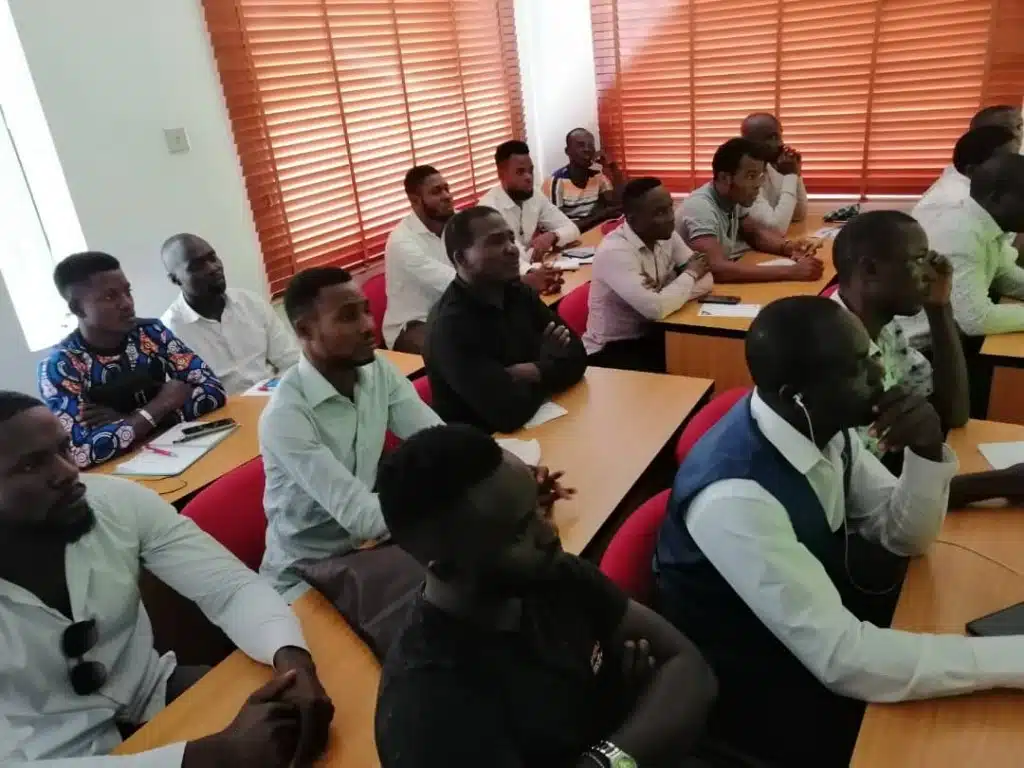
Nigeria is embarking on an ambitious journey to integrate artificial intelligence (AI) into its public administration through a new training initiative called the AI Government Campus. This programme, a collaborative effort between the Nigerian government, Google, and Apolitical, a global learning platform for government innovation, aims to equip thousands of public servants and leaders with the knowledge and skills to understand and apply AI for improved governance.
Speaking at the launch in Abuja, Bosun Tijani, Minister of Communications and Digital Economy, highlighted AI's potential to significantly boost productivity across key sectors and streamline public institutions. Adewolu Adene, Google’s Government Affairs and Public Policy Manager for West Africa, underscored that the real risk lies in missing the opportunity presented by AI, rather than the technology itself, citing examples of AI's capacity to enhance public service delivery without requiring vast budgets. Chris Ferguson, Vice President at Apolitical, emphasized the importance of structured training for responsible AI adoption, ensuring public servants can confidently lead digital transformation. The Apolitical platform will deliver courses covering AI fundamentals, ethical frameworks, and leadership applications, further supported by Google's broader commitment to strengthening AI capacity across Africa, including substantial grants for AI talent development and free access to premium AI tools for Nigerian university students.
Despite this promising AI initiative, Nigeria faces significant structural challenges that threaten its long-term developmental ambitions, particularly in building a technology- and AI-driven economy. Frequent and often random cabinet reshuffles in numerous Nigerian states create a pervasive instability, undermining policy continuity and stalling crucial innovation projects. When commissioners overseeing key innovation or digital economy portfolios are removed or redeployed midstream, their projects frequently suffer abandonment, delays, or redefinition by successors who lack institutional memory or commitment.
This pattern of instability has led to tangible setbacks across the country. In Ekiti State, the ambitious Ekiti Knowledge Zone (EKZ), conceptualized as a miniature Silicon Valley, has faced a 12-year delay due to political discontinuity, with its Commissioner for Innovation removed in a sweeping reshuffle. Similarly, Ebonyi’s University of ICT has slowed amid bureaucracy, and Niger State’s digital city dreams stalled after its new Commissioner of Communications Technology and Digital Economy was removed following a reshuffle. Even federal-level initiatives, such as proposed $10 billion innovation cities, remain largely on paper, demonstrating how political volatility consistently hampers technological ambition.
Experts lament that Nigeria's political system often undermines the long-term policy continuity, skilled leadership, and institutional memory essential for a sustainable AI ecosystem. Seun Fakuade, a former Commissioner, critically noted that political appointments often prioritize loyalty over technical expertise, leading to a situation where many leaders lack a fundamental understanding of the digital economy and its implications. This disconnect extends to the perception of government tech programs, which, according to Suleiman Isah, a pioneer Commissioner, are sometimes viewed by recipients as opportunities for personal gain rather than skill development.
Artificial intelligence, dependent on robust data, infrastructure, and talent, cannot thrive in a vacuum of incoherent governance and investment. Critics argue that state governments frequently prioritize short-term, visible projects like roads and bridges over foundational digital infrastructure such as fiber optics, broadband expansion, and essential tech skills training. Furthermore, the absence of federal–state coordination, exemplified by the lack of meetings between the Minister of Innovation and state-level innovation commissioners, severely hampers the formulation and implementation of a unified national AI policy, risking Nigeria's relegation to a mere consumer market for technologies developed elsewhere.
Ultimately, this isn’t just an issue of governance inefficiency; it carries a profound human cost. Each delayed innovation project translates into lost opportunities for millions of young Nigerians who could otherwise be contributing to and benefiting from a thriving digital ecosystem. The potential for the digital economy to significantly bolster Nigeria's prosperity is immense, yet it remains unrealized due to what many describe as a failure of political structure – one that rewards loyalty over competence, short-term gains over sustainable policy, and control over crucial collaboration.
For Nigeria to genuinely build an AI future, fundamental political reforms are imperative. This necessitates a re-evaluation of leadership appointment processes, the establishment of clear performance benchmarks for commissioners and ministers, and the institutionalization of accountability for developmental projects. Implementing a public performance model could track outputs, ensure continuity across administrations, and empower competent leaders. Without such reforms, Nigeria's digital ambitions risk remaining trapped in a perpetual cycle of aspiration and abandonment, preventing the nation from fully harnessing its potential.