Anthropic Slams Chinese Labs Amid US Chip Export Tensions
Anthropic has accused three Chinese AI companies—DeepSeek, Moonshot AI, and MiniMax—of extensive “distillation” attacks against its Claude AI model, using thousands of fake accounts to illicitly extract capabilities. These allegations highlight concerns over intellectual property theft and national security, reigniting debates on US export controls for advanced AI chips to China. The firm calls for a coordinated industry and policy response to counter such illicit activities.
Anthropic has formally accused three Chinese artificial intelligence firms—DeepSeek, Moonshot AI, and MiniMax—of orchestrating a massive “distillation” attack against its Claude AI model.
According to Anthropic, the companies created more than 24,000 fake accounts and generated over 16 million interactions with Claude to extract advanced capabilities such as agentic reasoning, coding, and tool use.
The alleged objective was to replicate and enhance their own AI systems using insights derived from Claude’s performance, raising concerns about intellectual property theft and unfair technological advantage in the global AI race.
The controversy emerges amid broader debates over export controls on advanced AI chips intended to slow China’s technological progress.
Distillation, while commonly used by AI labs to create smaller and efficient versions of models, can also be exploited to replicate proprietary systems without authorization.
OpenAI had previously made similar claims against DeepSeek, which gained global attention after releasing its open-source R1 reasoning model capable of competing with Western AI systems at significantly lower cost.
DeepSeek is now reportedly preparing its V4 model, which is rumored to rival or exceed the coding capabilities of leading American AI platforms.
Anthropic’s investigation outlined the scale and focus of each company’s activities. DeepSeek conducted more than 150,000 exchanges targeting logic, alignment, and censorship-safe responses.
Moonshot AI generated over 3.4 million exchanges aimed at improving agentic reasoning, coding, and computer-use capabilities, while MiniMax accounted for the largest volume, with approximately 13 million exchanges focused on coding, orchestration, and tool integration.
Anthropic reported that MiniMax redirected substantial traffic to extract capabilities from Claude shortly after its release, showing what the company described as a coordinated and deliberate effort to siphon advanced AI functionality.
In response, Anthropic has pledged to strengthen its defenses against distillation attacks and called for coordinated action involving AI companies, cloud providers, and policymakers.
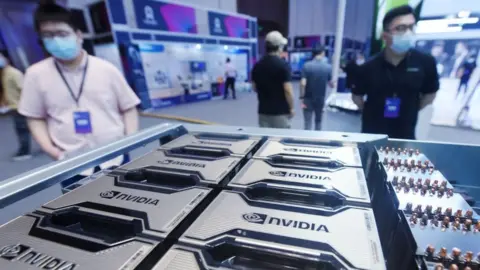
The issue has also intensified scrutiny over U.S. export policies, particularly following approval for companies like Nvidia to export advanced AI chips to China.
Anthropic argues that access to powerful chips enables large-scale distillation and accelerates foreign AI development, potentially undermining national security safeguards designed to prevent misuse.
The company warned that AI models created through illicit distillation may lack safety protections, increasing the risk of misuse in cyber warfare, surveillance, and disinformation campaigns, thereby raising urgent concerns about technological security and global AI governance.