Africa's Global Stage: G20 South Africa Delivers Major Commitments and Historic Handover
The G20 Leaders’ Summit in Johannesburg reaffirmed the resilience of the global trading system while addressing critical global challenges. Discussions covered WTO reforms, climate resilience, energy access, critical minerals, and food security, with a strong focus on African development. The summit also saw Turkish President Erdoğan pledging deepened economic ties with South Africa and supporting its stance on the Palestinian cause.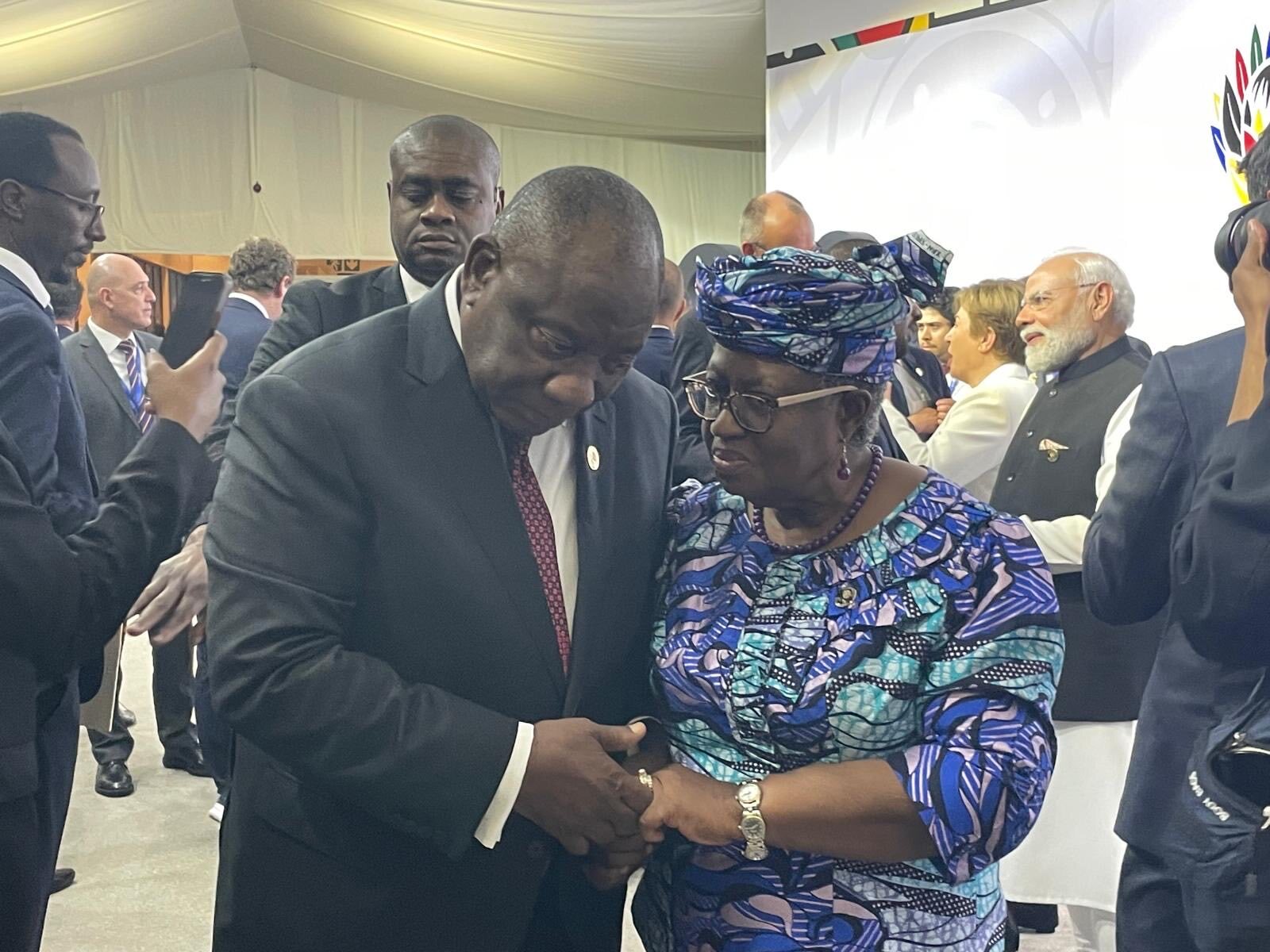
The G20 Leaders’ Summit, recently concluded in Johannesburg, underscored the enduring resilience of the global trading system despite escalating unilateral actions, particularly from the United States. World Trade Organisation (WTO) Director-General Ngozi Okonjo-Iweala affirmed that other nations have consciously avoided retaliatory measures that could fragment global trade. South Africa’s presidency of the G20 successfully positioned the rules-based trading system and the WTO at the forefront of negotiations, achieving significant consensus among member states, as noted by President Cyril Ramaphosa.
Okonjo-Iweala highlighted the overwhelming support for the centrality of the WTO and the world trading system expressed by global leaders during the summit. While acknowledging that global trade conducted under WTO rules has decreased from 80% to 72% due to US tariffs, she emphasized that the deliberate choice of countries not to retaliate has acted as a crucial stabilizing factor. Strengthening the multilateral system through comprehensive reforms remains essential, with a focus on building resilience. This includes encouraging the diversification of trade and the decentralization of global supply chains, specifically advocating for greater integration with Africa.
Africa's trade dependency on the US is minimal, with only 6% of its exports going to the US and 4% of its imports originating there. Okonjo-Iweala also shared insights from the WTO’s latest trade report, indicating that artificial intelligence (AI) could boost global trade by nearly 40% by 2040. However, she warned that unequal access to AI could exacerbate existing disparities, stressing the importance of equitable adoption, particularly for Africa, where AI could help reduce trade costs, which are currently 20% higher for intra-African trade compared to trade with the rest of the world. The discussion also focused on how G20 partners can collaborate with African countries to ensure more equitable adoption of AI and to create value chains on the African continent.
The G20 Leaders’ Summit also endorsed a comprehensive suite of global frameworks designed to address some of the decade’s most pressing challenges. These frameworks aim to strengthen climate resilience, accelerate clean energy transitions, reshape the governance of critical minerals, and support more resilient food systems. South Africa’s agenda notably centered the development needs of Africa, small island states, and other vulnerable regions within the declaration.
On climate resilience, the G20 leaders committed to transitioning from reactive crisis response to a prevention-first, people-centered disaster risk management approach. This involves scaling up pre-arranged disaster finance mechanisms like parametric insurance and catastrophe bonds to ensure instant fund release post-disaster. South Africa secured strong support for two new global tools: the G20 High-Level Principles for Investing in Disaster Risk Reduction and the Recovery Readiness Assessment Framework. The leaders reiterated support for the UN’s Early Warnings for All initiative, with South Africa being the first country to launch a national roadmap under it.
Addressing the global energy crisis, especially in Africa where over 600 million people lack electricity access, the G20 reaffirmed energy security as fundamental to national sovereignty. Commitments include tripling renewable energy capacity and doubling the rate of energy efficiency improvements by 2030, alongside deploying technologically neutral, equitable, and inclusive zero and low-emission technologies. A significant South African contribution, the Voluntary Energy Security Toolkit, was commended as a practical guide for developing countries. Leaders also backed Mission 300, a World Bank and African Development Bank effort to connect 300 million Africans to electricity by 2030, and a Voluntary Action Plan for Clean Cooking.
The declaration also tackled critical minerals, acknowledging the surging global demand for resources like cobalt and lithium. It noted that producer countries, predominantly in the Global South, often remain confined to raw-material extraction, limiting value capture and creating brittle supply chains. The G20 Critical Minerals Framework, a voluntary blueprint, was welcomed for its aim to build sustainable, transparent, and resilient mineral value chains. This framework seeks to move producer countries up the value curve through expanded exploration, investment, diversification of sources, stronger governance, local beneficiation, and community participation, affirming the sovereign right of these nations to harness resources for inclusive development.
Food insecurity was flagged as an urgent global challenge, with alarm expressed over up to 720 million people experiencing hunger in 2024. The G20 reaffirmed the fundamental right to be free from hunger and underscored the political will needed to expand access to safe, healthy, and nutritious food. It reiterated that intentional starvation of civilians should not be used as a method of warfare. Long-term food security necessitates transforming agriculture to be more climate-resilient and less carbon-intensive, particularly supporting small-scale farmers. The declaration advocated for expanded capacity building, technical support, improved access to finance and markets for African smallholder farmers, and investments in local production, storage, and intra-African trade to reduce reliance on volatile global supply chains.
Beyond the collective G20 agenda, Turkish President Recep Tayyip Erdoğan affirmed his commitment to strengthening economic trade and cooperation with South Africa, encompassing sectors from defense to energy. South Africa stands as Türkiye’s largest trading partner in sub-Saharan Africa. Erdoğan also voiced strong support for South Africa’s principled stance on the Palestinian cause, particularly its efforts to bring a genocide case against Israel to the International Court of Justice, highlighting South Africa’s exemplary response to the humanitarian crisis in Gaza. Türkiye itself is bolstering humanitarian and diplomatic support for other conflict-affected nations like Ukraine and Sudan, emphasizing the global responsibility to mitigate consequences and implement a two-state solution for lasting peace.