6 Most Bizarre Scientific Experiments in History
They weren’t science fiction; they really happened. From electrodes in the human brain to prisoners shocking each other in the name of “research,” these 6 bizarre experiments reveal the unsettling side of science that textbooks rarely mention.
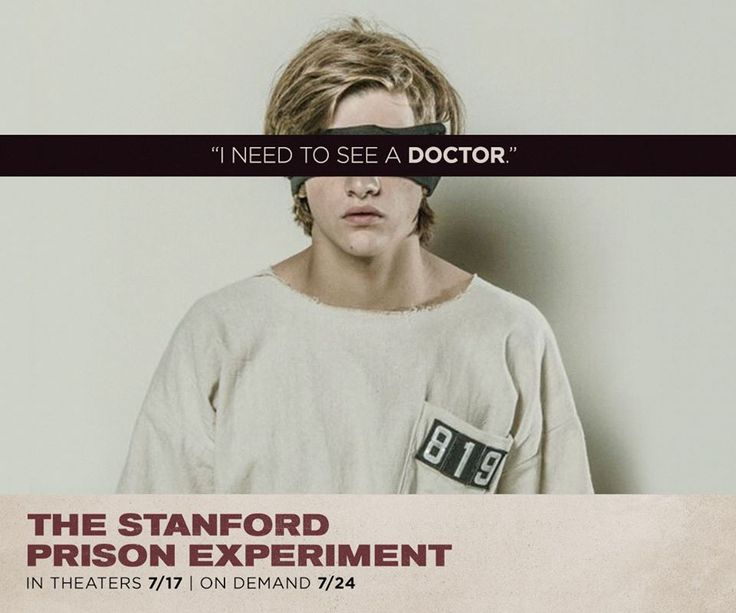
Throughout history, science has advanced because of curiosity, the urge to test ideas, push boundaries, and uncover truths. But curiosity sometimes takes unusual, even disturbing forms.
Some experiments produced groundbreaking insights; others caused controversy and harm. All of them, however, stand out as bizarre moments in scientific history that still provoke debate today.
Here are six of the strangest scientific experiments ever conducted, each factual, documented, and remembered for the questions they raised.
1. The Stanford Prison Experiment (1971, USA)
In August 1971, psychologist Philip Zimbardo at Stanford University set up a mock prison in the basement of a university building. He recruited 24 male college students, dividing them randomly into “guards” and “prisoners.” The goal was to study how people adapt to roles of authority and submission.

Within just a few days, the “guards” began displaying abusive behaviour. They imposed harsh punishments, deprived prisoners of sleep, and forced them into humiliating acts. The “prisoners,” meanwhile, suffered emotional distress, some broke down crying, others showed severe stress reactions.

Photo Credit: Stanford University Libraries
The experiment, originally planned for two weeks, was terminated after six days due to ethical concerns. Although later criticized for its methodology, the Stanford Prison Experiment remains one of the most infamous psychological studies of the 20th century and a key case in discussions of research ethics.
2. Head Transplants in Animals (1950s–1970s, USSR and USA)
In the 1950s, Soviet scientist Vladimir Demikhov conducted a series of transplant experiments in dogs. He surgically attached the head and forelimbs of a puppy onto the body of an adult dog. Some of these two-headed animals survived for days, drinking milk and responding to stimuli, before dying of organ rejection.
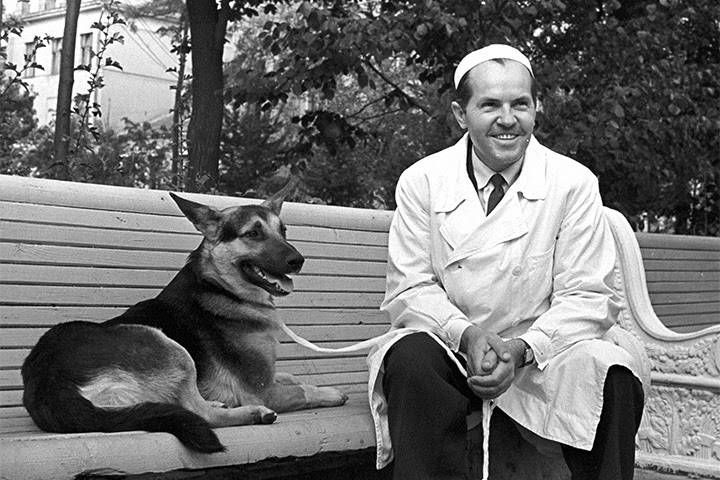
Photo Credit: Pinterest
In the 1970s, American neurosurgeon Dr. Robert Whitetransplanted the head of one rhesus monkey onto another’s body. The monkey was unable to move its new body, since the spinal cord had not been connected, but it could see, hear, and taste. It survived for nine days before its immune system rejected the foreign body.
These experiments, though ethically disturbing, contributed to the understanding of organ transplantation and neural surgery.
3. The Milgram Obedience Experiment (1961, USA)
History
Rewind the Stories that Made Africa, Africa
A Journey Through Time, Narrated with Insight.
In 1961, psychologist Stanley Milgram at Yale University wanted to explore how far ordinary people would go in obeying authority, even when asked to harm others.
Volunteers were instructed to administer electric shocks to a “learner” (actually an actor) whenever they gave a wrong answer. The shocks increased in intensity with each mistake, and although no real shocks were given, participants believed they were causing pain.

Photo Credit: Pinterest
The results were unsettling: 65% of participants continued to the maximum voltage level, even when the learner screamed in pain or begged to stop. The experiment demonstrated the powerful influence of authority on human behaviour and remains a cornerstone in the study of obedience and morality.
4. Human Radiation Experiments (1940s–1960s, USA)

During the early Cold War, the U.S. government sponsored secret experiments to understand how radiation exposure affects the human body.
Between the 1940s and 1960s, patients, prisoners, and vulnerable groups were subjected to radioactive substances without their informed consent. Some were injected with plutonium; others were fed radioactive materials in their food. These studies were conducted under government contracts, often disguised as medical treatments.

Photo Credit: Pinterest
The experiments only came to light in the 1990s after investigations revealed the extent of the violations. The scandal led to public outrage and tighter regulations on research ethics, especially around informed consent.
5. The Monster Study (1939, USA)
In 1939, speech pathologist Wendell Johnson and his graduate student Mary Tudor at the University of Iowa conducted an experiment on 22 orphaned children. The aim was to investigate the causes of stuttering.
Half of the children were given positive speech therapy, encouraged to speak fluently. The other half were subjected to negative reinforcement; told their speech was poor, criticized, and made to feel inadequate.
.jpeg)
Photo Credit: Pinterest
As a result, some children in the negative group developed speech problems and psychological trauma that lasted into adulthood. The study was never published at the time, and it only came to wider attention decades later. Today, it is remembered as one of the most unethical psychological experiments ever conducted.
6. The Elephant LSD Experiment (1962, USA)
History
Rewind the Stories that Made Africa, Africa
A Journey Through Time, Narrated with Insight.
On August 3, 1962, researchers at the University of Oklahoma injected an elephant named Tusko with a massive dose of LSD; 297 milligrams, roughly 3,000 times a human dose. The purpose was to study whether LSD could induce “musth,” a condition of heightened aggression and sexual activity in male elephants.

Photo Credit: Stateman Journal
Within minutes, Tusko collapsed, trumpeted loudly, and went into convulsions. Despite attempts to revive him with antipsychotic and barbiturate drugs, he died after about an hour.
The experiment was widely criticized for its recklessness and lack of scientific justification. It remains one of the most infamous examples of animal experimentation gone wrong.
Conclusion: Lessons From Strange Science
These six bizarre experiments reveal both the ambition and the dangers of unchecked scientific curiosity. Some advanced knowledge in psychology and medicine; others served only as cautionary tales of ethical failure.
Today, strict codes of ethics govern human and animal research; safeguards built in response to the mistakes of the past.
The stories of these experiments remind us that science isn’t just about discovering what is possible, but about carefully deciding what should be pursued in the first place.