100 Channels and a ₦1,500 Annual Fee: The Big Question Behind Nigeria's FreeTV Ambition
Nigeria's FreeTV offers 100+ channels for just ₦1,500 a year. Here is what the platform actually is, how it works, and whether the government can deliver on its promise.
For many Nigerians, entertainment now means monthly subscriptions that keep getting more expensive. DSTV, Netflix, GoTV and others are pricing out ordinary families, turning simple TV access into something only the rich and middle class can comfortably afford.
For tens of millions, entertainment is a bill they genuinely cannot afford. That is the exact gap the Federal Government's FreeTV platform is trying to fill, and it is worth understanding what the platform actually is before deciding what to make of it.
What Is Nigeria's FreeTV Platform and How Does It Work?
Launched on June 17, 2026, FreeTV is a digital television platform developed as part of Nigeria's Digital Switch-Over (DSO) programme. The platform gives households access to over 100 television channels with no monthly subscription fees, covering news, sports, movies, music, educational content, children's programmes and dedicated indigenous language channels.
Viewers can access FreeTV through satellite and terrestrial transmission, as well as through a dedicated FreeTV mobile application. This means a smartphone is a viable entry point.
Nigerians do not need to buy new television sets either; existing TVs can work with compatible DVB-T2 or DVB-S2 decoders, and many people who already own free-to-air decoders may already be equipped to access the service.
The one cost attached to the platform is a Digital Access Fee (DAF) of N1,500 per year and this is paid once, annually, for decoder activation. That works out to N125 per month. For context, that is less than the cost of many flour-based snacks in most Nigerian cities.
According to the FreeTV website, the platform delivers Free-to-Air channels with an electronic programme guide (EPG), improved signal reception and crystal clear picture quality, with push Video on Demand also available.
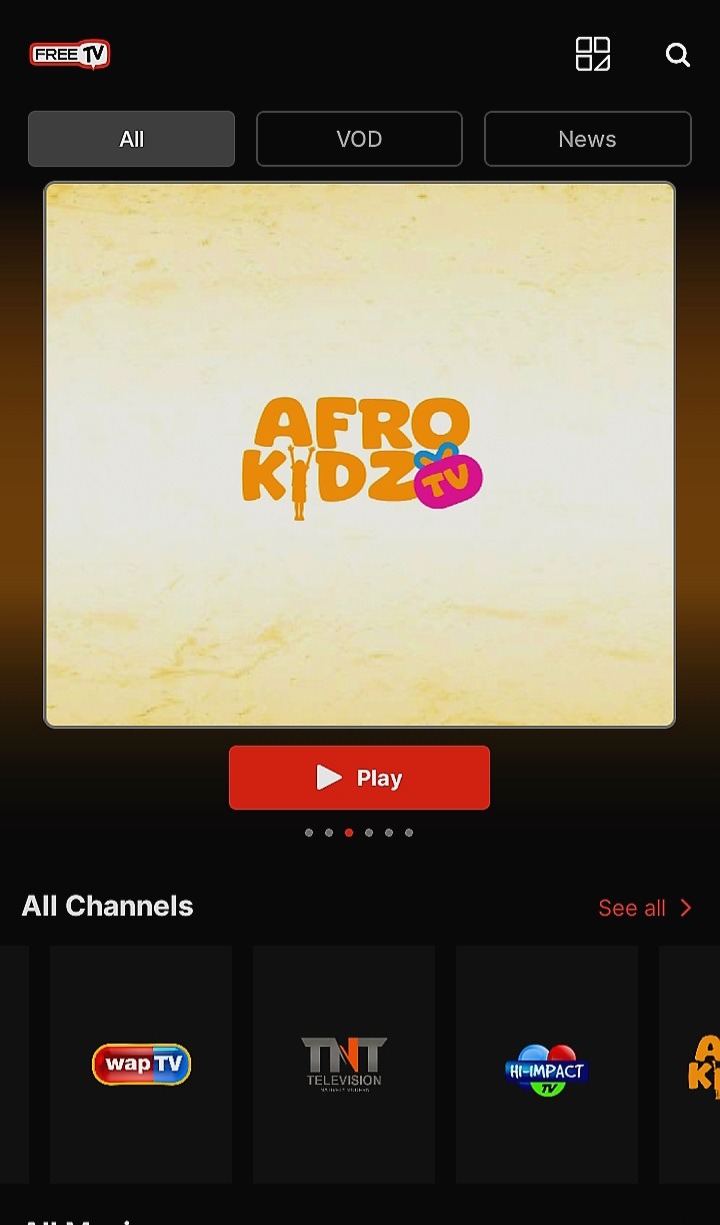
The app is powered by Thinktank Distribution Limitedand sales points are already established across Lagos, Abuja, Kano, Kaduna, Enugu, Kwara, Osun, and Plateau states.
Why FreeTV Nigeria Is a Genuinely Important Innovation
To dismiss FreeTV because it comes from a government that many citizens do not agree with would be to miss something significant. The economic logic behind the platform is sound and the timing is almost perfect.
Nigeria's inflation has made digital entertainment progressively inaccessible. Streaming platforms price in dollars and pass exchange rate shocks directly to subscribers. DSTV's parent company, MultiChoice, has raised subscription rates multiple times in the past two years alone, with little regulatory consequence.
The result is that millions of Nigerians have been effectively priced out of structured, quality broadcasting.
FreeTV addresses this with a model that is genuinely difficult to argue against. It offers one payment, no recurring cost, over 100 channels and mobile accessibility.
The National Broadcasting Commission (NBC) has framed the platform as central to deepening digital inclusion and ensuring more Nigerians benefit from technological advancement regardless of location or income level.
The platform's coverage is also designed to reach beyond major cities into rural and underserved communities, which is where the digital divide is most severe.
The NTA Question: What State-Managed Broadcasting Often Looks Like
The Nigerian Television Authority (NTA) is the oldest and largest television network in Africa. It has a national mandate, government funding and infrastructure that private broadcasters would envy on paper.
Yet when most Nigerians under 35 think of quality TV, NTA does not come to mind first. The channel has long struggled with production quality, scheduling inconsistency, aging infrastructure and content that often feels designed for bureaucratic approval rather than audience engagement.
This is typically what happens when public broadcasting is funded by government allocation rather than competitive audience retention.
The question FreeTV has to answer is whether it will operate more like NTA or more like a properly incentivised service broadcaster. The 100-channel promise includes a mix of existing free-to-air channels already available on other platforms, and the quality of those individual channels will vary enormously.
What the government directly controls, which includes the infrastructure, the EPG, the app experience and the decoder supply chain, is where the NTA comparison becomes relevant.

Regional production centres in Lagos, Abuja, Port Harcourt, Enugu, Kano and Benin are expected to serve as hubs for content development, creating opportunities for producers, editors, camera operators and other media professionals.
Whether those centres receive sustained investment after the launch excitement fades is the part that Nigerian history has trained citizens to watch carefully.
FreeTV's Long-Term Test: Execution Beyond the Announcement
Nigeria's analogue switch-off is scheduled for December 31, 2028. FreeTV is the infrastructure that is supposed to catch the millions of viewers that analogue television currently serves. That is not a small task.
The innovation itself addresses a genuine gap. The question is whether the state can sustain what it has announced: consistent signal quality, app maintenance, decoder availability at accessible price points and content investment that actually competes for attention rather than just occupying spectrum.