Zambian Civil Society Clashes with Attorney General Over Rule of Law and Constitutional Reform!
Zambia faces dual challenges in constitutional reform and democratic governance. While the Attorney General stresses legal adherence for constitutional changes amidst political calls for extended presidential tenure, civil society organizations highlight systemic concerns regarding institutional independence and human rights, advocating for structured, multi-stakeholder dialogue to address these critical national issues.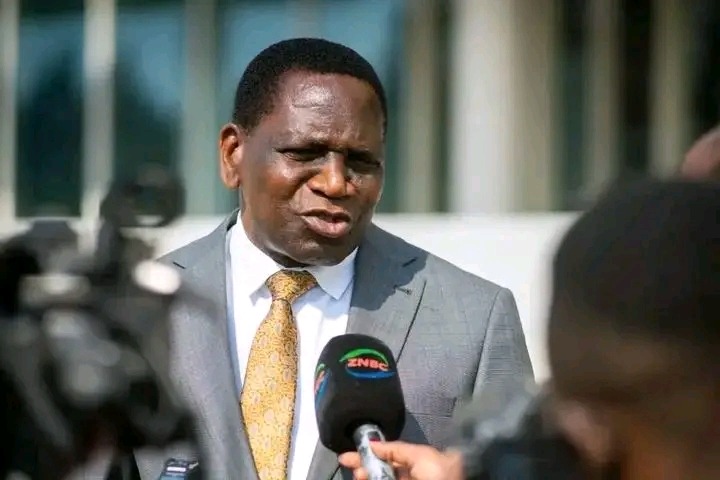
Zambia is currently navigating a complex landscape of constitutional reform and democratic governance concerns, marked by a national debate over presidential tenure and calls for enhanced institutional integrity. Attorney General Kabesha has firmly stated that the constitutional reform process will not be influenced by political commentary, emphasizing that Zambians will have a direct opportunity to participate in shaping proposed changes. The government, he assured, will carefully consider views from citizens and their elected representatives, underscoring that any amendments must strictly adhere to the processes required by law. This stance aims to delineate formal governmental constitutional programs from individual political advocacy.
However, this official position has emerged amidst public discussions from within the governing United Party for National Development (UPND). Florence Chileshe Chama, a UPND Proportional Representation MP, has publicly advocated for President Hakainde Hichilema to remain in office beyond the constitutionally stipulated year of 2031. Chama controversially stated that women “don’t want democracy but development,” linking this desire to continued support for Hichilema beyond his current term. Concurrently, another UPND official, Michael Chuzu, put forth a political argument suggesting that President Hichilema is presently completing the term of the late UPND founder Anderson Mazoka and would only commence his 'own' term in 2031. Kabesha has sought to distance the government's constitutional reform agenda from such statements, cautioning against them creating unnecessary fear or uncertainty, and reiterating that political advocacy alone does not amend constitutional provisions; a formal, legally compliant process is mandatory.
In parallel, a coalition of Joint Civil Society Organisations (CSOs) has voiced profound concerns regarding democratic governance, which they assert are “not speculative.” These concerns, originally outlined in a statement from September 14, 2026, are corroborated by a multitude of independent and credible bodies, including local and international election observer missions, regional and international Bar Associations, international human rights organizations, and the United Nations Special Rapporteur on the Rights to Freedom of Peaceful Assembly and of Association. The CSOs respectfully but firmly rejected the characterization of their concerns as “sweeping,” “inflammatory,” or unsupported by evidence, offering to share extensive reporting and correspondence from these bodies with the Office of the Attorney-General.
The CSOs have also addressed the principle of sub judice, reaffirming their respect for judicial independence and due process. They clarified that their statement was not intended to prejudge court outcomes but rather to raise public interest concerns about the broader institutional conduct, specifically regarding the independence and impartiality of the Judiciary, the Electoral Commission of Zambia (ECZ), the Defence Force, and law-enforcement agencies. They consider this oversight a proper remit of civil society, distinct from adjudicating individual legal cases.
Crucially, the Joint CSOs have welcomed the Zambian Government’s stated commitment to constructive and inclusive engagement with various stakeholders, including political parties, other civil society organisations, faith-based organisations, and professional bodies. This commitment resonates with the CSOs' own call for peace, restraint, and dialogue. They fully associate themselves with the Pastoral Statement issued by Archbishop George Lungu of Chipata on September 15, 2026, which called for a dialogue upholding fundamental national and constitutional values such as human dignity, the rule of law, access to justice, freedom of expression, responsible political participation, accountability, and legitimate citizens' rights. Echoing Archbishop Lungu's sentiment, the CSOs believe all parties, government and civil society included, must prioritize the country's welfare.
To facilitate this dialogue, the Joint CSOs have proposed a detailed framework and agenda. For representation, they suggest a broad table including the Office of the Attorney-General and designated Ministries, Joint CSOs and other civil society coalitions, opposition and ruling party representatives, the Law Association of Zambia, other professional bodies, faith-based organisations (ZCCB, CCZ, EFZ), the House of Chiefs, national human rights/electoral oversight institutions, and local and international election observer missions as observers. Essential safeguards for a credible process include each constituency nominating its own representatives, a published participant list, parity between government and non-state participants, an independent and mutually agreed facilitator, written terms of reference, and public reporting after each session, without prejudicing matters before the courts.
The proposed substantive agenda items cover critical areas: a review of Section 12 Passport Act use and access to Section 18 appeal; provisions for amnesty for political prisoners where appropriate and principles for law-enforcement conduct and timely legal representation; measures to ensure the independence of the Judiciary, ECZ, Defence Force, and law-enforcement agencies; protection of freedom of assembly, association, and expression in light of UN Special Rapporteur’s concerns; a public joint commitment by political actors on political tolerance and prevention of violence; and the establishment of a standing mechanism for continued engagement rather than a single meeting. The CSOs also outlined definitive steps forward with a clear timeline: Day 7 for participant list and terms of reference agreement, Day 14 for the first plenary and adoption of agenda/rules, Day 30 for substantive sessions with written outcomes, Day 45 for a joint public statement and implementation schedule, followed by periodic joint review sessions to monitor implementation. Aligning with Bishop Lungu, the CSOs advocate for removing the dialogue from public platforms and conducting it behind closed doors. The Joint CSOs, represented by Fr. Gabriel Mapulanga of Caritas Zambia and others, await the Attorney-General’s prompt response to their proposed engagement, reaffirming their commitment to the constitutional order and rule of law in Zambia.