Zambia's Election Victory Plunged Into Chaos: Courts Shut Down Amid Hichilema Petition Saga
Zambia faces intense post-election disputes following the August 2026 presidential election, with a petition challenging the results amidst controversies over court closures and conflicting official statements regarding its filing. As President-elect Hichilema prepares for inauguration, the nation grapples with legal complexities, political tensions, and calls for adherence to democratic principles.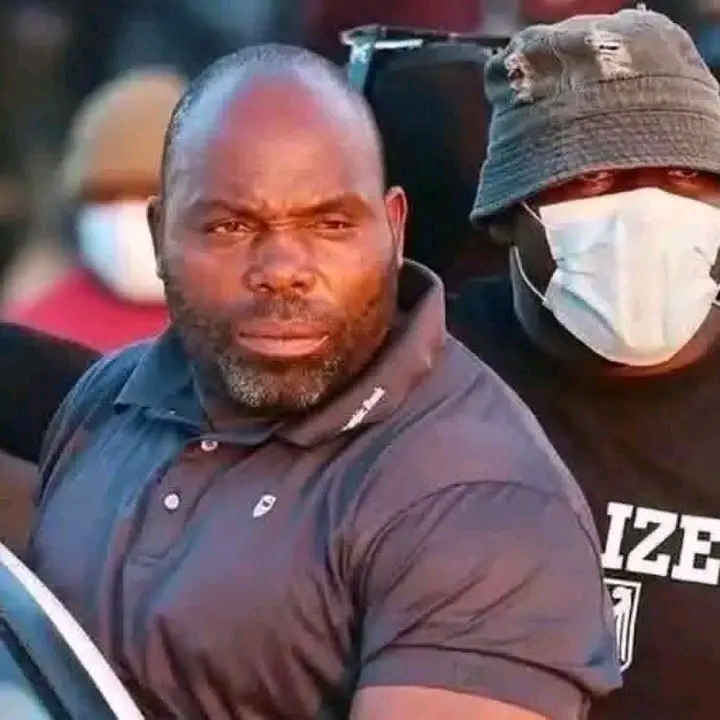
The August 2026 Zambian presidential election has plunged the nation into a complex web of legal disputes, political tensions, and conflicting official statements, even as President-elect Hakainde Hichilema prepares for his swearing-in. The post-election period has been marked by allegations of irregularities, challenges to judicial access, and an intense debate over the integrity of the democratic process.
A central point of contention is the presidential petition filed by lawyer Linda Kasonde, governance activist Brebner Changala, and LCK Freedom Foundation Limited. Their 60-page petition alleges that the election was not free, fair, or conducted on a level playing field, violating Articles 45 and 46 of the Constitution. The petitioners rely heavily on reports from domestic and international election observers, civil society organizations, and churches, identifying several major allegations. These include significant discrepancies between the Christian Churches Monitoring Group (CCMG)'s parallel vote tabulation (PVT) estimates and the Electoral Commission of Zambia (ECZ)'s official figures for national turnout (53.5% vs. 57.23%) and Hichilema's vote share (56% vs. 60.5%). They cite approximately 30 constituencies where official turnout allegedly exceeded CCMG's statistically plausible range. Further allegations involve differences between polling-station and tally-centre figures, an unequal political environment characterized by unequal application of the Public Order Act, police protection, political violence, restrictions on opposition campaigning, and the chilling effect of Cyber Security and Cyber Crimes legislation. The petition also challenges the ECZ's suspension of counting on August 14, 2026, the deployment of the Zambia Defence Force at polling stations, the alleged use of Social Cash Transfer programs to influence voters, and the recording of voters’ national registration numbers on ballot papers, compromising ballot secrecy. Broader constitutional concerns are raised regarding electoral law amendments introduced too close to the election. The petitioners are asking the Constitutional Court to declare the election invalid, nullify Hichilema’s declaration as President, order a fresh presidential election, or alternatively, a recount and re-tabulation.
However, a critical admission within the petition, which has been highlighted by analysts like George N. Mtonga, is that CCMG’s own PVT, while flagging discrepancies, still found that Hakainde Hichilema won with more than the constitutionally required 50% of the vote. This fact, according to Mtonga, undercuts the entire case, as Zambian courts have consistently applied a high standard of proof for nullifying elections, requiring “a fairly high degree of convincing clarity” and a “substantial effect” rule, meaning irregularities must be material enough to have changed the outcome. Process complaints, while important for electoral reform, do not automatically equate to a changed result in the eyes of the law.
Amidst these legal challenges, Zambia experienced unusual scenes with most important courts barricaded by armed military and security officers, citing security reasons. This development drew sharp reactions from key organizations like the Law Association of Zambia (LAZ), NGOCC, and civil society groups, who viewed it as an affront to democracy and an obstruction to challenging election outcomes. A judiciary source confirmed the indefinite closure, stating it was a decision by police and security agencies, not the judiciary itself. The Chief Justice, however, informed the nation that the Constitutional Court was on Michaelmas Recess from August 8 to September 6, 2026, during which normal court operations are legally reduced. State House strongly refuted allegations that President Hichilema ordered the court closures, with Communications Chief Specialist Clayson Hamasaka describing the claims as inconsistent with Zambia’s constitutional order, asserting that the disruptions were part of a broader, preventive security operation. State House also challenged the timing of the opposition's grievances, noting that courts were open for several working days after the August 18 results declaration without any presidential petitions being filed. Alliance Spokesperson Dr. Lawrence Mwelwa expressed concern over the court's closure on the final day for filing petitions, despite the reasons given.
Conflicting statements also emerged regarding the official receipt of the petition. The Judiciary stated that Chief Justice Mumba Malila had received email documents described as “the people’s presidential petition” from Linda Kasonde, referring them to the Constitutional Court for determination, despite Malila considering the use of his private email address “highly irregular.” Kasonde had resorted to this due to security issues preventing electronic filing through official channels. In stark contrast, Secretary to the Cabinet Patrick Kangwa announced that, at the expiration of the seven-day period for filing a petition, “the Judiciary had not received any petition.” As a result, President-elect Hakainde Hichilema was scheduled to be sworn in on Tuesday, September 1, 2026, in accordance with Article 105 of the Constitution. These conflicting statements leave the legal status of Kasonde’s submission to be determined by the Constitutional Court.
The political climate was further charged by reports concerning Richard Banda, bodyguard to opposition politician Brian Mundubile. Earlier social media reports claimed Banda had been killed, but opposition politician Chishala Kateka confirmed visiting Chelstone Police Station and seeing Banda alive and in police custody. The reasons for his detention and whether charges have been formally brought remain unclear, intensifying calls for clarity.
In response to the heightened tensions, Reverend Canon James Phiri, CCZ General Secretary, speaking on the Hot Seat Programme, emphasized the Church's efforts to promote dialogue between leaders, advocating for peace and unity in national development and urging citizens to use social media responsibly to combat hate speech and the use of children to insult political leaders. An opinion piece also called for careful consideration of politicians like Makebi Zulu and Brian Mundubile, urging people not to destroy their humanity based on political disagreement, but rather to let evidence, law, and courts speak. It highlighted the dangers of bad advice to political leaders, stressing the importance of accountability and due process.
Senator Jameson Z. Timba from Southern Africa weighed in, stressing that every state has a duty to protect its courts and citizens, but this must not frustrate constitutional rights, especially with strict election challenge timelines. He called for urgent clarification from the Zambian Judiciary on alternative mechanisms for filing time-sensitive petitions or ensuring no litigant is prejudiced. Timba also warned against any fundamental alteration of presidential term limits without the genuine consent of the Zambian people, emphasizing the importance of strong democratic institutions and accessible courts for regional stability.
The August 2026 election aftermath in Zambia thus presents a complex picture of ongoing legal battles, political maneuvering, calls for national unity, and a significant test of the nation's democratic institutions and constitutional principles.