Zambia in Mourning: Nation Bids Farewell to Former Vice President Dr. Guy Scott
Former Zambian Vice President Dr. Guy Scott, Africa's first white head of state in two decades, has died at 82. Honored with a state funeral and national mourning, he is celebrated for his servant leadership, unwavering respect for democracy, and commitment to upholding the law and treating everyone equally.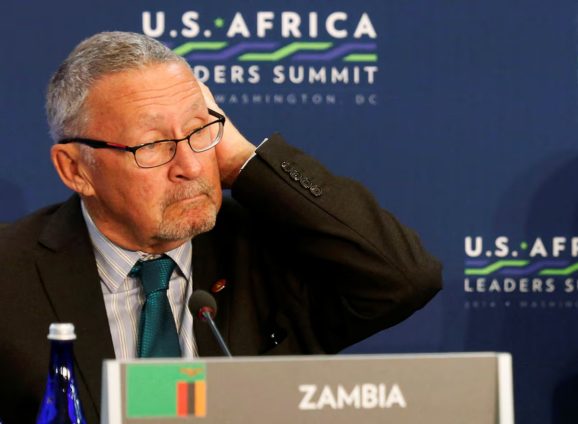
Zambia's former Vice President, Dr. Guy Scott, who made history in 2014 by becoming Africa's first white head of state in two decades when he briefly served as acting president, has passed away at the age of 82. The government announced his death on a Wednesday, stating that he died in Lusaka at his farm in the Leopards Hill area after an illness. President Hakainde Hichilema has accorded Dr. Scott a state funeral, and the nation will observe five days of national mourning.
Born in Zambia to Scottish parents and educated as an economist at Cambridge, Dr. Scott served as Vice President under the late President Michael Sata from 2011 until Sata's death in October 2014. Following Sata's demise, Scott assumed the role of acting president, serving until January 2015. This brief tenure marked a significant moment in African political history, as he was the first white head of state since South Africa's F.W. de Klerk left office in 1994. However, he was constitutionally barred from running in the subsequent presidential election because neither of his parents was born in Zambia, a law that had previously been implemented to prevent Dr. Kaunda from running.
Secretary to the Cabinet Patrick Kangwa announced the detailed arrangements for Dr. Scott's funeral. A State funeral will be held at the Cathedral of the Holy Cross in Lusaka on Monday, July 20, 2026, before his burial at Leopards Hill Memorial Park. Belvedere Lodge in Lusaka’s Kabulonga area has been designated as the venue for funeral activities during the five-day national mourning period.
Many have paid tribute to Dr. Scott, acknowledging him as a hero. Professor Kaluba Kapapula recounted an instance where Dr. Scott, upon being nominated for a Multi-Ethnic Commitment Award, humbly deflected credit to his staff. Professor Kapapula highlighted four key attributes that defined Dr. Scott's character and leadership.
Firstly, Dr. Scott was recognized for his unwavering commitment to service. He dedicated his life to the people, never considering himself superior due to his color or ancestral heritage. He consistently served everyone, even under challenging and unconventional leadership, demonstrating a profound sense of humility and a servant's heart.
Secondly, his deep respect for democracy and the will of the people was evident throughout his career. When his recommendations for a presidential successor were not accepted by the people of Zambia, he graciously bowed to their choice and never attempted to manipulate the situation, upholding the democratic process.
Thirdly, Dr. Scott rigorously upheld the law of the land. Despite the restrictive parental birth law, which some considered selfish and individually driven, affecting his own presidential ambitions, he never once sought to change it. Instead, he respected and abided by the existing legal framework.
Finally, he was lauded for treating everyone equally, without partiality. Professor Kapapula shared an example of Dr. Scott's backing facilitating an otherwise improbable adoption for a local ward, illustrating his commitment to fairness and equal opportunity for all.