Zambia Election Heats Up: Assassination Claims & Campaign Scandals Rock Presidential Race
Zambia's political landscape is fraught with campaign tensions, allegations of financial hypocrisy, and public discontent. Critical concerns have emerged regarding the safety of opposition candidate Brian Mundubile amidst calls for his elimination and claims of UPND's unfulfilled promises and desperate attempts to retain power. This intense political environment highlights the strategic importance of key provinces and the public's desire for transparent leadership.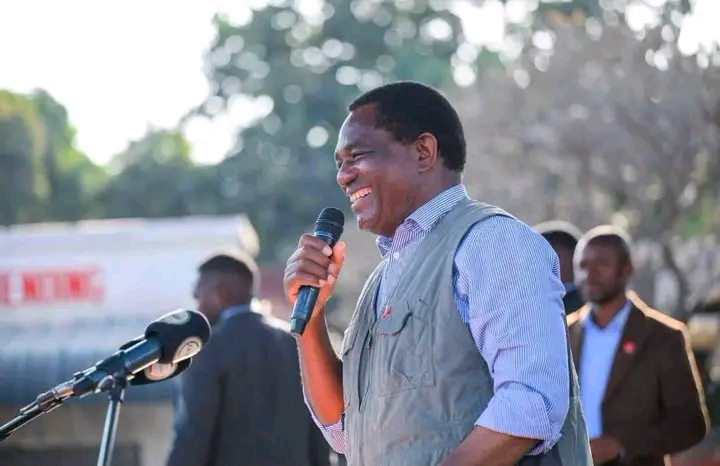
The current political landscape in Zambia is marked by intense campaign activities, allegations of hypocrisy regarding political financing, and growing public discontent with the ruling United Party for National Development (UPND) administration. A central point of contention revolves around the issue of campaign funding, where the opposition National Restoration Party for Unity and Progress (NRPUP) criticizes the UPND for openly fundraising in the past, including the "14 by 10" campaign in 2021 and public donation requests in 2015, only to now mock NRPUP's voluntary public contributions. NRPUP argues that public fundraising promotes transparency, democracy, and accountability, allowing citizens to support causes they believe in, in contrast to alleged secret financing from powerful foreign corporations like First Quantum Minerals (FQM), which FQM has denied but raises questions about foreign influence on policy.
Campaign efforts are intensifying across Zambia, with significant focus on key provinces. NRPUP's presidential candidate, Brian Mundubile, is reportedly gaining ground in areas previously considered UPND strongholds, such as Barotseland and North-Western Province. This shift is attributed to public exhaustion with unfulfilled promises, including stalled infrastructure projects, neglected social services, and general leadership failures. Criticisms against the UPND administration, which has been in power for five years, highlight a pattern of "groundbreaking ceremonies with no buildings" and manifestos that are "read once and forgotten."
Specific examples of UPND's perceived failures in Western Province include the incomplete Sesheke-Livingstone road, the lack of a public university (King Lewanika University existing "only on paper"), the unrehabilitated Lewanika General Hospital, persistent load-shedding, absence of tangible manufacturing industries, and poor Grade 12 results for three consecutive years. Drawing on Ghanaian storytelling traditions and the writings of Chinua Achebe, critics depict the UPND leadership as dishonest and resistant to change, urging the people of Barotseland to choose a different path for progress on August 13, 2026, with Mundubile of NRPUP.
Meanwhile, the UPND is also actively campaigning, particularly in Eastern Province, which represents the third-largest voting bloc with over 1.1 million registered voters. President Hakainde Hichilema's campaign caravan visited Katete, Chadiza, and Vubwi, where he emphasized continuity and asked voters to judge his administration on its existing record, promising expanded agricultural support, improved schools, roads, and business opportunities. He argued that with debt restructuring largely complete, the government could now focus on lowering the cost of living and expanding initiatives like the Constituency Development Fund and free education. The consistency of his message contrasts with campaigns built on new incentives, positioning him as a candidate seeking to renew an existing contract.
A notable development in Eastern Province was the public endorsement of President Hichilema by Dr. Martin Phiri, an official from the Resolute Party. This occurred despite the Resolute Party being part of the Tonse Pamozi Alliance, which supports Brian Mundubile. Dr. Phiri was subsequently expelled from his party for betraying the alliance. This incident highlights the competitive nature of Eastern Province, which is strategically important for both UPND, seeking to make gains, and the opposition, aiming to retain influence to offset UPND's strongholds in Southern, Western, and North-Western provinces. Campaign imagery, such as the Brown Bally Bear mascot, is also being used to generate visibility, though such attractions are not considered measures of electoral success.
Serious concerns have been raised regarding the safety of Brian Mundubile, with accusations that President Hichilema may be preparing to eliminate his main rival before the election. This dramatic assertion is supported by three main points: first, prominent supporters of Hichilema, such as "Seer 1" in a widely shared audio, have openly called for Mundubile's elimination, with Hichilema reportedly not condemning or distancing himself from such calls. Second, Mundubile's campaign has allegedly endured three coordinated violent attacks in Kitwe, Lusaka, and Solwezi, with no arrests made and no condemnation from the President. Third, Mundubile's death would offer significant political advantages to Hichilema, including the removal of his primary threat and the postponement of the presidential election, which could allow other party officials to campaign solely for Hichilema in a rescheduled election.
The desperation attributed to President Hichilema to retain power is linked to four key reasons. Firstly, a fear of prosecution for potential corruption or criminal misuse of power, given his extensive business interests and refusal to declare assets while in office. Secondly, an apparent beholdenness to commercial interests, both local and external, who allegedly bankrolled his campaigns in exchange for favorable policies, especially in the extractive sector. Thirdly, a perceived ethnic-regional bias, with accusations that Hichilema, as the first president from his region since 1964, has skewed public office appointments towards people from Southern, North-Western, and Western provinces, creating an "us and them" binary. Finally, a desire to avoid the embarrassment of losing power after just one term, despite having spent fifteen years in opposition. Critics argue that Hichilema's time in power has seen him abandon his opposition promises, alienate constituencies, and adopt authoritarian tendencies, becoming a "failed political experiment."
The President's detachment from reality is illustrated by his mockery of Mundubile's public fundraising efforts, despite Hichilema himself having sought public donations in his past campaigns. This perceived hypocrisy has backfired, with an outpouring of public support for Mundubile's transparent fundraising, generating over K860,000 cash and K2.8 million in pledges within 24 hours from diverse segments of the population. This public response indicates a widespread desire to finance Zambia's democracy rather than relying on foreign mining corporations, especially in light of the unaddressed allegations from Global Witness regarding First Quantum Minerals' alleged bankrolling of Hichilema's campaigns. The administration's failure to enact the Political Parties Bill further fuels concerns about political financing transparency. The article concludes with a stark warning that any harm to Mundubile before the election would have catastrophic consequences for Zambia, emphasizing that "Mundubile’s death before the election will set Zambia ablaze."