Zambia Election Fever: Voters Head to Polls Amidst Controversies and High Stakes
Zambia's General Election on August 13, 2026, saw high-stakes voting amid economic concerns, with leading candidates President Hakainde Hichilema and Brian Mundubile casting their ballots and addressing voters. The election was marked by mixed voter turnout, security operations targeting alleged electoral interference, and calls for vigilance during the post-voting counting process.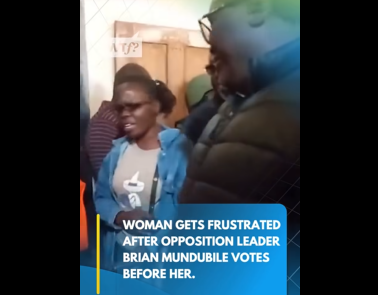
Zambia’s General Election on August 13, 2026, saw millions of registered voters cast their ballots for the presidency, parliamentary seats, and local government positions, with the process concluding at 18:00 hours. The election was largely framed around the nation’s economic hardships and civil liberties, drawing significant attention both domestically and internationally. Polling stations across the country, which opened at 06:00 hours, prepared for the crucial counting phase immediately after closure.
President Hakainde Hichilema, seeking a second term under the United Party for National Development (UPND), cast his vote at Kabulonga Boys Secondary School in Lusaka, accompanied by his family. He urged voters to participate peacefully, emphasizing his administration's efforts in debt restructuring and restoring the mining sector, despite challenges like drought and the debt burden. His public appearance with his family also served to contradict earlier opposition-aligned social media rumors suggesting they had left the country. Hichilema also humorously acknowledged the absence of a nationwide social media shutdown, a stark contrast to the 2021 election.
His main challenger, Brian Mundubile, leading an opposition alliance under the newly formed NRPUP, also voted in Lusaka. Mundubile expressed confidence in his prospects, calling for a “new beginning” for a free and united Zambia, and promised marketeers government support with excavators and vehicles for product transport if elected. He framed the election as a vote against cyber laws and for free expression, association, and poverty reduction. However, Mundubile faced scrutiny when a video circulated showing a voter questioning him for allegedly cutting in line at a polling station, insisting he wait his turn. Mundubile later appealed to voters to return to their polling stations after 18:00 hours to protect their ballots, expressing concern over reported delays, with some stations in Northern Province allegedly opening at 13:00 instead of 06:00, demanding an explanation from the Electoral Commission of Zambia (ECZ).
Voter turnout reports were mixed across the country. While some provinces saw substantial queues and strong participation, the Tonse Pamodzi Alliance expressed deep concern over very low turnout in Southern, Western, and North-Western Provinces, regions previously expected to show strong participation. The Alliance urged local and international observers, political parties, and civil society organizations to document and scrutinize these turnout patterns, calling for vigilance and commitment to protecting the integrity of the electoral process.
Among other notable figures, Independent parliamentary candidate Given Lubinda Nkombo cast his vote at Ndeke Polling Station in Mazabuka with his family, describing the experience as orderly and peaceful. He called for national unity and peace during the post-voting phase, famously wearing a shirt with a ripped sleeve, a symbol of resilience from an earlier confrontation with UPND cadres during his nomination filing. His campaign, dubbed the “Candlelight Movement,” focused on hope, resilience, and community unity. Election officials at Ndeke reported timely arrival of materials and smooth processing of voters, with minimal queues.
Security concerns were a significant feature of the election period. Police conducted stop-and-search operations nationwide. A 56-year-old Kenyan national, Michael Njuka, was arrested in an intelligence-led operation involving Zambia’s defence and security agencies over an alleged plot to interfere with the electoral system through cybercrime. The operation also led to the arrest of three former senior government officials accused of providing technical services to disrupt the electoral system. Additionally, three individuals were invited to assist investigations after being found with K7.3 million, and electronic devices containing sensitive military intelligence were reportedly recovered. Police spokesperson Godfrey Chilabi confirmed that campaign materials linked to Roma independent parliamentary candidate Sean Tembo were found in a vehicle, and Tembo was asked to assist with investigations. Separately, UPND Roma candidate Ross Kasikili filed allegations against Tembo involving pangas and a firearm, which remain claims requiring police investigation. The Ministry of Home Affairs denied any abductions, stating all apprehended individuals were in lawful custody. Defence and security agencies remained on high alert to safeguard national peace and the electoral process.
The digital landscape also showed significant political activity, with both Hichilema and Mundubile generating substantial online engagement on election day. However, it was cautioned that social media reactions and engagement do not equate to actual ballots, and the true electoral answer will emerge from the polling stations. With the close of polls, attention shifted to ballot reconciliation, counting, and results management. Mundubile’s call for voters to protect their votes underscored the opposition's focus on monitoring this critical phase. The presidential election results are expected by August 17, with the winner needing over 50 percent to avoid a runoff. Despite criticisms, President Hichilema is seen by some researchers as a more predictable leader, offering stability to the nation.