Yes, A Set of Twins Can Have Different Fathers. Here’s How Science Explains It
It sounds impossible, but science confirms that fraternal twins can, in rare cases, have different biological fathers. Understand how heteropaternal superfecundation works.

Twins are often seen as one of the closest examples of biological similarity. They share the same pregnancy, usually arrive on the same day, and are widely assumed to have the same biological parents.
But science shows that this assumption is not always true.
In extremely rare cases, a set of twins can have different biological fathers.
While this may sound like something from a movie script, it is a documented biological phenomenon known as heteropaternal superfecundation.
Though uncommon, the process is possible because of how ovulation, fertilisation, and sperm survival work in the human body. Cases like this continue to attract attention because they challenge what many people think they know about pregnancy and genetics.
How twins are usually formed
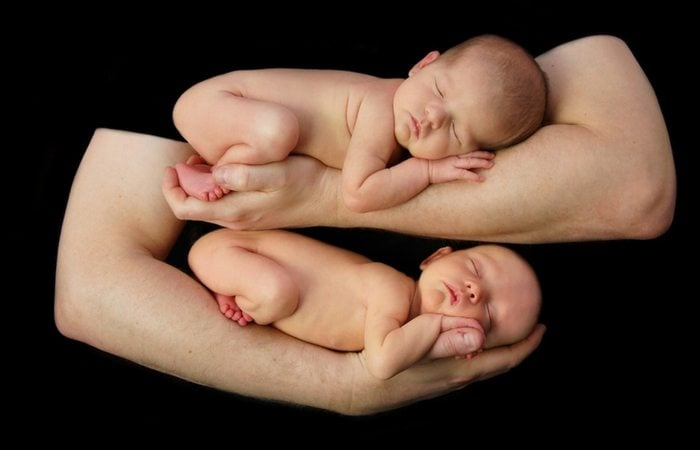
To understand how twins can have different fathers, it is important to first understand the two main types of twins.
Identical twins are formed when one fertilised egg splits into two embryos. Because both babies develop from the same egg and sperm combination, they share almost all of their genetic material and the same biological father.
Fraternal twins are formed differently. Instead of one egg splitting, the body releases two separate eggs during the same ovulation cycle. If both eggs are fertilised, two embryos begin developing at the same time.
Unlike identical twins, fraternal twins are genetically similar in the same way regular siblings are. They may look alike, but they can also show noticeable differences in facial features, body structure, or personality.
This distinction is what makes the rare phenomenon of twins with different fathers biologically possible.
The science behind different fathers
The condition that allows this is called heteropaternal superfecundation.
This happens when two separate eggs released during the same ovulation cycle are fertilised by sperm from two different men.
For this to occur, several specific events must align.
First, the woman must release more than one egg in the same cycle, a process commonly linked to fraternal twinning.
Second, intercourse with two different men must occur within a short fertile window.
This matters because sperm can survive in the female reproductive tract for as long as five days under favourable conditions. This creates a window in which sperm from separate encounters can remain active long enough to fertilise different eggs.
In this rare scenario, one egg is fertilised by sperm from one man, while the second egg is fertilised by sperm from another.
The result is fraternal twins conceived during the same pregnancy, but with different biological fathers.
How rare is it?


Heteropaternal superfecundation is considered exceptionally rare.
Because most families do not undergo DNA testing unless there is a medical, legal, or personal reason, experts say the true frequency is difficult to determine.
This means some cases may go completely undetected.
Most documented cases are discovered during paternity disputes, fertility investigations, or routine genetic testing that reveals unexpected biological differences.
Its rarity is one reason the topic often attracts public curiosity whenever a confirmed case becomes widely reported.
Modern DNA analysis has made it easier to identify unusual reproductive outcomes that may have gone unnoticed in previous generations.
Common misconceptions about twins and paternity
One common misconception is that all twins are genetically identical. This is only true for identical twins.
Fraternal twins are simply siblings who happen to share a womb and usually a birthday.
Another misunderstanding is that twins who look different must have different fathers. This is not necessarily true, since fraternal twins often inherit different traits from the same parents.
It is also important not to confuse heteropaternal superfecundation with superfetation.
Superfetation refers to the fertilisation and implantation of a second egg during an existing pregnancy,a phenomenon considered even rarer in humans, with fewer than ten confirmed cases documented in medical literature.
Unlike heteropaternal superfecundation, superfetation does not happen within the same ovulation cycle.
Biology is often more complex than expected
Cases of twins with different fathers remain rare, but they are a real example of how human reproduction can defy expectations.
Pregnancy is influenced by timing, hormones, genetics, and processes that are often far less predictable than many people assume.
While most twins do share the same biological parents, science confirms that rare exceptions do exist.
And in biology, rare does not mean impossible.