Why Ken Saro Wiwa Was Executed
Who was Ken Saro Wiwa and why was he hanged? This is a story on the chilling consequences of fighting for freedom.
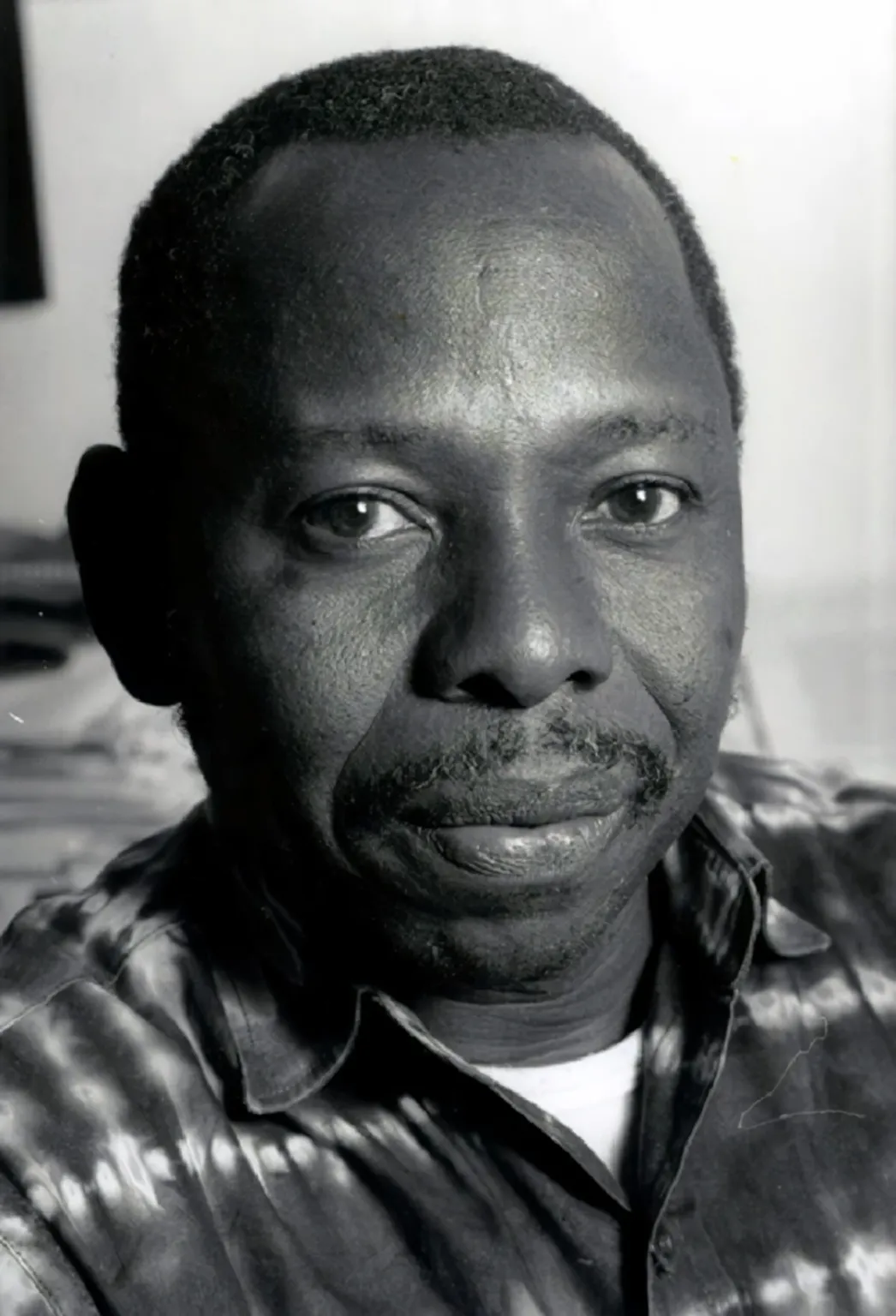
Beneath the tangled mangroves of southern Nigeria, where oil stains the earth and drilling machines once ruled, a voice broke through with indefatigable resolve. Born on October 10, 1941, in Bori, near Port Harcourt, Ken Saro-Wiwa filled many roles—teacher, novelist, television producer, and activist. Shockingly, his life would be cut short by execution on November 10, 1995, at the age of 54.
The following is a story of why and how this occurred.
Early Years and Education
Saro-Wiwa’s roots were steeped in the power of language. At Government College Umuahia, a crucible for Nigerian intellectuals, he began shaping the sharp wit and critical voice that would define his life. Later, at the University of Ibadan, he studied English and discovered his weapon: the power of the satirical narrative.
During the Nigerian Civil War (1967–1970), Ken Saro-Wiwa served as a civilian administrator at the Port of Bonny in the Niger Delta, a role that immersed him in the region’s complex political landscape. This experience sharpened his awareness of the deep-rooted struggles facing Ogoni people.
By 1973, his growing commitment to Ogoni rights led to his dismissal as Regional Commissioner for Education in Rivers State, after he openly advocated for greater freedoms and autonomy.
With politics no longer offering a platform, he turned fully to writing as his primary mode of resistance. Over the course of his career, he published more than 30 books, skillfully blending fiction, journalism, and political critique.
In the 1980s, he reached millions through the television series Basi and Company, which ran for about 150 episodes. Though comedic on the surface, the show delivered a sharp, often satirical indictment of corruption, greed, and the dysfunction of post-colonial Nigerian leadership.
1990: Ogoni, Oil, and the Birth of MOSOP

History
Rewind the Stories that Made Africa, Africa
A Journey Through Time, Narrated with Insight.
Image Credit: EPA/MARTEN VAN DIJL

Image Credit: EPA/MARTEN VAN DIJL

Ogoniland, located in Rivers State within the heart of the Niger Delta, is the ancestral home of the Ogoni people, a community deeply rooted in farming and fishing traditions. By 1990, this land of his childhood no longer carried the scent of fresh earth—it reeked of oil and pollution.
For over three decades, multinational giants—chief among them, Shell—had drilled into Ogoniland, extracting black gold since 1958—a resource worth an estimated $30 billion. But the Ogoni people reaped only devastation: poisoned rivers, destroyed crops, vanishing wildlife, acid rain, and oil spills stretching the size of football fields.
Despite Shell employing over 5,000 people across Nigeria, fewer than 100 were Ogonis.
That year, Saro-Wiwa founded the Movement for the Survival of the Ogoni People (MOSOP) and wrote the Ogoni Bill of Rights. It demanded $10 billion in compensation, environmental remediation, and political autonomy—a landmark document in Africa’s environmental justice movement.
1993: A March That Shook the World

The world couldn’t look away much longer. In January 1993, over 300,000 Ogonis—more than half the population—marched in peaceful protest. Their unified voice echoed so loudly that Shell suspended its operations in Ogoniland later that year—an almost unheard-of concession from an oil giant. But victories have consequences. The then Nigerian military government, under the rule of General Sani Abacha responded not with dialogue, but with heavy judgement.
History
Rewind the Stories that Made Africa, Africa
A Journey Through Time, Narrated with Insight.
1994: The Ogoni Four and the Tragic Turning Point
On May 21, 1994, the Ogoni struggle reached a dark and deeply divisive turning point. In Giokoo, within the Gokana Local Government Area, four prominent Ogoni leaders—Albert Badey, Edward Kobani, Samuel Orage, and Theophilus Orage—were lynched by a mob of angry youths.
These men were not outsiders; they were well-known and respected figures within the Ogoni community. Albert Badey, a former Secretary to the Rivers State Government, had played a crucial role in negotiations between Ogoni leaders and federal authorities. Edward Kobani, once a radical student at the University of Ibadan and an early Deputy President of MOSOP, had also served as a commissioner in Rivers State. Samuel and Theophilus Orage, influential traditional chiefs, had worked to bridge the growing rift within Ogoni leadership.
The killings arose from a bitter internal divide between those who supported Saro-Wiwa’s increasingly confrontational tactics and others who favored negotiation and compromise. The military regime quickly seized on the unrest. Saro-Wiwa and eight other MOSOP leaders were arrested and accused of inciting the violence. The charges were thin, but the crackdown was effective. It gave the government the pretext it needed.
1993–1995: Trial, Execution, and Outrage
Between 1993 and 1995, Saro-Wiwa was detained repeatedly, beaten, isolated, and silenced. In 1995, after a trial widely condemned as a sham, he and his co-accused—the Ogoni Nine—were found guilty of murder.
On November 10, 1995, they were hanged.
The world erupted. Despite urgent pleas from the United Nations, the Pope, and global leaders, the execution went forward. The fallout was swift: Nigeria was suspended from the Commonwealth, and Shell faced a tidal wave of international condemnation.
Legacy in Numbers, Action, and Influence
History
Rewind the Stories that Made Africa, Africa
A Journey Through Time, Narrated with Insight.
Saro-Wiwa’s death did not silence the movement—it amplified it. Though Ogoniland still awaits full environmental remediation, the pressure he applied forced Shell to withdraw from the region and provided a framework that environmental justice movements around the world continue to follow.
His work earned global recognition: in 1994, he received the Right Livelihood Award, often referred to as the “Alternative Nobel Prize”; in 1995, he was honored with the Goldman Environmental Prize; and in 2025, he was posthumously awarded Nigeria’s Commander of the Order of the Niger (CON), along with official pardons for the Ogoni Nine.
The cost of this struggle, however, was staggering—an estimated 2,000 Ogonis were killed during military crackdowns throughout the 1990s. His legacy endured not only in institutions and movements but also through his family. His son, Ken Wiwa Jr, became a journalist and advisor on African affairs, continuing to carry the Ogoni story into the global conversation until his death in 2016.