What If Nigeria’s Next Satellites Signal a New Era of Strategic Independence?
Nigeria is turning to Israel and France for new satellites, but is Abuja quietly reducing its dependence on China?
What happens when a country decides that relying on one foreign partner for critical communications infrastructure is no longer enough?
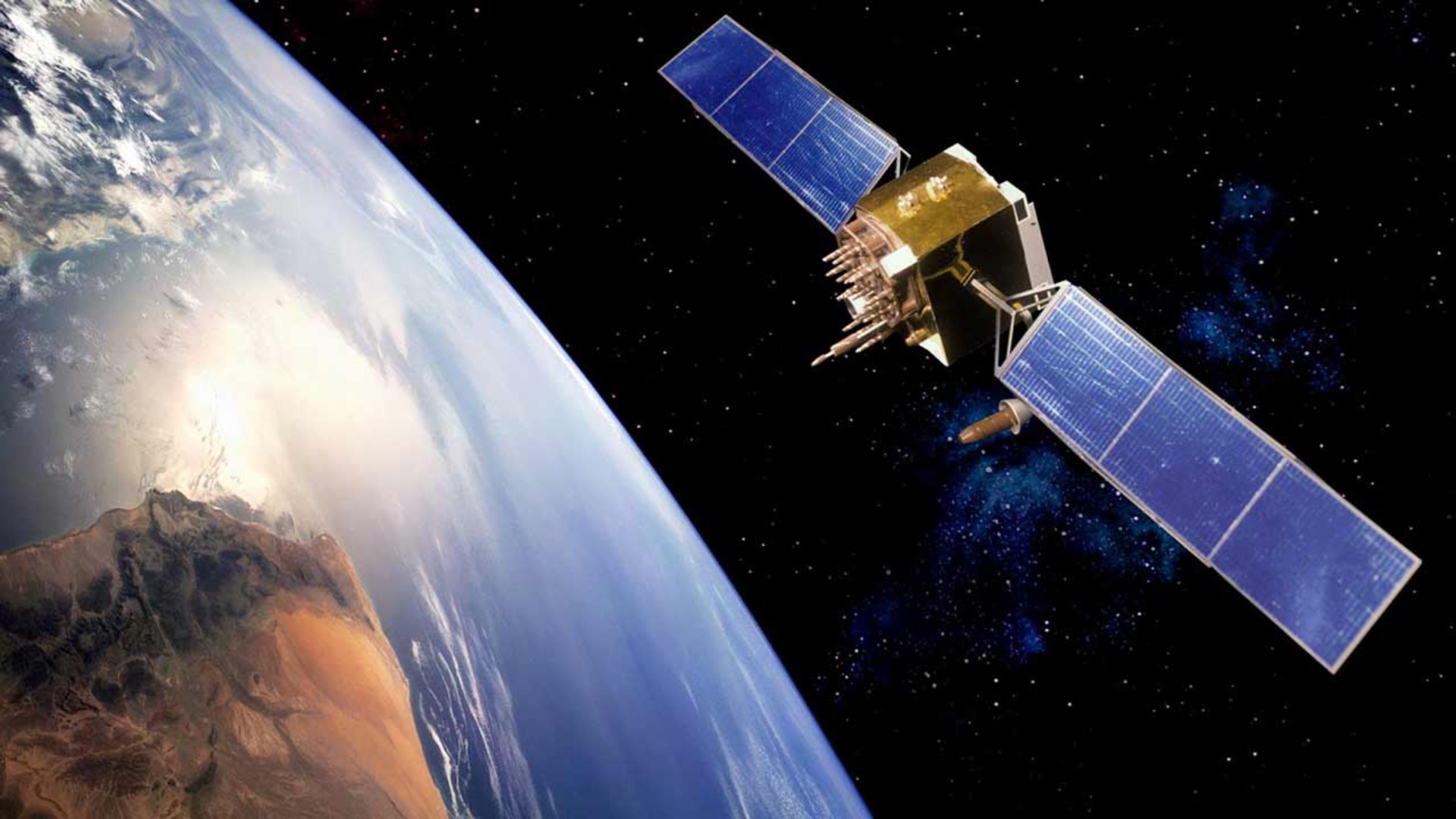
Nigeria is preparing to take a different approach to its satellite infrastructure, turning to Israel and France for its next-generation communications satellites instead of relying solely on its long-standing Chinese partnership.
The Federal Government has approved the acquisition of NigComSat-2A and NigComSat-2B, with Israel Aerospace Industries (IAI) and France’s Thales Alenia Space expected to supply the satellites.
The first is targeted for launch by the end of 2028, while the second could follow in 2029 or 2030.
The decision comes after a dispute with China Great Wall Industry Corporation (CGWIC), which warned earlier in 2026 that it could suspend services supporting Nigeria’s existing NigComSat-1R over an alleged $11.44 million debt.
The development raises a bigger question about Nigeria’s digital future: Is Abuja simply buying new satellites, or is it deliberately reducing its dependence on a single foreign technology partner?
Could the China Satellite Dispute Have Changed Nigeria’s Strategy?
Nigeria’s relationship with China remains important, because the existing NigComSat-1R was built by CGWIC and launched from China in 2011, while Nigeria’s earlier NigComSat-1 was also built and launched by China.
But the dispute over the $11.44 million payment exposed the risks that can come with depending heavily on an external supplier for infrastructure linked to communications, broadcasting and national security.
CGWIC had threatened to deactivate active transponders if the outstanding amount was not settled, potentially affecting internet, broadcasting and defence communications.
NIGCOMSAT rejected the debt claim and maintained that its relationship with the Chinese company remained intact.
Still, the episode provided a practical reminder: when critical infrastructure depends on one foreign partner, a disagreement over money or services can quickly become a strategic issue.
Nigeria's decision to involve Israeli and French companies therefore appears less like an abandonment of China and more like an attempt to spread its technological partnerships across multiple countries.
What Will NigComSat-2A and 2B Actually Change?
The new satellites are expected to significantly increase Nigeria's communications capacity.
NIGCOMSAT says the programme will support high-capacitybroadband, broadcasting, enterprise connectivity and government services, with particular attention to communities that remain underserved or difficult to reach through conventional infrastructure.
The satellites could also support sectors such as education, healthcare, agriculture and financial services, while providing secure communications for critical government and national-security requirements.
This is important because Nigeria's digital ambitions cannot depend entirely on terrestrial infrastructure.
Fibre-optic networks and mobile towers remain essential, but satellites can reach locations where laying cables or constructing extensive terrestrial networks is difficult or expensive.

If successfully deployed, NigComSat-2A and 2B could therefore become more than replacement infrastructure.
They could provide additional capacity for a country trying to expand digital services to millions of people.

Is Nigeria Building a More Diversified Digital Future?
The most interesting part of the satellite programme may not simply be who is building the spacecraft, but why Nigeria is choosing multiple partners.
With IAI handling one satellite and Thales Alenia Space involved in the programme, Nigeria is broadening the international technology base behind its communications infrastructure.
That does not mean the country's relationship with China is ending. NigComSat-1R remains operational, and NIGCOMSAT has maintained that its partnership with CGWIC continues.
Instead, Nigeria appears to be moving toward a model where no single foreign supplier carries the entire weight of its strategic satellite infrastructure.
If the programme stays on schedule, the first satellite could be in orbit by the end of 2028, followed by the second around 2029 or 2030.
The bigger test will then be whether Nigeria can turn the investment into reliable broadband, wider coverage and stronger digital services rather than simply adding new satellites to its fleet.
So perhaps the real question is not whether Nigeria is moving away from China, but whether it is finally building a satellite strategy in which it has more choices, more capacity and less dependence on any single partner.