What Happens to Families Left Behind When the Breadwinner Leaves — An Underreported Cost of Migration
Nigeria's migration boom is often measured through remittances and economic opportunity, but families left behind also absorb the emotional, parental and domestic costs of separation.

When a Nigerian leaves for the UK, Canada or another country, the departure is usually narrated as the beginning of something: a better salary, a better life, a chance to send money home and, eventually, and just maybe, an opportunity for everyone else to join.
Imagine, however, the family story from the other side of the airport departure hall: a spouse who now handles the household alone, children who have learnt to schedule their lives around video calls, parents including siblings who are now used to the ache of absence, or an elderly parent who receives money regularly but still has to wait for someone else to accompany them to the hospital.
The migrant has left in search of opportunity, but someone at home has quietly inherited the responsibilities that opportunity could not carry away.
The Part of Japa We Can Calculate

If you have never heard the word “Japa,” we might have to ask whether you have been living in Nigeria. Borrowed from Yoruba, japa means to run, flee, or escape, and in contemporary Nigerian slang, it has become shorthand for leaving the country, usually in search of better economic opportunities, a more stable life, or simply a chance to breathe somewhere else.
What began as casual street language has become one of the defining words of Nigeria’s migration era, capturing not just the act of leaving, but the frustration and hope that often sit behind it.
There is a reason the economic argument for migration is so persuasive. Money is measurable, and a salary earned abroad can be converted into naira; school fees can be paid, rent can be covered, medical expenses can be handled, and a family can move from surviving month to month to having some financial breathing room.
For a country where remittances have become an important part of household and national finances, the migrant's ability to send money home is not a small benefit: World Bank data shows personal remittances received by Nigeria were equivalent to 7.8 percent of GDP in 2025.
This is the part of the migration story Nigerians understand easily because it arrives with receipts. Someone abroad pays a sibling's university fees. A mother receives money for her children's school expenses. A new roof appears on the family house.
Sometimes the person who left is supporting several relatives at once, becoming a kind of unofficial foreign-exchange department for the family.
And none of this should be dismissed. Migration can be economically rational, particularly when people are responding to limited opportunities at home. The problem begins when the calculation stops at the money.
Then There Is the Work Money Cannot Send Home

A transfer can pay a child's school fees. It cannot attend the school's parents' meeting.
It can pay a hospital bill, but it cannot sit beside an aging parent in a waiting room. It can put food on the table, but it cannot settle the argument between siblings, comfort a child after a difficult day or notice that someone at home has been unusually quiet.
This is the less visible economy created by migration: the redistribution of care.
When one individual or even parent leaves, the other may become a single parent in everything but name. When both parents leave, grandparents, older siblings or relatives may absorb responsibilities that were never formally assigned to them.
Diaspora Connect
Stay Connected to Home
From Lagos to London, Accra to Atlanta - We Cover It All.
In case of big families, the void cannot be filled, as family members adjust around the fact that the other is not around and their absence is felt.
The family may continue functioning perfectly well from the outside, but functioning is not the same thing as remaining unchanged.
There is also the strange arithmetic of emotional presence. The person abroad may be working long shifts precisely to provide for the family, while the parent at home is exhausted from doing the things money cannot outsource. Both are making sacrifices, but only one sacrifice tends to appear in the migration success story.
Technology helps, of course. A child can now see a parent on a phone thousands of kilometres away, attend a birthday celebration through a screen and receive a goodnight message before bed, an adult can always call his father, mother and other siblings. But a video call is still a video call. It is a remarkable substitute for distance, but it has not abolished distance.
When Temporary Separation Quietly Becomes Family Structure
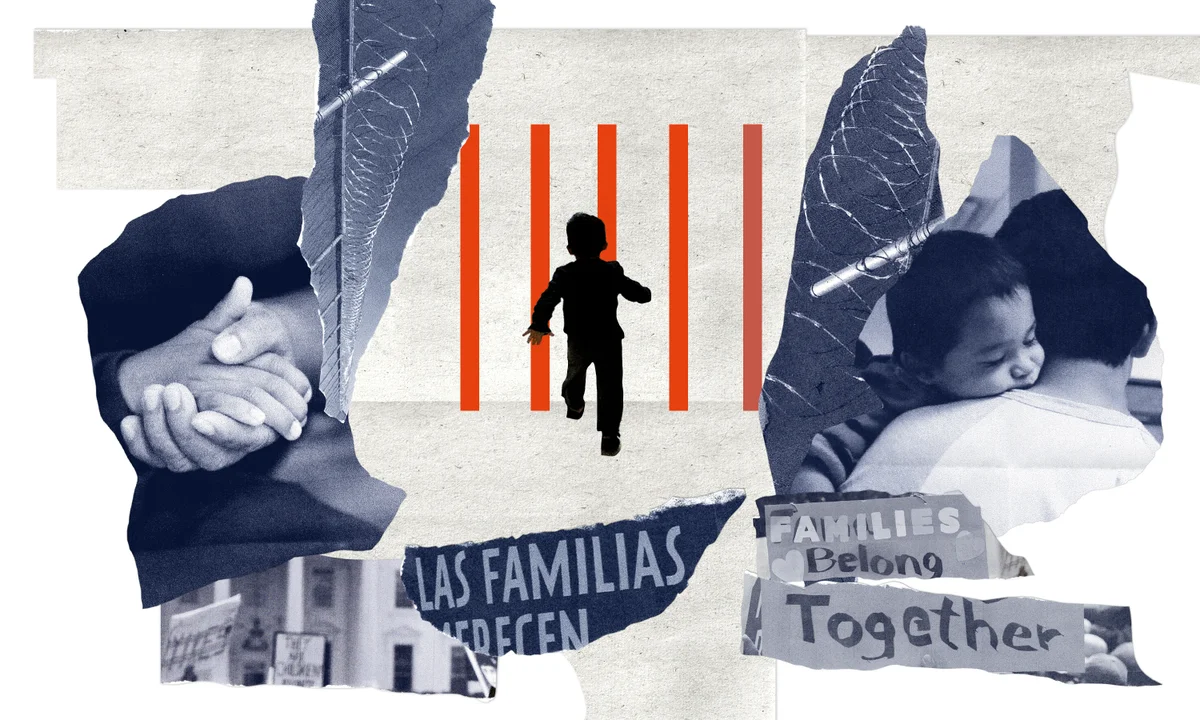
Most families do not begin with the intention of becoming permanently separated. The language is usually temporary: I will go first. You will join me later. Let me settle down. We will figure it out.

Sometimes they do. Sometimes "later" becomes another year.
Migration pathways can make that delay more complicated than families initially expect. Immigration rules, employment conditions, housing costs and the financial requirements attached to bringing dependants can all affect whether families are reunited as planned.
The UK's immigration changes, for example, have restricted dependants on some routes; from March 2024, care workers and senior care workers in England generally could no longer bring dependants under the relevant route.
The UK's own assessment noted that the policy made the route less attractive partly because of its implications for family migration.
The consequences are not always visible in migration statistics. A visa application can be counted. A dependant can be counted. A remittance can be counted.
But who counts the years in which a child grows up with one parent physically present and another appearing mostly on a screen?
This is where the "Japa" conversation needs a wider vocabulary. Migration is often framed as a personal decision, and increasingly as a financial strategy.
But for families, it can also become a structural change: one person becomes the breadwinner abroad, another becomes the permanent manager of life at home, and children learn to understand parental presence in two different forms.
None of this makes migration wrong. It simply makes the story more complicated.
Japa Has a Family Story Too
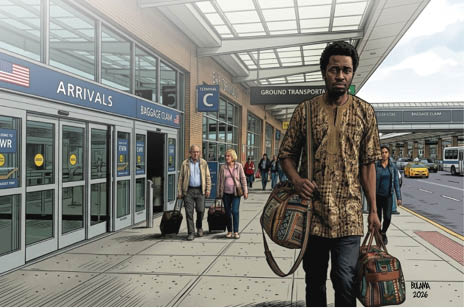
Nigeria's migration conversation has become very skilled at celebrating departure. We discuss the visa, the flight, the first job, the first salary, the new apartment and the first picture taken in winter as though surviving cold weather is itself a professional achievement.
Diaspora Connect
Stay Connected to Home
From Lagos to London, Accra to Atlanta - We Cover It All.
But there is another story taking place quietly behind those photographs.
It is the spouse who has become accustomed to making decisions alone. It is the child who knows that birthdays come with a phone call. It is the grandmother who receives money for medication but still wishes her son or daughter could sit beside her. It is the migrant who is physically absent because they are trying, often sincerely, to create a better future for everyone else.
The point is not to romanticize staying or condemn leaving. Leaving can be economically sensible and emotionally expensive at the same time.
A family can be financially better off while carrying a different kind of deficit, one that does not appear on a bank statement.
Perhaps that is the part of the Japa story worth examining more closely. For every Nigerian whose departure is celebrated as a success story, there is often a family at home learning how to live around the shape of the absence.
And that family, too, is part of the migration story.