Visionary Leader: Nkechi Okenwa's Bold Plan for Renewable Energy & Women's Empowerment in Nigeria
Nkechi Okenwa, a Nigerian electrical engineer, has dedicated her career to bridging the gender gap in the renewable energy sector. Through her companies, Energy Excell Systems and Solutions and the Women in Energy and Economic Sustainability Initiative (WEESI), she empowers women with skills and opportunities, transforming livelihoods and advocating for inclusion in a male-dominated industry. Her work addresses critical energy access issues while challenging biases and envisioning a more equitable future for Nigeria's energy landscape.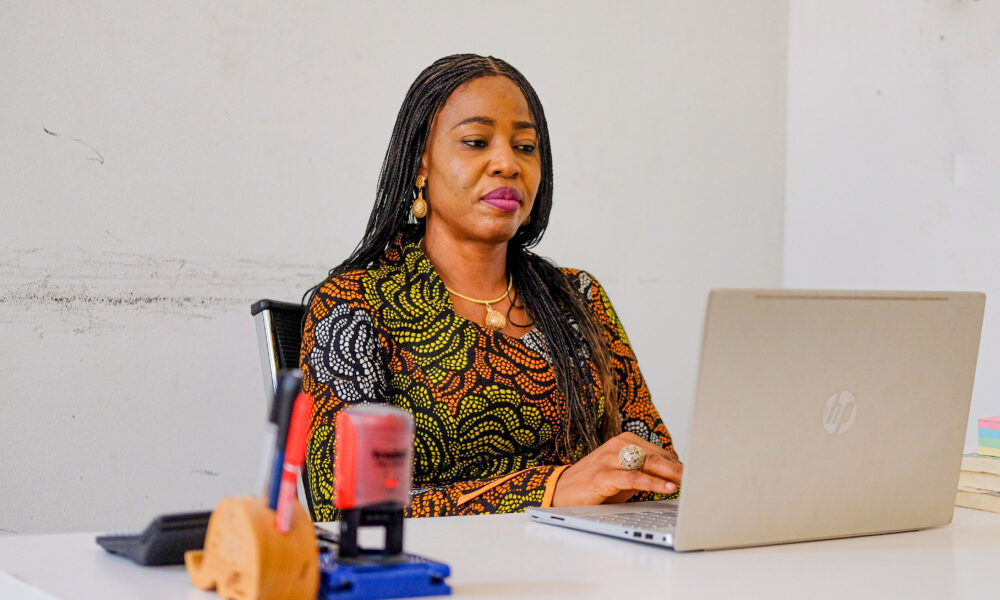
Nkechi Okenwa, CEO of Energy Excell Systems and Solutions and founder of the Women in Energy and Economic Sustainability Initiative (WEESI), began her journey with a profound fascination for energy. Growing up in Nigeria, she witnessed firsthand how electricity could transform homes and communities, igniting a passion that led her to pursue electrical electronics engineering. This path, however, revealed a significant gender disparity, with women making up a mere five percent of her 220-strong engineering class. This imbalance, though intimidating, became the catalyst for her larger mission: to ensure women's inclusion in the energy sector.
Inspired by her own perseverance through a male-dominated field, Nkechi became determined to create opportunities for other aspiring women. This resolve led to the establishment of two key ventures. In 2013, she founded Energy Excell Systems and Solutions Limited, an indigenous Nigerian renewable energy social enterprise and Engineering, Procurement, and Construction (EPC) company. Beyond mere solar panel installation, Energy Excell focuses on "productive use" energy, providing energy-efficient appliances such as solar-powered rice mills, cassava graters, and grinders to homes, small businesses, and farming communities, directly enhancing livelihoods and local economies.
As her business grew, Nkechi observed that women, despite being disproportionately affected by energy poverty, were largely excluded from energy solution discussions. This realization prompted her to launch the Women in Energy and Economic Sustainability Initiative (WEESI) in 2020. WEESI aims to forge pathways for women and girls across the entire energy value chain, from grassroots communities to leadership positions. The initiative offers strategically tailored programs, including STEM essay competitions, mentorship, and scholarship opportunities for girls and young women aged 12 to 26 to cultivate early interest in renewable energy and engineering. At the community level, WEESI provides technical training in solar photovoltaic installation and maintenance, alongside sustainable clean cooking practices. They also educate rural women, community entrepreneurs, and internally displaced persons (IDPs) on converting waste, like rice husks, into profitable charcoal briquettes, demonstrating practical applications of renewable energy for economic empowerment.
The impact of WEESI has been transformative for many, including Anita Manuel, an entrepreneur and contractor. Drawn to WEESI's mission, Manuel gained practical skills in solar panel installation, energy auditing, and technical troubleshooting. Her participation in a successful solar installation, which powered an entire building and activated a freezer, cemented her belief in the practical and transformative power of the knowledge she acquired.
Nkechi's journey was also marked by a personal battle against self-doubt and institutional bias. Even as an engineering graduate, she frequently questioned whether her expertise would be trusted in a predominantly male industry. These fears were often reinforced by clients who would enter her office searching for a male engineer, doubting her capabilities. However, Nkechi consistently met these challenges by allowing her technical excellence to speak for itself, gradually overcoming her fears and reinforcing her belief that women belong at every level of the industry.
Despite the progress championed by individuals like Nkechi, Nigeria's renewable energy sector still confronts significant structural hurdles. High installation costs, inconsistent policies, and poor-quality installations by untrained technicians contribute to public skepticism and limit adoption rates. Eng. Ale Oluwafeyisayo Joy points out that Nigeria lags behind countries like Kenya and South Africa, which have established clearer structural development, policies, and financial pathways for renewable energy. The International Energy Agency (IEA) highlights that nearly 600 million people in Africa lack electricity access, with sub-Saharan Africa bearing the largest share, emphasizing the urgent need for investment in mini-grids, solar systems, and decentralized solutions, especially in rural areas.
Nevertheless, Nkechi remains optimistic about the future of renewable energy in Nigeria, viewing solar as a necessity rather than an option. For her, this future transcends mere market expansion and technological adoption; it is fundamentally about diversifying participation. It is about ensuring that the next generation of girls entering engineering classrooms feels empowered and included, and that the industry evolves to value women's contributions without requiring them to constantly prove their belonging. Every morning, from her office window, Nkechi continues to build this inclusive future, powered by energy, persistence, and endless possibilities.