Urgent Health Alert: Northern Nigeria Faces Meningitis Threat
NiMet has issued a critical advisory, warning of a heightened risk of Cerebrospinal Meningitis (CSM) in several northern Nigerian states due to dry, dusty weather conditions. The agency identified high-risk areas, vulnerable groups, symptoms, and preventive measures including vaccination and hygiene. This follows an earlier heat warning, detailing risks of heat stress in various states.The Nigerian Meteorological Agency (NiMet) has issued a critical nationwide advisory, warning residents in several northern states of a heightened risk of Cerebrospinal Meningitis (CSM), attributed to prevailing dry and dusty weather conditions during the hot season that are highly conducive to the spread of the disease.
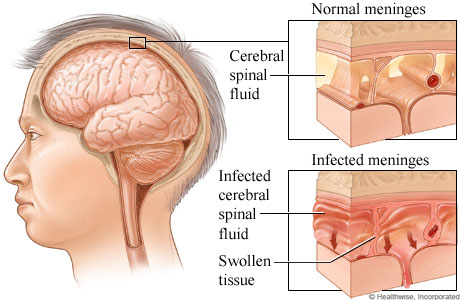
Cerebrospinal Meningitis is a severe infection that targets the membranes enveloping the brain and spinal cord, predominantly caused by the bacterium Neisseria meningitidis, and can advance rapidly to become life-threatening within hours if treatment is delayed.
NiMet has identified numerous northern states as falling within the high-risk category, including Sokoto, Zamfara, Kebbi, Katsina, Kano, Jigawa, Adamawa, Gombe, Bauchi, Yobe, and Borno, while Plateau, Oyo, Cross River, Edo, Ekiti, and Enugu have been classified as requiring comparatively lower vigilance levels.
Certain demographic groups are particularly susceptible to CSM infection, with NiMet highlighting children and young adults, individuals in overcrowded settings, those exposed to dry and dusty environments, and persons with compromised immune systems as being most at risk.
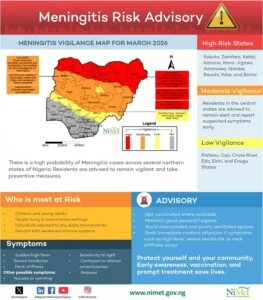
NiMet urged the public to recognize early symptoms including sudden high fever, severe headache, neck stiffness, nausea, and sensitivity to light, emphasizing the critical importance of immediate medical attention and recommending vaccination as one of the most effective preventive strategies.
Beyond vaccination, crucial preventive measures include maintaining rigorous personal hygiene, frequent handwashing, refraining from sharing personal items, and ensuring adequate ventilation in homes, schools, and other public spaces.

This meningitis advisory closely follows an earlier nationwide warning concerning rising temperatures, with NiMet indicating that residents in Benue, Nasarawa, the FCT, Kogi, Niger, Kebbi, Cross River, Oyo, and Ogun, along with other inland southern areas, could be particularly vulnerable to extreme heat.
NiMet elaborated that heat stress occurs when the human body struggles to regulate its temperature, triggered by a combination of high temperatures, elevated humidity, poor ventilation, dehydration, and excessive physical exertion, which can progress to critical conditions like heat exhaustion or heatstroke in severe instances.