Unveiling the Lost Professions: Shocking Truths About Medieval Women's Work
Challenging historical assumptions, medieval women actively engaged in diverse professional roles between 600 AD and 1500 AD, extending beyond domestic life. This article details their contributions as agricultural workers, professional bakers, businesswomen, and skilled clothiers, showcasing their vital economic and social impact.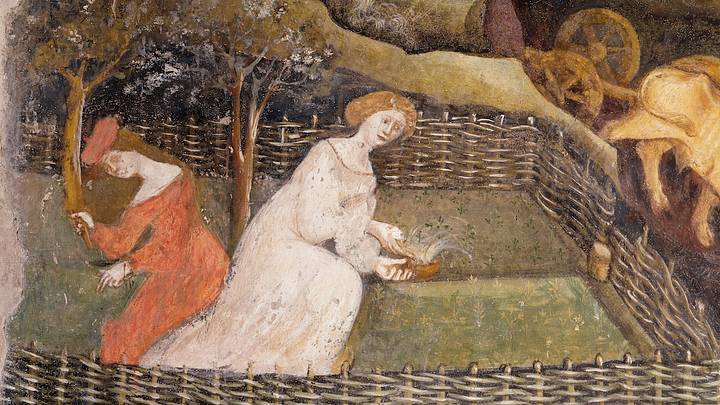
Contrary to common misconceptions, women in the medieval period, spanning from 600 AD to 1500 AD, were not solely confined to domestic life. While their opportunities for professional work were more limited compared to men, they undertook a variety of jobs that offer valuable insights into the daily life of this historical era. This analysis explores five such occupations performed by women during the Middle Ages, including agricultural workers, bakers, businesswomen, clothiers, and healers.
Agricultural work was a cornerstone of medieval society, and many women were deeply involved in it. Their roles extended beyond tending to their own family's needs, often encompassing paid employment. Women frequently worked alongside men in the fields, participating in crucial tasks such as planting and harvesting crops. They also played a significant part in activities like sheep shearing. Historical records even indicate instances of women leading harvesting teams. The prominent medieval manuscript, *Très riches heures du Duc de Berry*, provides visual evidence of women engaged in agricultural labor.
Beyond their domestic responsibilities of baking and cooking, some women professionally produced and sold bread, particularly at local markets. A substantial and time-consuming aspect of the baking process was the grinding of grain, which was essential for bread production. Illuminated manuscripts from this era, known as books of hours, feature illustrations depicting women bakers diligently at work.
The involvement of women in medieval business was more extensive than often believed. The notable case of Annabell Furner, described as a “female tycoon” of medieval London, exemplifies how women could achieve wealth and success in commerce. Furthermore, women commonly managed their husbands’ estates while the latter were absent, engaged in activities such as crusades or pilgrimages, demonstrating their significant role in economic management.
Similar to baking, cloth-making was an activity performed by women both for their families and as a professional trade. Those who manufactured and sold garments were known as cloth-makers or clothiers. The cloth-making industry gained considerable importance in England during the late Middle Ages, opening numerous opportunities in this field for women. References to female clothiers also appear in medieval literature, such as Geoffrey Chaucer’s *The Wife of Bath’s Prologue and Tale*, where the titular character is a cloth-maker involved in the financial aspects of selling clothes.
Healers constituted another important category of work for women in the medieval period, although specific details regarding their practices are not elaborated in the provided text.