Dire Economic Forecast: Fuel Prices Could Hit N5,000 Under Tinubu's Second Term
SDP presidential candidate Prince Adewole Adebayo warns that petrol prices could reach ₦5,000 per litre if President Tinubu secures a second term, citing current economic policies like naira floating and subsidy removal. Adebayo argues these policies will fuel inflation and proposes an alternative focused on domestic refining and consumer protection to bring fuel prices down to ₦200 per litre.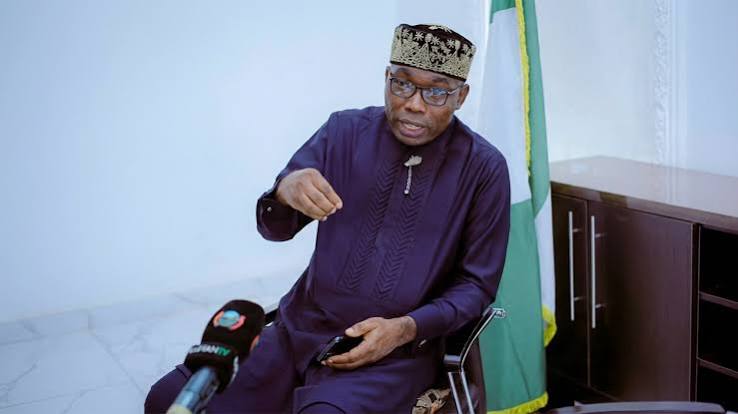
Presidential candidate of the Social Democratic Party (SDP), Prince Adewole Adebayo, has issued a stark warning regarding the potential escalation of petrol prices in Nigeria, projecting a staggering cost of up to ₦5,000 per litre should President Bola Tinubu secure a second term in office. Adebayo attributed this alarming forecast to the current trajectory of the federal government's economic policies, specifically citing the deregulation of the downstream petroleum sector and the ongoing policy of floating the naira.
In a statement released by his Chief Communications Adviser, Mark Adebayo, the SDP candidate argued that these economic strategies are poised to propel the Nigerian economy deeper into inflationary pressures. A central tenet of his argument is the persistent depreciation of the naira, which he identifies as a primary driver behind the rising cost of imported petroleum products, inherently priced in United States Dollars. He emphasized that since petrol is imported and dollar-denominated, the naira's continuous weakening, unchecked by robust local production, inevitably inflates fuel costs. Adebayo illustrated this point, stating that if the exchange rate were to reach ₦3,500 to $1 in the coming years, the landing cost of fuel alone would exceed ₦4,000.
Furthermore, Adebayo strongly criticized the federal government's decision to remove petrol subsidy. He contended that this policy has stripped the government of its capacity to buffer Nigerian consumers against fluctuations in international crude oil prices. Should global crude prices surge due to geopolitical instability, he warned, Nigerian consumers would bear the entire burden at the pump, triggering a severe, compounded inflation spiral across the economy. The ripple effect of higher petrol prices, Adebayo explained, directly translates into increased transportation costs, which in turn drive up food inflation. This creates a "vicious cycle" that diminishes the purchasing power of the naira and compels marketers to raise prices merely to cover operational expenses.
Beyond policy decisions, Adebayo also highlighted other systemic challenges exacerbating the cost of petroleum imports. He pointed to the high interest rates at which oil marketers must borrow to finance imports, alongside port-related expenses and distribution hurdles, all of which contribute significantly to the final pump price of petrol. He characterized the current economic approach as a misguided adoption of "foreign IMF-style models," advocating instead for policies rooted in domestic production. "We cannot run an economy purely on taxes, subsidy removal, and currency devaluation without producing anything internally," Adebayo asserted.
Consequently, Adebayo reiterated his warning that a ₦5,000 per litre petrol price is not a mere speculation but a logical outcome of the current economic direction. He urged Nigerians to demand a fundamental shift in economic philosophy to avert this reality. Offering an alternative vision, the SDP candidate pledged that an SDP administration, if elected, would prioritize policies aimed at bolstering domestic refining capacity and shielding Nigerians from international fuel-price shocks. Specifically, he promised that his administration would "immediately revive local refining capacity through transparent public-private models, and reintroduce targeted cushions to protect regular Nigerians from economic collapse" upon taking office. Adebayo also recently committed that, if elected in 2027, his government would strive to reduce the prices of petrol, cooking gas, and aviation fuel to ₦200 per litre within its first year, achieved through the revitalization of local refineries and support for modular refining initiatives.