Unveiling the Dark Secrets: 8 Children’s Toys with Shocking Origins
Beneath the innocent facade of beloved childhood toys lie surprising dark secrets and disturbing backstories. From the grim origins of the Teddy Bear to dangerous recalls of Aqua Dots and unsettling revelations about Barbie and Cabbage Patch Kids, this article unveils the hidden complexities behind our favorite playthings.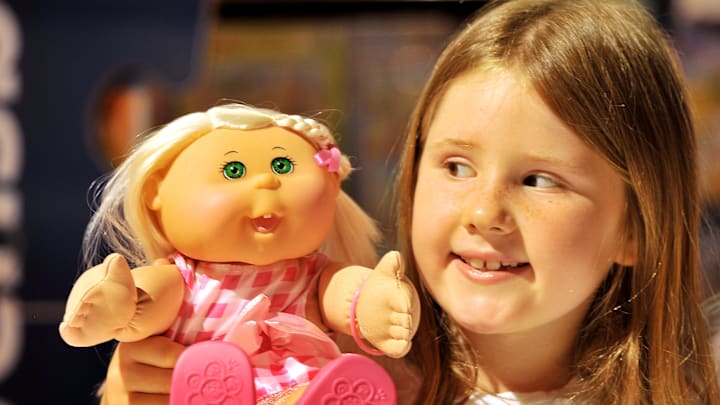
The world of childhood toys, often seen as symbols of innocence and nostalgic joy, harbors surprising dark secrets and disturbing backstories that can transform seemingly harmless playthings into objects of curiosity or even concern. Beneath the bright colors and friendly faces of many beloved toys lie tales ranging from historical sanitization and questionable marketing to outright dangers and unforeseen anomalies.
One iconic example is the Teddy Bear, a cute and cuddly plushie whose origins are tied to a rather grim hunting trip involving President Theodore Roosevelt in 1902. When Roosevelt, having had no success, was presented with a bear captured and tied to a tree by his companions, he famously refused to shoot it, deeming it unsportsmanlike. This act of perceived mercy spread through the news and inspired Morris Michtom to create the stuffed bear doll named after the president. However, the darker truth reveals that while Roosevelt indeed declined to pull the trigger himself, he did order the bear to be killed, and the animal had already endured a brutal beating with clubs before being "put down" to end its misery.
The Slinky, a beloved kinetic toy, also has a creator with a troubling personal journey. Richard T. James accidentally invented the Slinky while attempting to develop a spring for naval ships. He and his wife, Betty, established the James Spring and Wire Company, achieving immense wealth through the mass production of the toy. Yet, in the late 1950s, Richard James became disillusioned with material possessions and joined a religious cult. He proceeded to donate nearly all of his Slinky profits to this cult before abandoning his wife and children to relocate to Bolivia with his new congregation. Betty James, demonstrating remarkable resilience, managed to salvage and rebuild the company on her own, never seeing her husband again.
Barbie, a long-standing emblem of female empowerment, surprisingly began her life in a far less wholesome form. The doll we recognize today as Barbie was initially "Bild Lilli," a character from a German comic strip. This original incarnation was an overly sexualized doll, frequently sold in adult toy shops. It was only after Mattel acquired the rights to Bild Lilli that Ruth Handler skillfully transformed her into the iconic Barbie, replacing her racy outfits with fashionable clothes and redesigning her legs to end in actual feet instead of permanent black stilettos.
The wildly popular Cabbage Patch Kids of the 1980s, despite their innocent baby doll appearance, are linked to controversies surrounding their creator, Xavier Roberts. Roberts, who became a billionaire from the toys, did not originate the concept himself. Instead, he allegedly stole the idea from folk artist Mary Nelson Thomas's "Doll Babies," purchasing some of her creations as a blueprint for his own. Furthermore, Roberts was notably particular about the marketing of Cabbage Patch Kids, insisting they be referred to as "babies" or "kids" rather than dolls, and that stores be called "adoption centers" where the toys were "adopted" for a fee, not sold. This insistence on their "realness" becomes particularly unsettling when considering he stamped his signature on the buttocks of each doll and, perhaps most bizarrely, thought a marketing strategy featuring a grown man bathing with one of his "babies" was appropriate.
Even technologically advanced toys have faced scrutiny. The '90s sensation Furby, known for its ability to "learn" through interaction, raised serious concerns among government agencies regarding its recording capabilities. The FAA permitted Furbys on planes only if they were powered off to prevent interference with aircraft systems, while the NSA outright banned them from their offices, fearing the toy could record sensitive information. Tiger Electronics, Furby's manufacturer, had to publicly refute these rumors, issuing the explicit statement: "Furby is not a spy."
Another toy with a truly dangerous secret was Aqua Dots, sometimes known as Bindeez. These beads offered the fun of Perler Beads without the need for an iron. However, in 2007, Spin Master recalled 4.2 million units after reports of children ingesting them and subsequently suffering from vomiting, loss of consciousness, and even comas. The chemical designed to make the beads bond when wet was found to break down into gamma-hydroxybutyrate (GHB), a notorious "club drug," when ingested. Depending on the child's size and age, swallowing these beads could lead to a dangerous overdose.
Concerns about audio technology also plagued the Elmo Knows Your Name doll. In 2008, a Florida mother was horrified after changing the batteries in her son's doll, hearing it exclaim, "Kill James" instead of the intended "Hi, James." The situation escalated when her two-year-old son, James, began repeating the sinister phrase. While Fisher-Price replaced the doll and investigated other units, this particular Elmo doll was discontinued later that same year.
Finally, the cautionary tale of the Evilstick highlights the perils of bootlegged toys. This dollar store princess wand initially seemed like an inexpensive treat. However, it quickly revealed its true nature with a creepy laugh and, upon removal of its foil, an inappropriate picture hidden underneath, serving as a stark reminder for parents to be wary of unregulated, discount products.
These examples underscore that the seemingly simple world of children's toys often conceals complex, controversial, or even perilous histories, challenging our perceptions of innocence and nostalgia.