Unveiling Ancient Secrets: The Haunting Symbolism of Winged Skulls on Old Gravestones
Gravestone symbols, particularly the winged skull, offer profound insights into human mortality and life's fragility. Originating in medieval Europe and evolving through Puritan New England, this "funerary art" connects to the concept of "memento mori." It encourages reflection on the present to live more fully, as explored in philosophy and religious texts.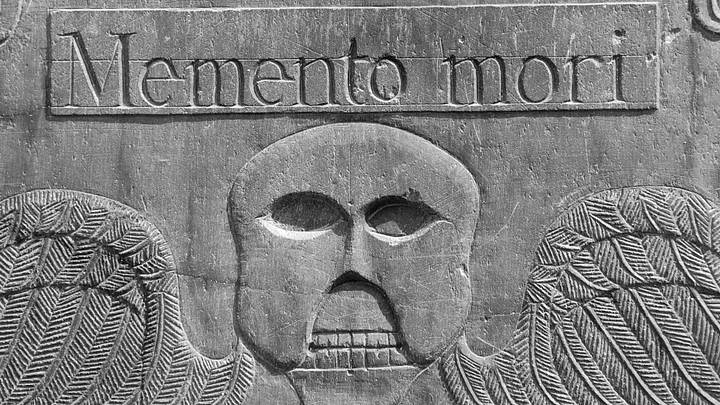
From beyond the silent graveyard gates, headstones stand as blurred grey slabs, their faded dedications and symbols inviting contemplation. Among these, older gravestones often require closer inspection, a squint, or even a rub of dirt to discern the inscriptions and the intended messages of lives long passed. These stones frequently bear thought-provoking symbols that offer insights into the individuals buried beneath them, though over time, many of these emblems have lost their nuanced meanings. One such symbol, the winged skull, might appear morbid at first glance, but it serves as a poignant reminder of life's delicate and transient nature.
According to the Virginia Department of Historic Resources, this particular symbol is a prime example of "funerary art." Its origins trace back to Europe as early as the 13th century, where skull and crossed bones were etched into headstones. Puritan colonists subsequently carried this tradition to New England, evolving the carvings on old gravestones. The symbol transformed from a skull and crossbones to a winged skull, and by the late 1700s, further transitioned into a cherub, with each iteration conveying a similar underlying concept. A journey through cemeteries dating back to the first colonies will likely reveal several of these symbols, prompting questions about their insights into both death and life.
The winged skull is widely understood to symbolize mortality, intrinsically linked to the Latin phrase “memento mori,” which translates to "remember to die" or "remember death." This concept has deep roots in both philosophy and religion. As noted by Encyclopedia Britannica, the ancient Greek philosopher Socrates explored this idea, not to instill fear of death, but rather to dispel it. He posited that a true understanding of death's inevitability enables one to live the present moment to its fullest. Similarly, the Roman philosopher Seneca encouraged reflection on "the end" as a means to deepen appreciation for the present.
In a religious context, several Bible verses echo the sentiment of memento mori, encouraging believers to reflect on life through the lens of death. Psalm 90:12 advises, "Teach us to number our days, that we may apply our hearts unto wisdom." Ecclesiastes 7:2 states, "Death is the destiny of everyone; the living should take this to heart." A tangible example is Ash Wednesday, a Catholic observance where ashes are received, accompanied by the belief that "for dust you are and to dust you will return" (Genesis 3:19), a passage that profoundly reinforces human mortality.
Ultimately, the winged skull, as a piece of funerary art, is not intended to frighten passersby in a cemetery. Instead, it aims to provoke contemplation on the present. By grasping life’s temporary nature, individuals can shed superficial concerns, perceive the present with greater clarity, and truly appreciate the simple wonders each day offers, free from the fear of what is yet to come.