Unmasking Hollywood's Haunting Habit: The Deep Dive into Celebrity Halloween Decor
Explore the ancient origins of Halloween, tracing its roots back to the Celtic festival of Samhain and its beliefs about spirits. Discover how these traditions, including carved gourds and trick-or-treating, evolved through immigration and societal changes to become the modern holiday we celebrate today.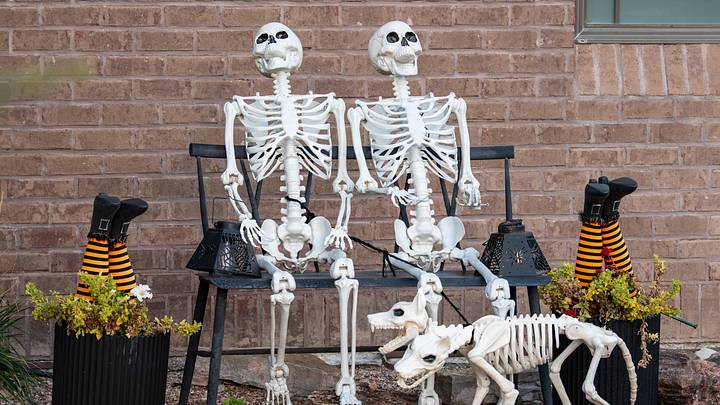
Modern Halloween, largely celebrated with pop-up decorations, pop-culture costumes, and abundant candy, traces its roots back to the ancient Celtic holiday of Samhain. This ancestor of Halloween was a period of deep reverence and genuine fear, as people believed spirits freely roamed the earth during this liminal time. Many contemporary Halloween traditions, including decorating with spooky elements, are thought to originate from Celtic customs, such as carving faces into gourds and squash to display outside homes to repel mischievous spirits.
Most historians pinpoint Samhain as the origin of Halloween. This festival was one of four significant Gaelic holidays, alongside Imbolc, Beltane, and Lughnasadh, observed approximately 2,000 to 3,000 years ago across areas now known as Ireland, England, Wales, the Isle of Man, and northern France. Samhain marked the transition from autumn to winter and was traditionally honored with sacred communal bonfires lit by Druid priests. Ancient texts suggest it was a three-day festival where townspeople were required to present themselves before their local chieftains. Crucially, it was widely believed that during Samhain, the veil separating the living and the dead thinned, enabling ancestors, spirits, monsters, and faeries to traverse into the mortal world. This belief fostered many traditions aimed at honoring the deceased and safeguarding the living.
As Christianity spread across Europe in the fifth century CE, efforts were made to integrate or replace pagan practices. Pope Boniface attempted to shift Samhain into a May festival honoring saints, yet autumnal fire celebrations persisted. Later, in the eighth century, Pope Gregory III moved the Roman festival of All Saints’ Day to November 1. Subsequently, October 31 became known as All Hallows’ Eve, a night when many continued their pagan customs. In the 19th century, Irish and Scottish immigrants brought these Samhain traditions to America, contributing to the evolution of what we now know as modern Halloween.
The earliest precursors to modern Halloween decorations were carved turnips, gourds, and squash, designed to ward off malevolent spirits during Samhain. In the Middle Ages, turnips were the preferred choice for this task, often hollowed out, filled with burning coals, and hung from sticks, earning them the name