To Pierce or Not to Pierce: The Baby Ear Piercing Debate
The debate over piercing babies’ ears raises cultural, ethical, and health questions. Is it an act of tradition and beauty, or an unnecessary decision made too soon?
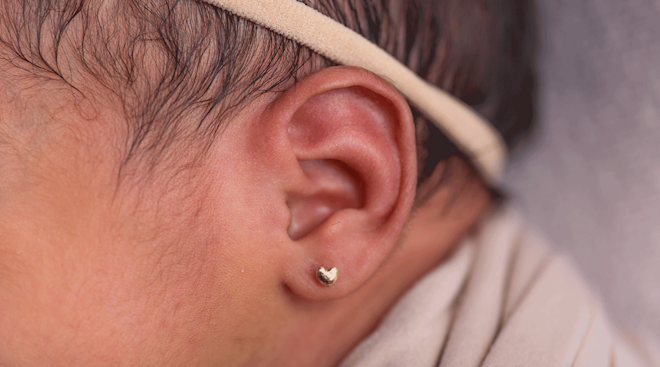
It is a bright Saturday morning, a young mother beams proudly as she holds up her infant daughter for the aesthetician. The baby, barely six months old, squirms gently while her mother whispers soothingly, “Just a small pinch, my darling.”
Moments later, two tiny gold studs glimmer on the baby’s soft earlobes. Around them, other women nod approvingly. To them, it is the tradition.
But across the internet, thousands of voices disagree. Some call it “beautiful,” others call it “cruel.” The question stands tall in the middle of parenting debates: should babies’ ears be pierced at all?
A Tradition Passed Down
In many parts of the world, piercing a baby’s ears is norm as well as cultural inheritance. In Nigeria and much of West Africa, it is common for baby girls to get their ears pierced within weeks of birth, sometimes few hours after birth.
In Latin American cultures, the same tradition holds. A newborn girl leaving the hospital with tiny gold earrings is a symbol of femininity, family, and identity.
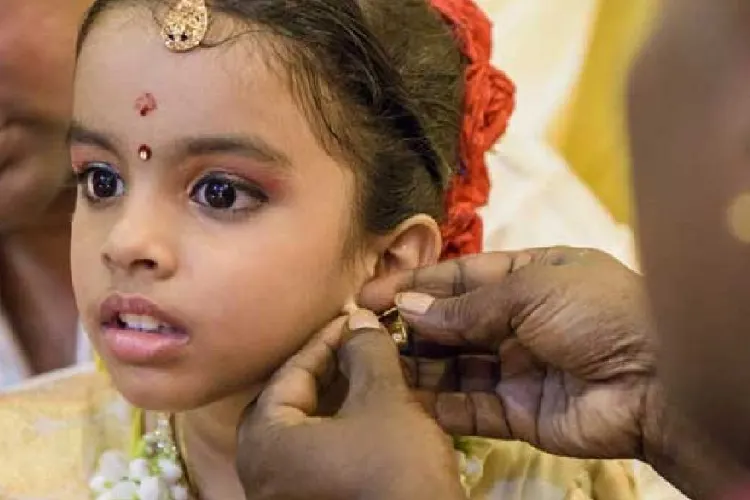
In India, ear piercing popularly known as Karnavedha, is a sacred ritual often conducted in early childhood, believed to bring prosperity and protect against illness. For generations, these practices have tied families to their ancestors and communities, making the piercing ceremony a moment of celebration and belonging.
To many parents, delaying it would feel like cutting ties with something deeper than aesthetics. To them, it would mean disrupting continuity and it is not just about earrings but rather about legacy. And in a world rapidly losing its cultural ideals, such symbols carry emotional weight and meaning.
The Parental Choice Argument
Supporters of early piercing defend it as a harmless and even thoughtful decision. “It’s easier when they’re babies,” many mothers insist. “They won’t remember the pain, and it heals faster.” Indeed, pediatricians confirm that babies’ lobes are softer and tend to recover quickly with proper care.
Some parents also frame it as part of nurturing. Just as they choose clothes, names, and religious ceremonies for their children, they see ear piercing as another form of parental expression and identity-making.
For others, it is seemly an emotional or sentimental act — a small way to recreate their own childhoods or connect with their mothers’ choices. A grandmother might even gift the baby’s first pair of earrings, making it an intergenerational bond sealed in gold.
Culture
Read Between the Lines of African Society
Your Gateway to Africa's Untold Cultural Narratives.
The Consent and Ethics Argument
Yet, on the other side of the discussion is the louder, more modern concern which is consent. Critics argue that babies, incapable of understanding or choosing, should not be subjected to any non-medical body alteration.
Ethicists point out that ear piercing, while minor, represents a symbolic violation of bodily autonomy. “If it’s truly for the child,” they ask, “why not wait until she can decide?”
The argument has gained traction among Western and younger African parents who advocate for bodily autonomy from infancy. They argue that decisions about one’s body, even tiny ones like piercings, should rest with the individual, not tradition.
Furthermore, some question whether the aesthetic pressure of gender norms plays a role. The idea that a baby girl must have earrings to “look like a girl” is being reexamined in feminist and parenting circles. To these parents, skipping the piercing is a quiet rebellion, a statement that a girl’s identity doesn’t hang from her earlobes.

The Medical and Safety Angle
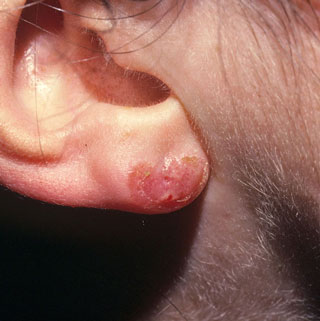
Beyond ethics and emotion, there is the medical reality. While ear piercing is generally safe, it is not without risks.
Infections can occur if the tools are unsterilized or if the wound is touched with dirty hands. Allergic reactions to metals like nickel are also common, leading to swelling, redness, or scarring.
Pediatricians recommend professional piercing services which is ideally by a trained piercer or medical practitioner and using hypoallergenic materials such as gold or surgical steel.
Pediatric dermatologists notes that the key issue is hygiene, not timing. Whether at six months or six years, parents must ensure sterile conditions and proper aftercare.
Their advice bridges both worlds and not necessarily opposing baby piercings but advocating safety over sentiment.
The Cultural Divide and Online Wars
The age-old practice has found new battlegrounds in the digital age. On parenting forums and TikTok comment sections, the debate rages on.
Videos of babies getting their ears pierced often attract mixed reactions. While some are filled with heart emojis, others are filled with accusations of cruelty.
Culture
Read Between the Lines of African Society
Your Gateway to Africa's Untold Cultural Narratives.
The internet has magnified what used to be a private family choice into a global moral argument. Terms like “mom-shaming” have become part of the conversation. Some mothers are accused of vanity while others of being overly cautious.
This clash looks generational too. Older parents who see piercing as natural are often shocked at the backlash. Younger parents, influenced by modern parenting philosophies emphasizing consent, see the act as outdated.
Interestingly, both sides are motivated by love. While one guided by heritage, the other by autonomy. Yet online, that balance is often lost.
Finding a Middle Ground
The truth remains that both choices can coexist. Some parents now choose to delay piercing until their children can express interest, often around age five or six. Others maintain the tradition but ensure it is done safely and respectfully.
Cultural traditions evolve, and many believe they can adapt without being erased. A grandmother’s love for tradition can meet a mother’s respect for consent halfway and perhaps by keeping the earrings for later or discussing it openly as the child grows.
In the end, piercing a baby’s ears doesn’t make one a better or worse parent. What matters is the intent behind the choice and the care that follows it. Parenting is, after all, a long experiment in love, balance, and sometimes beautiful contradiction.
Should Babies’ Ears Be Pierced?
The baby ear piercing debate isn’t about gold studs or tiny lobes. Rather, it is about how culture, ethics, and parenting intersect.
For some, it is a cherished tradition passed down like lullabies. For others, it is a boundary too sacred to cross without consent.
There is no single right answer. Parenting, after all, is a thread of choices, stitched together by love, culture, and conscience. Whether you decide to pierce or not, the truest ornament a child can wear is the care with which they are raised.