Time Travel Tickets: Discover Your Birth Year's Movie Price!
The movie-going experience has transformed significantly over the decades, from ticketing methods to seating arrangements and particularly the soaring cost of concessions. This article details the evolution of cinema visits and presents a historical perspective on movie ticket prices, adjusted for inflation, highlighting how much more expensive a trip to the movies has become.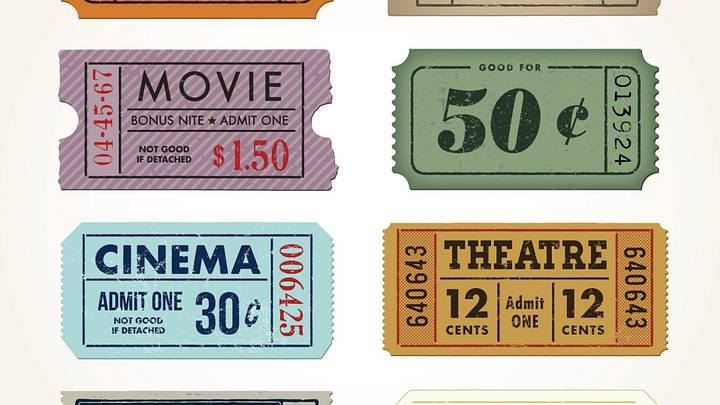
The act of going to the movies remains a cherished and timeless experience for many, offering an escape into cinematic worlds. While the fundamental concept of visiting a local theater to enjoy a new film and indulge in snacks persists, numerous aspects of this experience have undergone significant transformations over the years, particularly concerning purchasing methods, concessions, and seating.
In contrast to past decades where tickets were primarily purchased at a physical box office, modern cinemas frequently feature touchscreen kiosks, and an increasing number of patrons opt to buy their tickets online prior to their arrival. This digital shift streamlines the entry process but signifies a departure from traditional ticketing.
Perhaps the most striking change, however, is the substantial increase in the cost of concessions. What once cost less than $10 for a date, including snacks, has ballooned into a much more expensive outing. By 2026, the average price of a single movie ticket is projected to be $16.50. Accompanying this, a large popcorn at an AMC Theater can range from $9 to $12, depending on the location, while a large fountain drink costs approximately $8.50. Consequently, taking a date to the movies, encompassing tickets, snacks, and drinks for two, can easily exceed $70, with family outings proving even more costly.
Theater seating and design have also evolved considerably. In the early 1900s, theaters were characterized by large spaces with wooden chairs and benches situated on flat floors. Over time, comfort became a priority, leading to the introduction of upholstered, cushioned, and eventually reclining seats. Floors became sloped to enhance viewing angles, and overall theater sizes trended towards smaller, more intimate settings, diverging from the grand, expansive venues of yesteryear.
Despite these changes, the essence of pausing reality for a few hours to enjoy a film and some snacks endures. However, the financial aspect, especially the price of admission, has seen a dramatic rise over the decades. According to data compiled by Cheapism, the average cost of a movie ticket has changed significantly, with inflation-adjusted figures providing a clearer picture of its historical value. For instance, a ticket that cost $0.54 in 1955 would be equivalent to $6.57 in 2025 dollars. This trend continued with a ticket priced at $0.59 in 1956 becoming $7.15 (adjusted), and $0.63 in 1957 becoming $7.41 (adjusted). By 1960, a $0.75 ticket was $8.31 in 2025 dollars, and in 1970, a $1.54 ticket equated to $13.23. The prices steadily climbed, reaching $2.69 in 1980 (adjusted to $11.23) and $4.22 in 1990 (adjusted to $10.76). By 1999, the average movie ticket stood at $5.06, which would be $10.00 in 2025 dollars, illustrating the complex interplay of actual price increases and inflation over time.