The “Owambe Economy” Is Bigger Than Most Nigerian Startups
Nigeria's Owambe culture is more than elaborate celebrations. It is a thriving informal economy that powers thousands of businesses and generates billions of naira in economic activity every weekend.
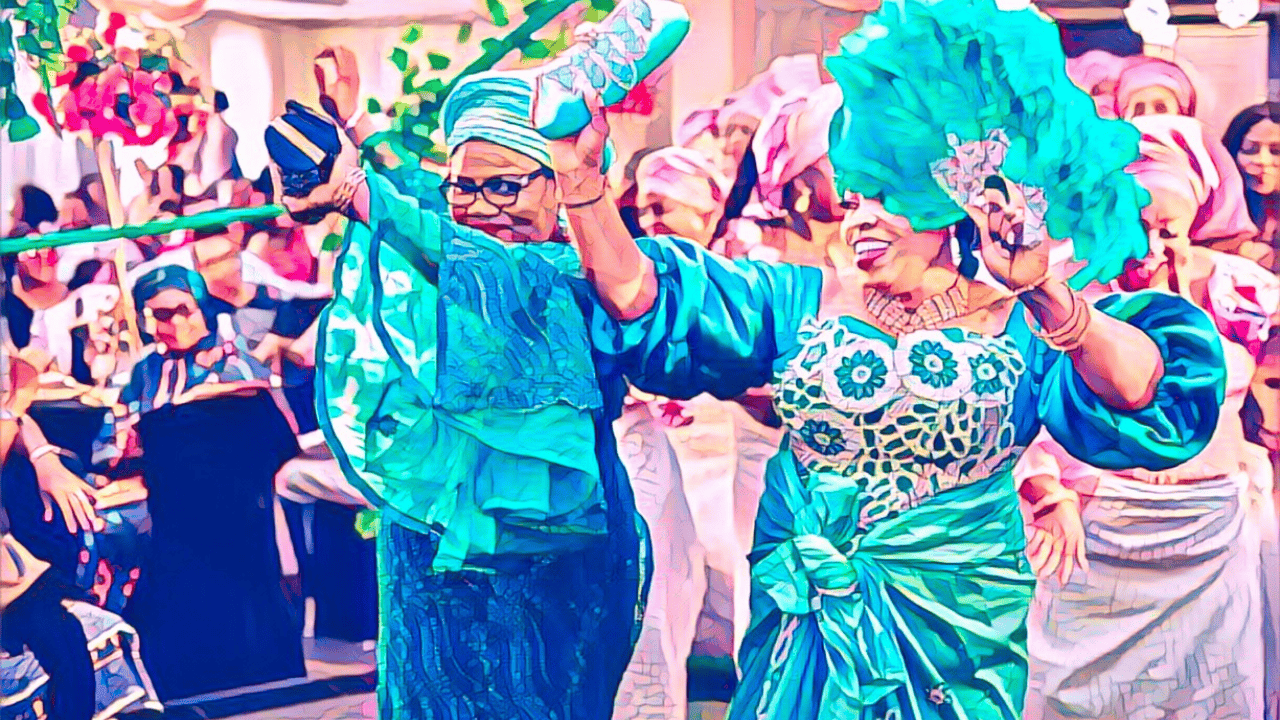
On any given Saturday in Lagos, Abuja, Benin City, or Port Harcourt, billions of naira quietly change hands before noon. Someone somewhere is paying ₦500,000 for aso-ebi.Another person is hiring a makeup artist for ₦80,000. A caterer is cooking for 500 guests. A photographer has already collected a deposit ahead of time. A popular DJ is on his second event of the day.
And somewhere in the city, an event centre has been booked six months in advance. Long before it all turned into an economic phenomenon, that is if you have realised it, Owambe was a cultural one.
The term is deeply rooted in Yoruba culture and is commonly associated with elaborate celebrations, communal gatherings and social festivities.
While interpretations of its exact meaning differ, it has largely come to represent the idea that "the party is over there" or "something worth celebrating is happening there."
What began as a Yoruba cultural expression has since evolved into a Nigerian cultural institution embraced across tribes, cities, and generations.
We call it Owambe as though it is simply party culture. It isn't. It is an actual full blown economy.
The uncomfortable truth is that Nigeria's Owambe economy may employ more people and generate more economic activity every weekend than some startups celebrated for raising millions of dollars in venture capital.
What if Nigerians are grossly underestimating one of the country's biggest industries simply because it wears gele and dances to Nigerian traditional music?
What Happens Before The First Plate Of Jollof Rice Is Served?
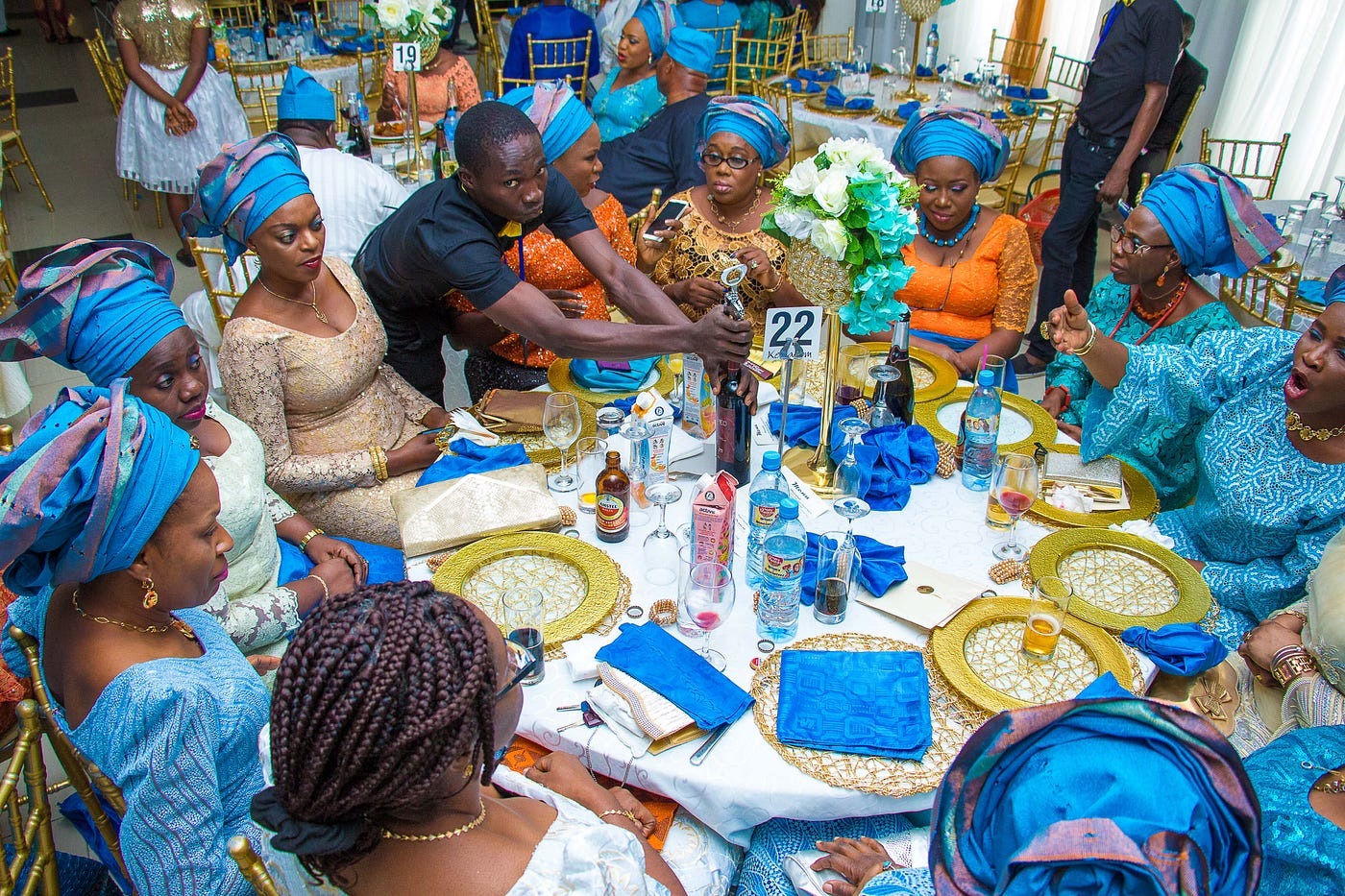
When Nigerians talk about Owambe, they often talk about the bride, the groom, the music or the food. What rarely enters the conversation is the economic machine quietly operating behind every celebration.
The Owambe economy is not a niche cultural quirk, it is a trillion-naira informal ecosystem, recession-proof and largely invisible to formal economic accounting.
BusinessDay estimates the Nigerian wedding and events industry alone is worth ₦1.2 trillion annually, a figure that does not fully capture the satellite economies it powers.An Owambe is rarely just one business making money. It is often dozens all neatly packed as a market supply chain.
Event planners coordinate timelines and vendors. Caterers feed hundreds of guests. MCs and DJs move between multiple events on the same day. Fashion designers race against delivery deadlines. Gele artists charge premium rates during peak seasons. Photographers and videographers document everything for social media and family archives.
Behind all of them: decorators, rental businesses, security personnel, event centres, hotels, transportation, ushers, cake vendors, small chops operators, and roadside sellers are all catching the overflow.
At current exchange rates, ₦1 trillion is roughly $670 million USD, not a rounding error, but a sector of genuine macroeconomic weight operating with no price transparency, no consumer protection framework, and no formal regulatory oversight.
Culture
Read Between the Lines of African Society
Your Gateway to Africa's Untold Cultural Narratives.
One Owambe weekend sustains an entire supply chain most people never see.
Most Nigerian startups spend years trying to build ecosystems. Owambe already has one and it's flourishing.
An average Nigerian wedding can easily employ more than thirty different service providers before the first plate of jollof rice is served.
Unlike many industries that depend heavily on government interventions or foreign investments, the Owambe economy has largely been built by Nigerians, sustained by Nigerians, and funded by Nigerians.
It has become one of the country's most successful informal economic ecosystems hiding in plain sight.
Why Does Owambe Refuse To Slow Down?
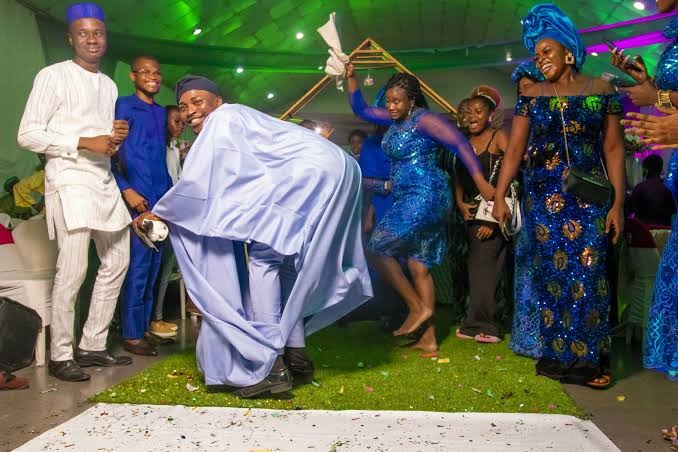

Perhaps the most fascinating thing about the Owambe economy is its resilience.
Nigeria has experienced inflation, currency devaluation, rising transportation costs, and economic uncertainty over the years. Yet, every weekend, Nigerians continue to celebrate.
The obvious question is why.
Why do Nigerians still spend millions of naira on weddings and celebrations during difficult economic times? Why are event centres still booked months in advance? Why do people borrow money or save for years simply to host memorable ceremonies?
The answer may have less to do with extravagance and more to do with culture.
In Nigeria, celebration is not merely leisure. It is social currency. Owambe is where families reunite. It is where friendships are strengthened, and communities come together.
Businesses gain new customers through referrals. Politicians build influence. Musicians expand their audiences. Entrepreneurs secure contracts. Even job opportunities are sometimes born over conversations at wedding receptions.
For many Nigerians, celebrations are investments in social capital. The Owambe economy does not merely survive economic downturns. It adapts to them.
When times are hard, celebrations become smaller. The cheaper Aso-ebi is sought after to ensure it becomes more affordable to everyone. Families share event spaces. The Owambe economy simply finds new ways to continue operating.
Nigerians may postpone buying land before postponing an important family celebration. That may sound irrational to outsiders, but culture has never been entirely rational. It is emotional, communal and deeply rooted in identity.
Culture
Read Between the Lines of African Society
Your Gateway to Africa's Untold Cultural Narratives.
The Owambe economy understands this better than most industries ever will.
If Owambe Were A Startup, Investors Would Probably Love It.
Nigeria's startup ecosystem celebrates funding announcements, valuations and scalability.
That raises an interesting question: what exactly is scalability if an industry can generate economic activity in virtually every Nigerian city every single weekend?
If Owambe were a technology startup, investors would probably describe it as one of Nigeria's most successful platforms.
Its inputs are already impressive: Fashion. Food. Hospitality. Transportation. Entertainment. Beauty. Media. Tourism and logistics.
Its outputs are equally significant: Employment. Consumer spending. Economic circulation. Small business growth. Cultural preservation and wealth distribution across multiple sectors.
The difference is that Owambe does not pitch venture capitalists. It just simply exists.
No founder is standing on stage explaining its business model to investors. There are no billion-dollar valuations attached to it.
Yet, every weekend, Nigerians collectively spend enormous amounts of money participating in an industry many economists and policymakers barely discuss.
The only reason we do not talk about it like an industry is that we have normalised it culturally.
When something becomes deeply embedded in everyday life, we often stop recognising its economic significance.
Perhaps we have been calling it "party culture" for so long that we forgot it is also commerce.
The Biggest Industry Nigerians Don't Talk About Enough

The biggest irony surrounding the Owambe economy is that it remains largely absent from serious economic conversations.
Governments regularly discuss attracting foreign direct investments, building unicorn startups and expanding industries like agriculture and fintech. Those conversations are important.
Yet, how often do policymakers ask how much economic value the Owambe industry generates annually?
Culture
Read Between the Lines of African Society
Your Gateway to Africa's Untold Cultural Narratives.
How many jobs does it create across Nigeria? How much consumer spending flows through its ecosystem every weekend? Why is it rarely studied as an economic sector despite touching fashion, hospitality, entertainment, and transportation simultaneously?
Nigeria spends a significant amount of time waiting for foreign investors and billion-dollar startups while quietly overlooking industries Nigerians have already built for themselves.
The Owambe economy does not rely on Silicon Valley. It does not need foreign accelerators or investment rounds to remain relevant. It has survived decades of economic uncertainty because it is built on something far more sustainable in Nigeria's context: culture and community.
Perhaps Nigeria's biggest informal economy is not hiding in a tech hub or industrial park.
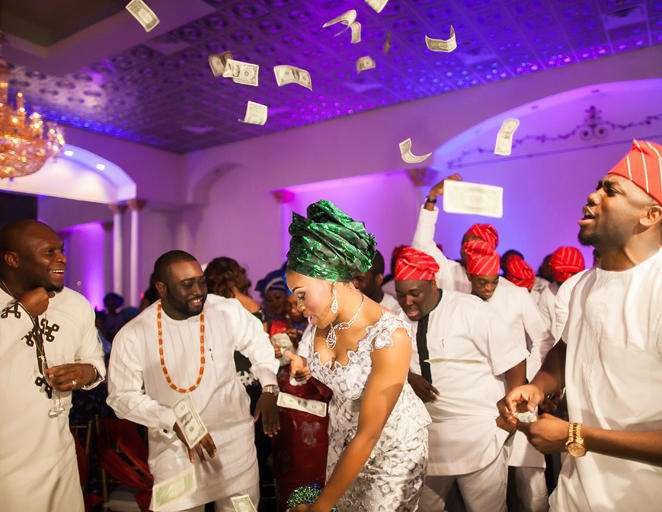
Perhaps it wears aso-oke, sprays naira notes and dances to talking drums every Saturday.
More Than Just A Party
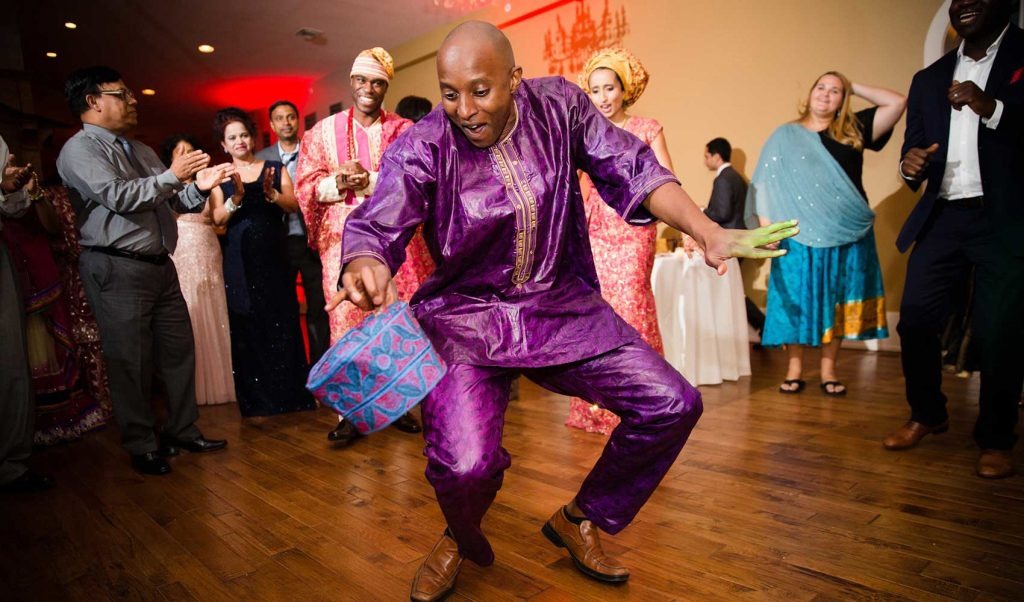
Perhaps the biggest misconception about Owambe is that it is merely about parties. It isn't.
It is an informal economic system built on culture, community and commerce. It employs thousands of Nigerians who may never call themselves entrepreneurs despite running profitable businesses every weekend.
The next time someone dismisses Nigerians for "spending too much money on parties," it might be worth asking a different question.
If Owambe disappeared tomorrow, how many Nigerian businesses would disappear with it?
Because somewhere between the gele, jollof rice, and spraying of naira notes, Nigeria quietly built an industry that economists still do not talk about enough.