The Opposition Coalition and 2027: Hope or Just Another Political Tool?
A 2027 coalition of political heavyweights is taking shape in Nigeria—but with familiar faces and vague promises, many wonder: is this a path to reform or another elite reshuffle?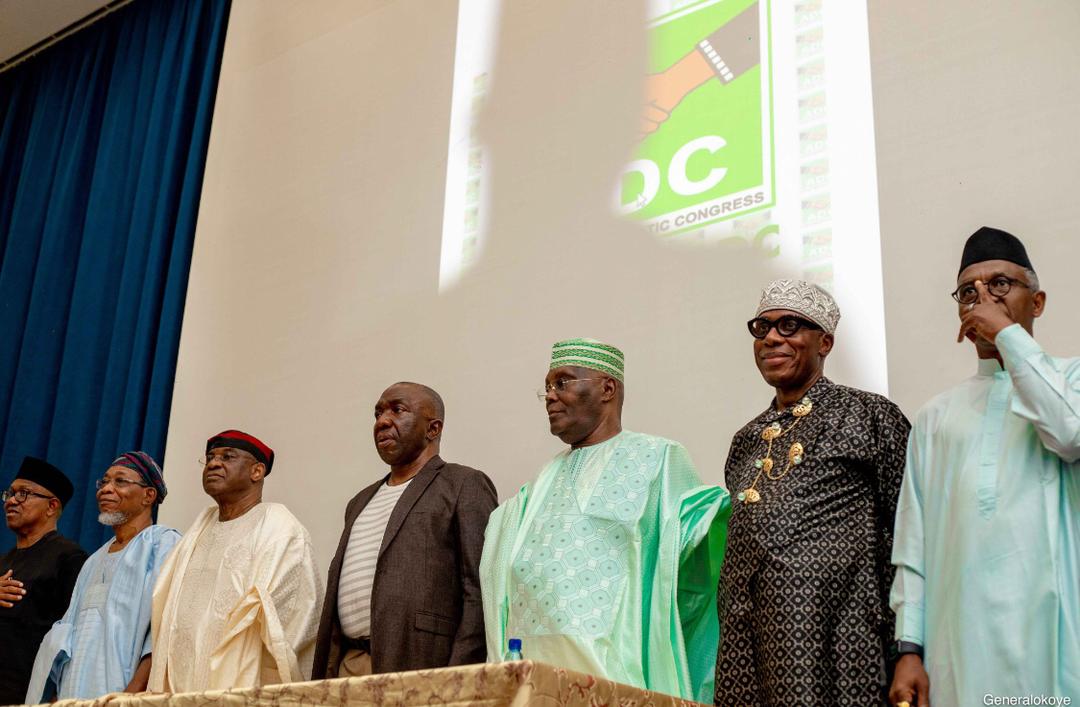
The Gathering Storm in Familiar Skies
As Nigeria inches closer to 2027, whispers have begun to take shape: a grand coalition of opposition forces may be brewing. At first glance, it sounds promising. After all, the ruling party appears firmly planted, and mounting public frustration over inflation, insecurity, and governance has left many hoping for a serious alternative.
But beneath the surface, a different kind of conversation is growing. The question isn't just whether a coalition will form — but whether it will truly stand for anything beyond the ambitions of familiar faces. In a country where political parties often blur into personal empires, is this coalition a united front for change or simply another tool for power rotation among elites?
The Return of the Political Bigwigs

SOURCE: Getty Images
So far, the names linked to this developing alliance are not unknown:Atiku Abubakar, a long-standing presidential hopeful; Rotimi Amaechi, a political heavyweight from the South-South; and Nasir El-Rufai, former Kaduna governor and one of the most polarizing figures in Nigerian politics. Each brings clout, networks, and national name recognition.
Together, they are being positioned as anchors for a broad-based coalition that could rival the current administration in strength and strategy. But that strength, many argue, lies not in shared ideology, but in the cold calculus of political arithmetic.
The math is simple. Bring together Northern power blocs, Southern influence, and disgruntled centrists. Add a dose of social media buzz, rebrand the movement as "unity," and challenge the incumbent.
But politics, as Nigerians know too well, is rarely solved with equations alone.
Coalitions Without Convictions
Nigeria has seen coalitions before — some successful, most short-lived. The most famous being the All Progressives Congress (APC), a merger of parties that eventually unseated the PDP in 2015. Yet, what followed was not so much a change in governance style as it was a shift in who held the reins.
The fear, therefore, is not unfounded: will this new coalition follow the same script? Several analysts note that no clear agenda has emerged beyond the objective of removing the current government. What is the economic blueprint? What is the strategy for national unity, especially in a time of ethnic tension? How will they tackle insecurity differently? These questions remain unanswered.
Moreover, the coalition’s early architects have often been rivals themselves. Atiku and El-Rufai have had public disagreements in the past. Amaechi's relationship with key players in both APC and PDP remains complicated. If personal ambitions once split parties apart, what now holds this fragile alliance together?
The Party is Not the Story — The People Are

SOURCE: Getty Images
In Nigeria, parties are often platforms of convenience. Politicians switch affiliations frequently, not necessarily out of conviction, but opportunity. That trend continues to define this coalition — it is less about Labour, APC, PDP, or ADC, and more about who can control the levers within them.
What this reveals is that the coalition is not a movement in the truest sense — at least not yet. It's not a groundswell from below. It's a calculation from above. And that matters because Nigerian voters, especially younger ones, are increasingly alert to such dynamics.
They remember 2023 — not just for who won, but for how many emerged in protest of the old order. They saw a wave of political participation that wasn’t dictated by zoning formulas or big names, but by hope for something fundamentally different. For this coalition to work, it would need to tap into that energy — and that energy demands substance, not just symbolism.
The Peter Obi Factor

Even in this landscape, one name continues to draw both anticipation and skepticism — Peter Obi. Having declared his intent to run again, he now finds himself both as a potential insider and outsider. His participation in any coalition will either lend it credibility or expose its contradictions.
Already, there are murmurs. Will Obi merge with the new bloc or remain with Labour? Does the coalition truly want him, or merely his crowd? Would joining them dilute his anti-establishment message? Or does staying outside risk political isolation?
It’s a delicate dance. One that Obi — and the coalition — must choreograph carefully. Because at stake is not just strategy, but the perception of what the opposition actually represents. If it becomes just a pact of old power centers, Obi’s involvement could alienate his base. If it excludes him, the coalition risks looking like a rearranged elite circle, ignoring one of the most organic movements Nigeria has seen in years.
What the Voters Are Seeing
Across the country, from Enugu to Kaduna, Ilorin to Warri, people are watching — not necessarily the speeches, but the shifts. A coalition that merely rearranges the furniture without fixing the house won’t hold. Nigerians have been here before: grand alliances, roadshows, slogans. And still, the roads remain bad, the hospitals under-equipped, the schools barely funded.
So when the coalition speaks of rescuing Nigeria, the average citizen will ask: rescue it from what — and to what? And more importantly, with whom?
Credibility, not just numbers, will define this coalition. Transparency, not just unity, will sustain it. Nigerians no longer trust easily. And why should they?
Between Strategy and Sincerity
To be fair, forming a coalition in Nigeria’s political environment is not easy. The electoral system favors alliances. National victory almost requires broad-based support. But broad should not mean shallow. Strategic should not mean insincerity.
If this coalition is serious about change, it must offer more than a return to power for recycled politicians. It must present a clear vision — not just of governance, but of leadership values. It must address hard questions on restructuring, justice, security, and jobs — not just with promises, but with plans.
And it must resist the temptation of shortcuts. No anointed saviors. No last-minute alliances. No imposition of candidates without internal democracy. Otherwise, it risks becoming the very thing it seeks to replace.
Hope or Mirage?
There is no denying that many Nigerians still want change — real change. They want leaders who think beyond election cycles. They want institutions that function, not just personalities that dominate. They want politics that works — not just politics that wins.
The coalition, as it is currently conceived, may indeed unseat the ruling party. But that is not the goal. The real question is: what comes after? Will it simply be another round of musical chairs? Or will it be a true turn in Nigeria’s political story?
So far, the jury is out. The opposition is still setting the table. But soon, the nation will ask what’s being served.
And this time, it will take more than familiar faces and familiar words to convince a hungry people.